


Maritime safety

Collection Contents
21 - 40 of 133 results
-
-
Security Awareness Training for All Seafarers
show More to view fulltext, buy and share links for:Security Awareness Training for All Seafarers show Less to hide fulltext, buy and share links for: Security Awareness Training for All SeafarersThis model course is intended to provide the knowledge required to enable personnel without designated security duties in connection with a Ship Security Plan (SSP) to enhance ship security in accordance with the requirements of chapter XI-2 of SOLAS 74 as amended, the ISPS Code, and section A-VI/6-1 of the STCW Code, as amended.
Those who successfully complete this course should achieve the required standard of competence enabling them to contribute to the enhancement of maritime security through heightened awareness and the ability to recognize security threats and to respond appropriately.
-
-
-
Security Training for Seafarers with Designated Security Duties
show More to view fulltext, buy and share links for:Security Training for Seafarers with Designated Security Duties show Less to hide fulltext, buy and share links for: Security Training for Seafarers with Designated Security DutiesThis model course is intended to provide the knowledge required for seafarers with designated security duties in connection with a Ship Security Plan (SSP) to perform their duties in accordance with the requirements of chapter XI-2 of SOLAS 74 as amended, the ISPS Code, and section A-VI/6 of the STCW Code, as amended.
-
-
-
Dispositivos de salvamento incluido el Código IDS
show More to view fulltext, buy and share links for:Dispositivos de salvamento incluido el Código IDS show Less to hide fulltext, buy and share links for: Dispositivos de salvamento incluido el Código IDSLa presente publicación contiene la versión actualizada de los tres instrumentos más importantes de la OMI que tratan de los dispositivos de salvamento, es decir:
- el Código internacional de dispositivos de salvamento (Código IDS) (resolución MSC.48(66));
- la Recomendación revisada sobre las pruebas de los dispositivos de salvamento (resolución MSC.81(70)); y
- el Código de prácticas para la evaluación, la prueba y la aceptación de prototipos de dispositivos y medios de salvamento de carácter innovador (resolución A.520(13)).
-
-
-
Engins de sauvetage, y compris le Recueil LSA
show More to view fulltext, buy and share links for:Engins de sauvetage, y compris le Recueil LSA show Less to hide fulltext, buy and share links for: Engins de sauvetage, y compris le Recueil LSALa présente publication comprend la version actualisée des trois instruments de l’Organisation maritime internationale (OMI) les plus importants traitant des engins de sauvetage, à savoir :
- le Recueil international de règles relatives aux engins de sauvetage (Recueil LSA) (résolution MSC.48(66));
- la Recommandation révisée sur la mise à l’essai des engins de sauvetage (résolution MSC.81(70)); et
- le Recueil de règles pratiques pour l’évaluation, la mise à l’essai et l’acceptation de prototypes d’engins et de dispositifs de sauvetage nouveaux (résolution A.520(13)).
-
-
-
Life-saving Appliances Including LSA Code
show More to view fulltext, buy and share links for:Life-saving Appliances Including LSA Code show Less to hide fulltext, buy and share links for: Life-saving Appliances Including LSA CodeThis publication contains the three most important IMO instruments dealing with life-saving appliances, as updated, namely:
- the International Life-Saving Appliance (LSA) Code (resolution MSC.48(66));
- the Revised recommendation on testing of life-saving appliances (resolution MSC.81(70)); and
- the Code of Practice for the Evaluation, Testing and Acceptance of Prototype Novel Life-saving appliances and Arrangements (resolution A.520(13)).
-
-
-
Engine-Room Resource Management
show More to view fulltext, buy and share links for:Engine-Room Resource Management show Less to hide fulltext, buy and share links for: Engine-Room Resource ManagementThe overall aim of this model course is to meet the mandatory minimum standard of competence for seafarers for the following competence: Maintain a safe engineering watch, in particular engine-room resource management, in column 2, table A-III/1 of the STCW Code, under the function marine engineering at the operational level. This course is theoretical and practical, including simulator exercises, taking into account table A-III/1 and the relevant parts of section A-VIII/2 of the STCW Code.
-
-
-
Passenger safety, cargo safety and hull integrity training
show More to view fulltext, buy and share links for:Passenger safety, cargo safety and hull integrity training show Less to hide fulltext, buy and share links for: Passenger safety, cargo safety and hull integrity trainingThis IMO Model course addresses the competences and training that are required to achieve the standards for knowledge, understanding and proficiencies (KUPs) set out in paragraph 5 of section A-V/2 of the STCW Code.
-
-
-
Guide pour la sûreté maritime et Code ISPS
show More to view fulltext, buy and share links for:Guide pour la sûreté maritime et Code ISPS show Less to hide fulltext, buy and share links for: Guide pour la sûreté maritime et Code ISPSLe présent Guide a été élaboré dans le but de regrouper les textes existants de l’Organisation maritime internationale (OMI) relatifs à la sûreté maritime dans un vade-mecum facile à consulter du chapitre XI-2 de la Convention internationale de 1974 pour la sauvegarde de la vie humaine en mer (Convention SOLAS) et du Code international pour la sûreté des navires et des installations portuaires (Code ISPS) en vue d’aider les États à promouvoir la sûreté maritime en mettant en place le cadre juridique, les pratiques et les procédures administratives connexes, ainsi que les ressources matérielles techniques et humaines nécessaires.
Il a pour double objectif d’aider les Gouvernements contractants à la Convention SOLAS à mettre en œuvre et à faire appliquer les dispositions du chapitre XI-2 de la Convention SOLAS et du Code ISPS et à en vérifier le respect et de servir d’aide et de référence à ceux qui exécutent des activités de renforcement des capacités dans le domaine de la sûreté maritime.
Dans cette deuxième édition, les recommandations approuvées par le Comité de la sécurité maritime (MSC) sur l’élaboration d’une législation en matière de sûreté maritime ainsi que sur la gestion des cyber-risques maritimes ont été incorporées et des références renvoyant à des renseignements complémentaires ont été révisées et mises à jour afin d’appuyer la mise en œuvre du Code ISPS.
-
-
-
Guía sobre protección marítima y Código PBIP
show More to view fulltext, buy and share links for:Guía sobre protección marítima y Código PBIP show Less to hide fulltext, buy and share links for: Guía sobre protección marítima y Código PBIPLa presente publicación tiene por objeto refundir el material de la Organización Marítima Internacional (OMI) existente relacionado con la protección marítima en una guía que facilita la lectura del capítulo XI-2 del Convenio internacional para la seguridad de la vida humana en el mar, 1974 (Convenio SOLAS) y el Código internacional para la protección de los buques y de las instalaciones portuarias (Código PBIP), a fin de ayudar a los Estados a promover la protección marítima mediante la elaboración del marco jurídico requerido, prácticas y procedimientos, así como los recursos humanos y técnicos necesarios.
La Guía está destinada a asistir a los Gobiernos Contratantes del Convenio SOLAS en la implantación, verificación, cumplimiento y aplicación de las disposiciones del capítulo XI-2 del Convenio SOLAS y del Código PBIP. También debería servir de ayuda y referencia para las personas encargadas de llevar a cabo actividades de creación de capacidad en el ámbito de la protección marítima.
En esta segunda edición de la Guía se han incorporado orientaciones aprobadas por el Comité de seguridad marítima (MSC) respecto de la elaboración de legislación marítima, así como de la gestión de los riesgos cibernéticos marítimos, y se incluyen referencias actualizadas a información adicional para respaldar la implantación del Código PBIP.
-
-
-
Guide to Maritime Security and the ISPS Code
show More to view fulltext, buy and share links for:Guide to Maritime Security and the ISPS Code show Less to hide fulltext, buy and share links for: Guide to Maritime Security and the ISPS CodeThis Guide has been developed to consolidate existing IMO maritime security-related material into an easily read companion guide to SOLAS chapter XI-2 and the ISPS Code in order to assist States in promoting maritime security through development in the requisite legal framework, associated administrative practices, procedures and technical and human resources.
It is intended both to assist SOLAS Contracting Governments in the implementation, verification, compliance with, and enforcement of, the provisions of SOLAS chapter XI-2 and the ISPS Code. It should also serve as an aid and reference for those engaged in delivering capacity-building activities in the field of maritime security.
This second edition of the Guide incorporates guidance approved by the Maritime Safety Committee on the development of maritime security legislation as well as maritime cyber risk management and includes updated sources for further information to support the implementation of the ISPS Code.
-
-
-
Código NGV 2000
show More to view fulltext, buy and share links for:Código NGV 2000 show Less to hide fulltext, buy and share links for: Código NGV 2000El Comité de seguridad marítima adoptó el Código internacional de seguridad para naves de gran velocidad, 2000 (Código NGV 2000) en diciembre de 2000 mediante la resolución MSC.97(73). El Código adquirió carácter obligatorio en virtud del capítulo X (Medidas de seguridad aplicables a las naves de gran velocidad) del Convenio SOLAS 1974 y se aplica a toda nave de gran velocidad que realice viajes internacionales y cuya quilla haya sido colocada, o cuya construcción se halle en una fase equivalente, el 1 de julio de 2002 o posteriormente.
La edición de 2021 contiene el texto refundido del Código NGV 2000, que incorpora las enmiendas adoptadas por el Comité de seguridad marítima mediante las resoluciones MSC.175(79), MSC.222(82), MSC.260(84), MSC.271(85), MSC.326(90), MSC.352(92), MSC.424(98) y MSC.439(99). También incluye interpretaciones unificadas del Código NGV 2000, las Directrices sobre la determinación de limitaciones operacionales uniformes para las naves de gran velocidad (MSC.1/Circ.1329) y el capítulo X del Convenio SOLAS.
-
-
-
Recueil HSC 2000
show More to view fulltext, buy and share links for:Recueil HSC 2000 show Less to hide fulltext, buy and share links for: Recueil HSC 2000Le Recueil international de règles de sécurité applicables aux engins à grande vitesse, 2000 (Recueil HSC 2000) a été adopté par le Comité de la sécurité maritime, en décembre 2000, par la résolution MSC.97(73). Le Recueil HSC 2000 est obligatoire en vertu du chapitre X (Mesures de sécurité applicables aux engins à grande vitesse) de la Convention SOLAS de 1974 et s’applique aux engins à grande vitesse effectuant des voyages internationaux dont la quille a été posée ou dont la construction se trouvait à un stade équivalent le 1er juillet 2002 ou après cette date.
L’édition de 2021 contient le texte récapitulatif du Recueil HSC 2000, qui incorpore les amendements adoptés par le Comité de la sécurité maritime par les résolutions MSC.175(79), MSC.222(82), MSC.260(84), MSC.271(85), MSC.326(90), MSC.352(92), MSC.424(98) et MSC.439(99). Elle contient également les Interprétations uniformes des chapitres au Recueil HSC 2000, les Directives pour l’harmonisation des limites imposées à l’exploitation des engins à grande vitesse (MSC.1/Circ.1329) et le chapitre X de la Convention SOLAS.
-
-
-
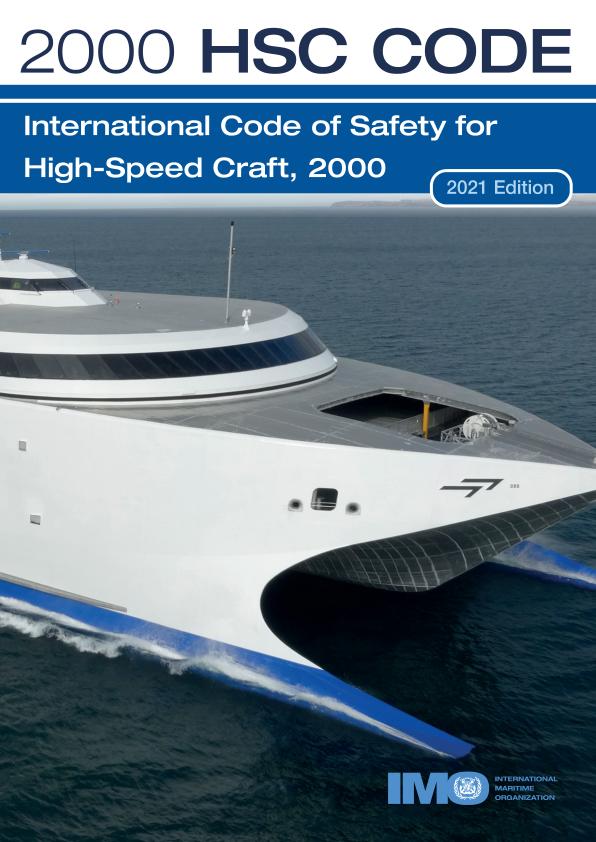
2000 HSC Code
show More to view fulltext, buy and share links for:2000 HSC Code show Less to hide fulltext, buy and share links for: 2000 HSC CodeThe International Code of Safety for High-Speed Craft, 2000 (2000 HSC Code) applies to high-speed craft that are involved in international voyages and for which the keels were laid after 1 January 1996. The 2000 HSC Code applies to craft for which the keels were laid, or which were at a similar stage of construction, on or after 1 July 2002. The application of both HSC Codes is mandatory under chapter X of the SOLAS Convention.
-
-
-
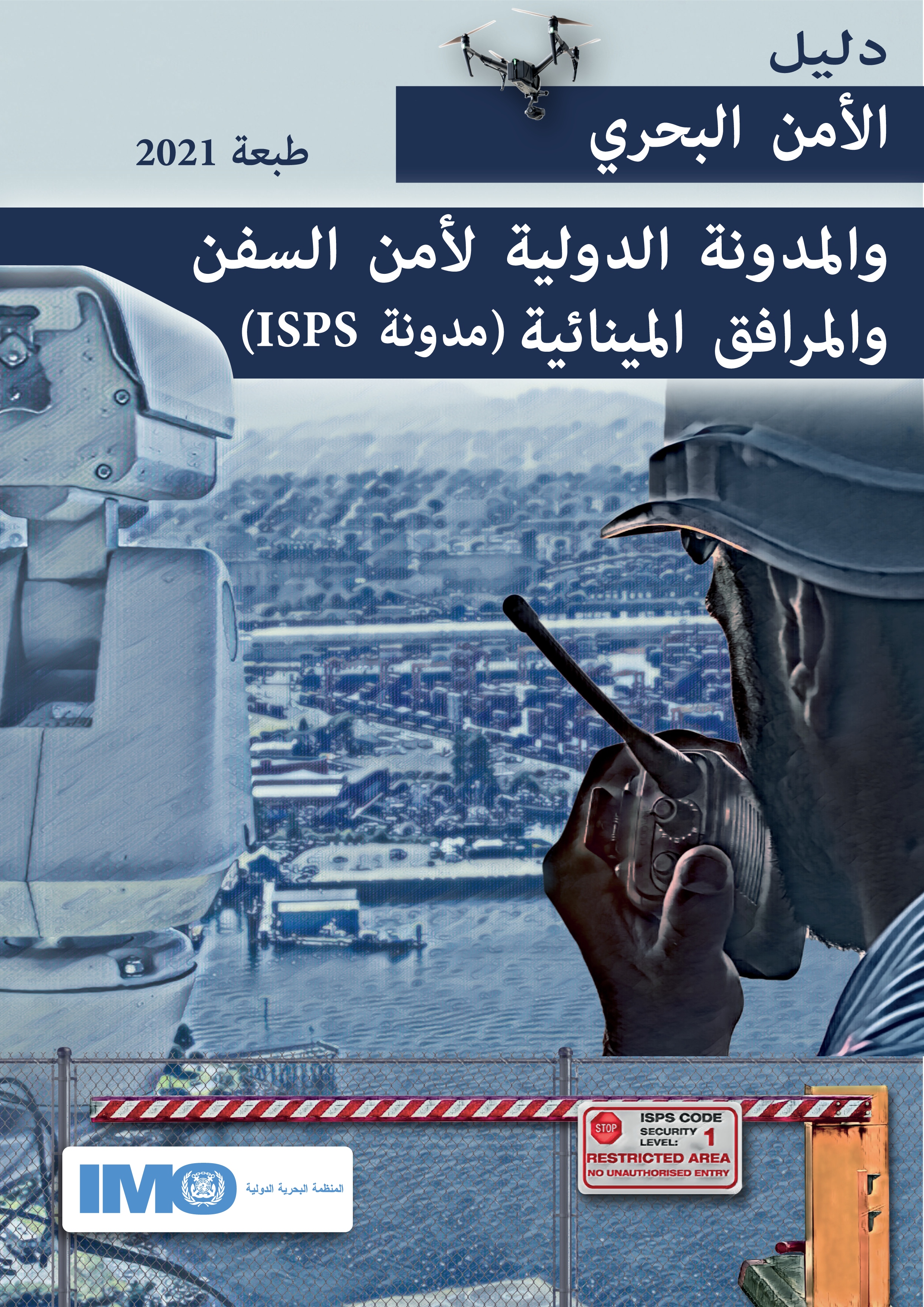
دليل الأمن البحري والمدونة الدولية لأمن السفن والمرافق المينائية (ISPS مدونة )
show More to view fulltext, buy and share links for:دليل الأمن البحري والمدونة الدولية لأمن السفن والمرافق المينائية (ISPS مدونة ) show Less to hide fulltext, buy and share links for: دليل الأمن البحري والمدونة الدولية لأمن السفن والمرافق المينائية (ISPS مدونة )أُعِدَّ هذا الدليل من أجل جمع مواد المنظمة البحرية الدولية المتعلّقة بالأمن في دليل مرشد سهل القراءة إلى الفصل 2-XI من اتفاقية سولاس والمدونة الدولية لأمن السفن والمرافق المينائية (مدونة ISPS ) بغية مساعدة الدول على تعزيز الأمن البحري، من خلال وضع الإطار القانوني اللازم والممارسات والتدابير الإدارية المتصلة بذلك، وتأمين الموارد المادية والبشرية والتقنية الضرورية.
والقصد من هذا الدليل مساعدة الحكومات المتعاقدة في اتفاقية سولاس على تنفيذ أحكام الفصل 2-XI من هذه الاتفاقية ومدونة ISPS والتحقّق من ذلك وضمان الامتثال لأحكامهما وإنفاذها، وأن يكون أيضاً عوناً ومرجعاً لَمنْ يشاركون في تنفيذ أنشطة بناء القدرات في ميدان الأمن البحري.
وفي هذه الطبعة الثانية من الإرشادات، تمّ إدماج الإرشادات التي اعتمدتها لجنة السلامة بشأن إعداد التشريعات في مجال الأمن البحري والتصدي للمخاطر السيبرانية، وتمّت مراجعة الإحالات إلى معلومات إضافية وتحديثها من أجل دعم تطبيق مدونة ISPS .
تصريح
-
-
-
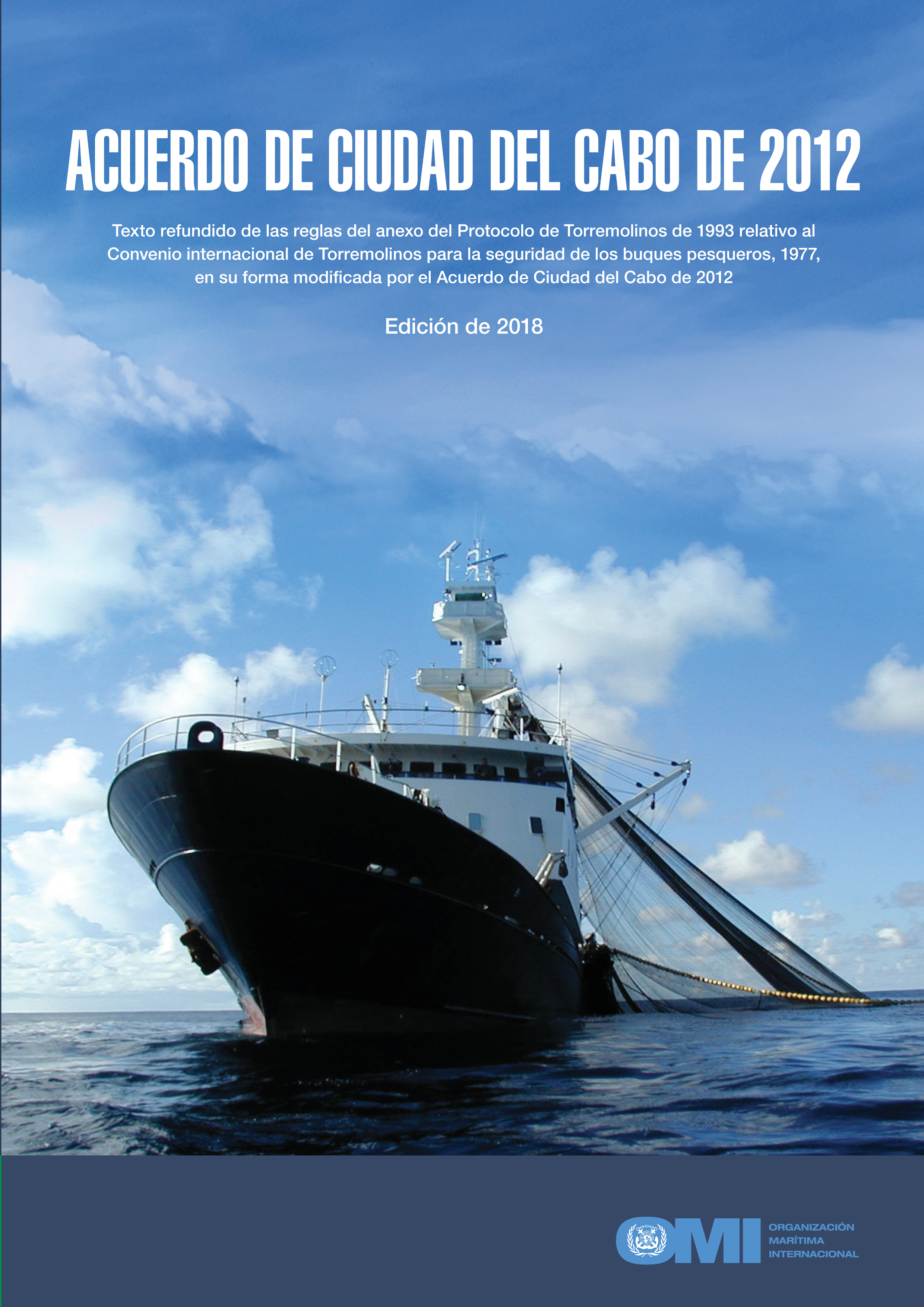
Acuerdo de Ciudad del Cabo de 2012
show More to view fulltext, buy and share links for:Acuerdo de Ciudad del Cabo de 2012 show Less to hide fulltext, buy and share links for: Acuerdo de Ciudad del Cabo de 2012El Acuerdo de Ciudad del Cabo de 2012 sobre la implantación de las disposiciones del Protocolo de Torremolinos de 1993 relativo al Convenio internacional de Torremolinos para la seguridad de los buques pesqueros, 1977 (el Acuerdo) fue adoptado por la Conferencia internacional sobre la seguridad de los buques pesqueros, celebrada del 9 al 11 de octubre de 2012 en Ciudad del Cabo (Sudáfrica), bajo los auspicios de la Organización Marítima Internacional (OMI), como resultado de la ardua labor realizada y los intensos debates mantenidos a lo largo de cinco años.
La seguridad de los pescadores y de los buques de pesca forma parte integrante del mandato de la OMI, sin embargo, desde una perspectiva mundial, el sector pesquero no cuenta con un historial de seguridad aceptable; y aunque varios factores han contribuido a ello, no hay duda que la falta de un regimen normativo vinculante a nivel internacional ha desempeñado un papel significante en la situación actual. En este contexto, ni el Convenio internacional de Torremolinos para la seguridad de los buques pesqueros, 1977, ni el Protocolo de Torremolinos, adoptado en 1993, llegaron a entrar en vigor debido a varias restricciones de índole técnica y jurídica. El Acuerdo supuso la renovación de las disposiciones de entrada en vigor del Protocolo de Torremolinos de 1993, y se espera que desempeñe una función importante en la mejora de las normas de seguridad y la reducción de la pérdida de vidas humanas en el sector de la pesca.
El Acuerdo de Ciudad del Cabo de 2012 entrará en vigor 12 meses después de la fecha en que por lo menos 22 Estados que tengan como mínimo 3 600 buques pesqueros de eslora igual o superior a 24 m que operen en alta mar en total hayan manifestado su consentimiento en obligarse por él.
-
-
-
Advanced Training for Masters, Officers, Ratings and Other Personnel on Ships Subject to the IGF Code
show More to view fulltext, buy and share links for:Advanced Training for Masters, Officers, Ratings and Other Personnel on Ships Subject to the IGF Code show Less to hide fulltext, buy and share links for: Advanced Training for Masters, Officers, Ratings and Other Personnel on Ships Subject to the IGF CodeThis course comprises an advanced training programme and qualification for personnel with immediate responsibility for the care and use of fuels and fuel systems on ships subject to the IGF Code, and builds upon the learning outcomes of the basic course. The course addresses trainees’ duties to apply a safety culture on board and be familiar with the properties of liquefied gas fuels, take precautions to prevent hazards, apply health and safety precautions and Fire safety measures, respond to emergencies, prevent pollution of the environment, and monitor and control compliance with legislative requirements.
-
-
-
Automatic Identification Systems (AIS)
show More to view fulltext, buy and share links for:Automatic Identification Systems (AIS) show Less to hide fulltext, buy and share links for: Automatic Identification Systems (AIS)This course provides information on the generic use of AIS, and is designed for officers in charge of a navigational watch on ships that are fitted with such equipment. Its main aims are to increase safety and security and to protect the environment by giving instruction on the understanding and safe use of such systems, including illustrations of dangerous or improper use.
This model course aims to meet the mandatory minimum requirements for knowledge, understanding and proficiency in table A-II/1 of the STCW Code and takes into account all relevant IMO resolutions and guidelines on AIS available at the time the model course was prepared.
-
-
-
Basic Training for Masters, Officers, Ratings and Other Personnel on Ships Subject to the IGF Code
show More to view fulltext, buy and share links for:Basic Training for Masters, Officers, Ratings and Other Personnel on Ships Subject to the IGF Code show Less to hide fulltext, buy and share links for: Basic Training for Masters, Officers, Ratings and Other Personnel on Ships Subject to the IGF CodeThis course gives practical guidance, training and basic qualifications for seafarers responsible for the care and use of, and in-emergency response to, the fuel on board ships subject to the International Code of Safety for Ships using Gases or other Low-flashpoint Fuels (IGF Code). It contains exercises structured around the safe operation of ships, their installations of systems for propulsion machinery and auxiliary power generation machinery using gas or other low-flashpoint fuel.
-
-
-
Electro-Technical Rating
show More to view fulltext, buy and share links for:Electro-Technical Rating show Less to hide fulltext, buy and share links for: Electro-Technical RatingThe aim of this model course is to meet the mandatory minimum standards of competence for seafarers as electro-technical ratings, in the following functions: electrical, electronic and control engineering; maintenance and repair; and controlling the operation of the ship and care for persons on board, at the support level specified in table A-III/7 of the STCW Code.
-
-
-
Formación Avanzada para Buques que Operen en Aguas Polares
show More to view fulltext, buy and share links for:Formación Avanzada para Buques que Operen en Aguas Polares show Less to hide fulltext, buy and share links for: Formación Avanzada para Buques que Operen en Aguas PolaresThis “advanced” course provides training to navigation officers to operate ships in Polar waters and to address those additional provisions deemed necessary for consideration beyond existing requirements of the SOLAS and MARPOL Conventions, in order to take into account the climatic conditions of Polar waters and to meet appropriate standards of Maritime safety and pollution prevention.
-