


Navigation and communications

Collection Contents
1 - 20 of 38 results
-
-
COLREG
show More to view fulltext, buy and share links for:COLREG show Less to hide fulltext, buy and share links for: COLREGAl hacer clic en el botón “Read” en esta página, accederá al PDF del libro completo. Para acceder a la versión de texto completo y a los PDF de los capítulos individuales, haga clic en la pestaña “Chapters” y seleccione el capítulo que desea leer.
La presente edición del Convenio sobre el Reglamento Internacional para Prevenir los Abordajes, 1972 (COLREG 1972) contiene el texto del Convenio refundido con todas las enmiendas adoptadas por el Comité de Seguridad Marítima y las resoluciones adoptadas por la Asamblea de la Organización Marítima Internacional, incluidas las últimas enmiendas de la resolución A.1085(28), que entraron en vigor el 1 de enero de 2016.
-
-
-
COLREG
show More to view fulltext, buy and share links for:COLREG show Less to hide fulltext, buy and share links for: COLREGEn cliquant sur le bouton « Read » de cette page, vous accéderez au PDF de l’ouvrage complet. Pour accéder à la version en texte intégral ainsi qu’aux PDF des chapitres individuels, cliquez sur l’onglet « Chapters » et sélectionnez le chapitre que vous souhaitez consulter.
La présente édition de la Convention sur le Règlement international de 1972 pour prévenir les abordages en mer (COLREG) contient le texte récapitulatif de la Convention de 1972, tous les amendements adoptés par le Comité de la sécurité maritime et les résolutions adoptées par l’Assemblée de l’Organisation maritime internationale, y compris les derniers amendements de la résolution A.1085(28), qui est entrée en vigueur le 1er janvier 2016.
-
-
-
COLREG
show More to view fulltext, buy and share links for:COLREG show Less to hide fulltext, buy and share links for: COLREGBy clicking on the "Read" button on this page you will be accessing the PDF of the full book. To access the Full-Text version and PDFs of the individual chapters, click on the “Chapters” tab and select the chapter you would like to read.
This edition of the Convention on the International Regulations for Preventing Collisions at Sea, 1972 (COLREG 1972) contains the consolidated text of the 1972 Convention and all amendments adopted by the Maritime Safety Committee and resolutions adopted by the Assembly of the International Maritime Organization, including the latest amendments from resolution A.1085(28) which entered into force on 1 January 2016.
-
-
-
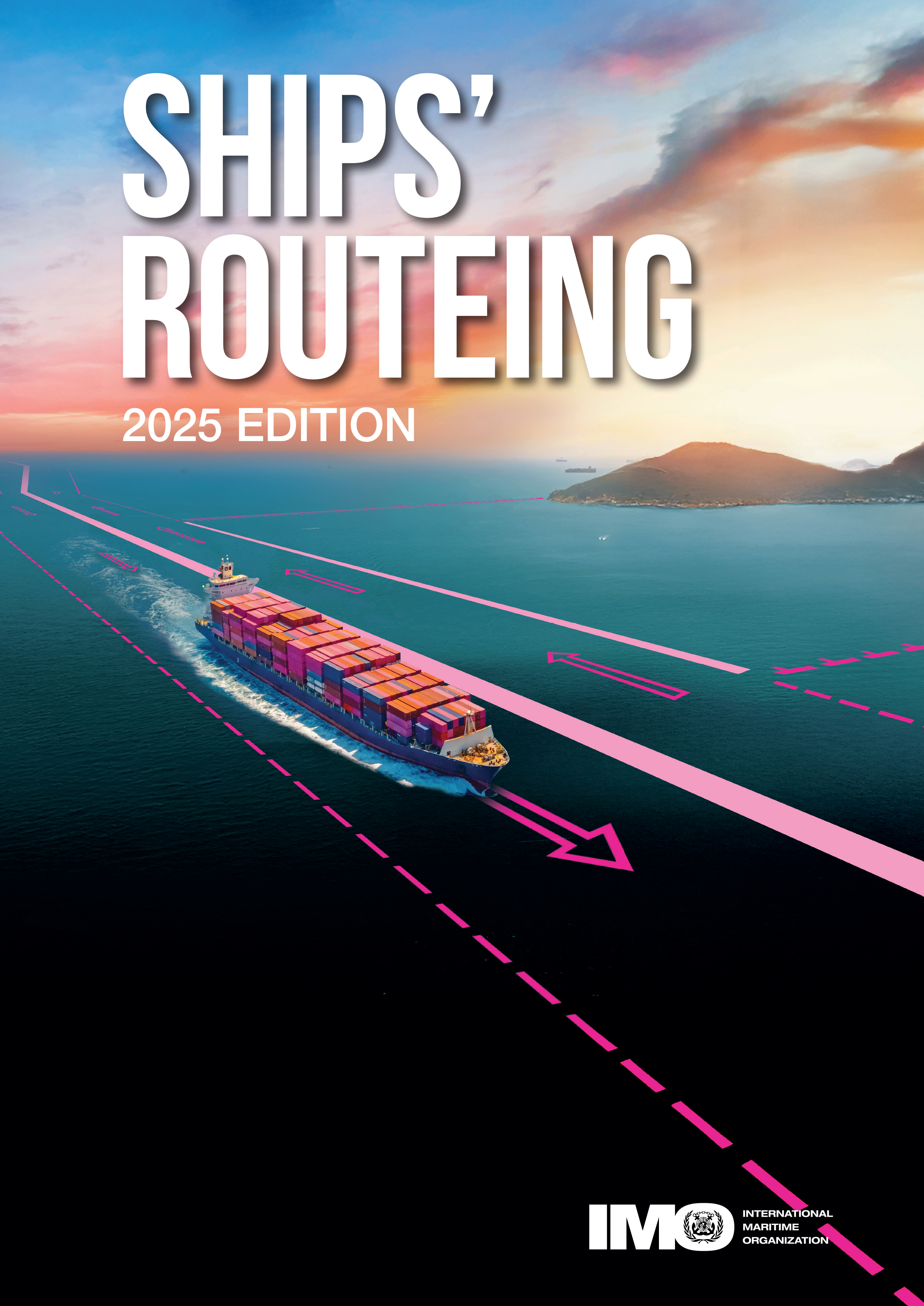
Ships’ Routeing
show More to view fulltext, buy and share links for:Ships’ Routeing show Less to hide fulltext, buy and share links for: Ships’ RouteingBy clicking on the "Read" button on this page you will be accessing the PDF of the full book. To access the Full-Text version and PDFs of the individual chapters, click on the “Chapters” tab and select the chapter you would like to read.
Both the safety of shipping and the cleanliness of oceans are promoted in many ways, one of which is the continuing development of routeing measures to organize the navigation of vessels and to monitor their progress. This publication presents individual descriptions of the following routeing measures:
- traffic separation schemes and inshore
- traffic zones
- deep-water routes
- areas to be avoided
- no anchoring areas
- other routeing measures, such as recommended tracks, two-way routes and recommended directions of traffic flow associated rules and recommendations on navigation
- archipelagic sea lanes
- ship reporting systems
This edition incorporates routeing measures that have been adopted before September 2025.
-
-
-
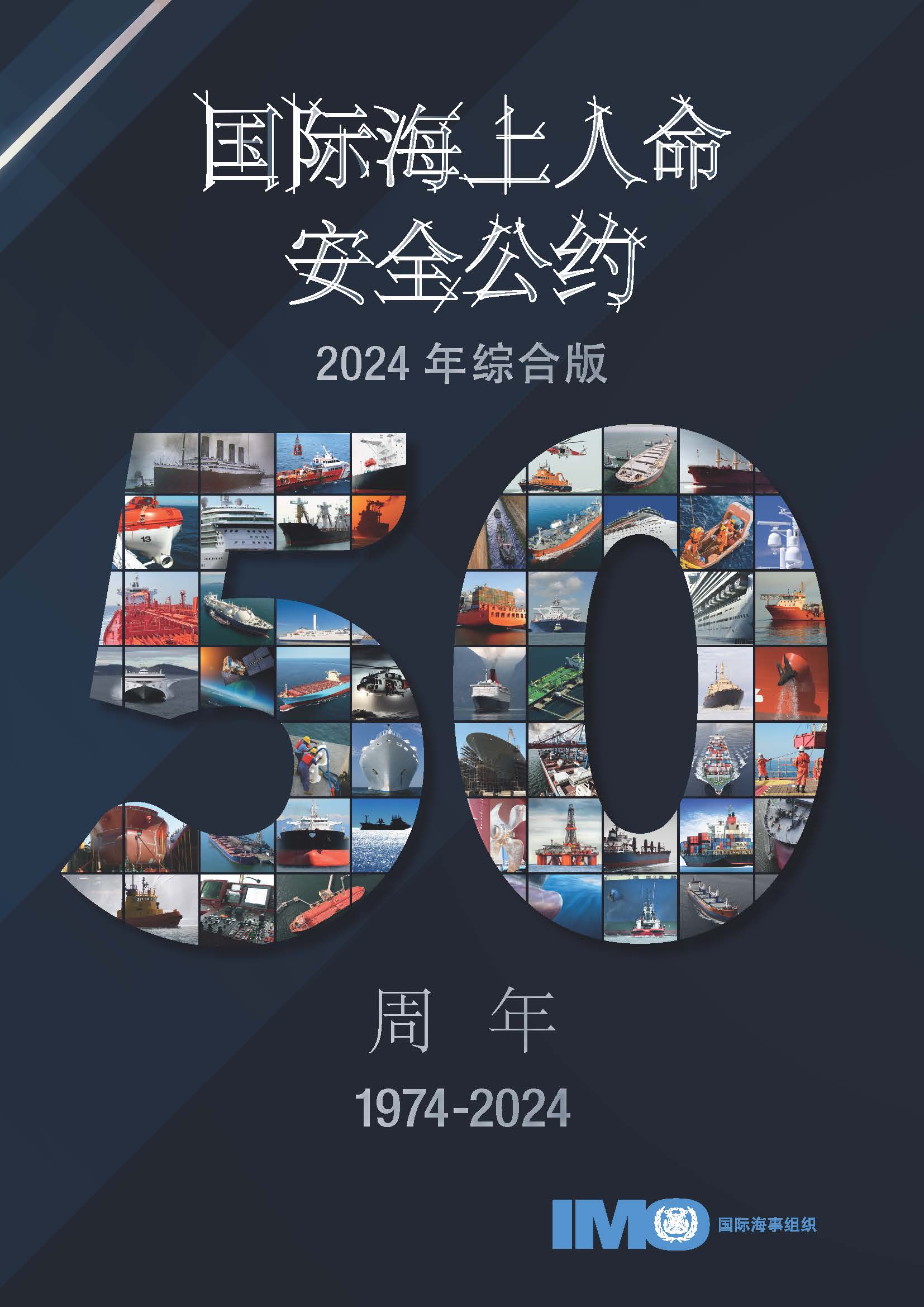
国际海上人命安全公约
show More to view fulltext, buy and share links for:国际海上人命安全公约 show Less to hide fulltext, buy and share links for: 国际海上人命安全公约在所有涉及海上安全的国际公约中,最重要的当属《国际海上人命安全公约》(简称《安全公约》),该公约涵盖了一系列旨在提升航运安全的措施。
该公约也是同类公约中历史最悠久的公约之一:首个版本于1914年泰坦尼克号沉没、造成1500多人丧生后通过。此后,《安全公约》又经历了四次修订。现行版本于1974年通过,并于1980年生效。本出版物旨在纪念《1974年安全公约》通过50周年,该公约是一份重要的国际海上安全文书。
本出版物收录了该公约、其《1988年议定书》以及2024年7月1日或之前生效的所有修正案的综合文本。此外,本版本还收录了海上安全委员会批准的《安全公约》规则的统一解释。
-
-
-
Restricted Operator’s Certificate for the Global Maritime Distress and Safety System (GMDSS)
show More to view fulltext, buy and share links for:Restricted Operator’s Certificate for the Global Maritime Distress and Safety System (GMDSS) show Less to hide fulltext, buy and share links for: Restricted Operator’s Certificate for the Global Maritime Distress and Safety System (GMDSS)This course aims to facilitate training that meets the mandatory minimum standards of competence and relevant requirements in the restricted operator's certificate for the Global Maritime Distress and Safety System (GMDSS). This is in accordance with the STCW Convention and Code, the Radio Regulations, and the STCW-F Convention and Code.
-
-
-
General Operator’s Certificate for the Global Maritime Distress and Safety System (GMDSS)
show More to view fulltext, buy and share links for:General Operator’s Certificate for the Global Maritime Distress and Safety System (GMDSS) show Less to hide fulltext, buy and share links for: General Operator’s Certificate for the Global Maritime Distress and Safety System (GMDSS)This course aims to facilitate training that meets the mandatory minimum standards of competence and relevant requirements in general operator's certificate for the Global Maritime Distress and Safety System (GMDSS). This is in accordance with the STCW Convention and Code, the Radio Regulations, and the STCW-F Convention and Code.
-
-
-
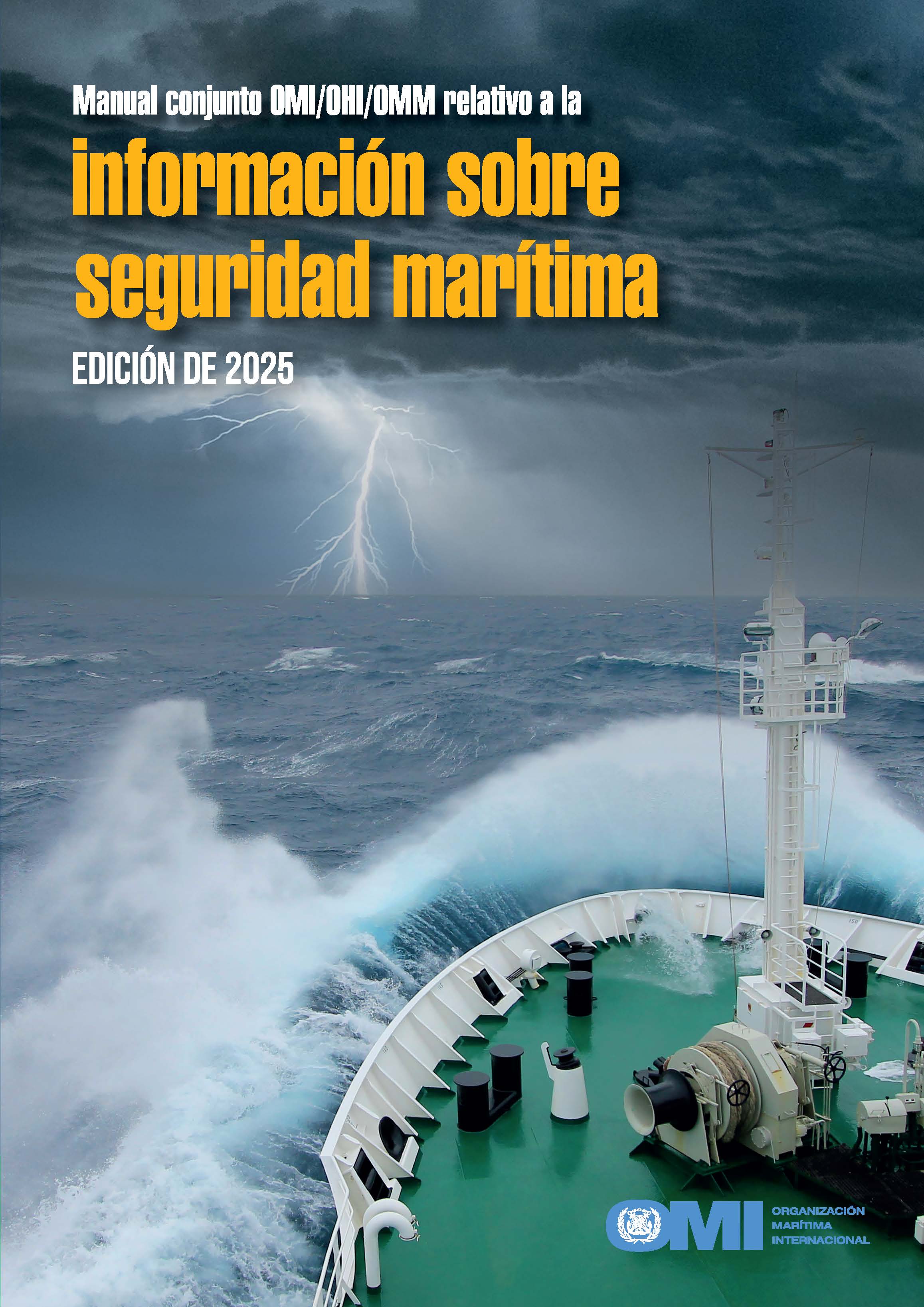
Manual conjunto OMI/OHI/OMM relativo a la información sobre securidad marítima
show More to view fulltext, buy and share links for:Manual conjunto OMI/OHI/OMM relativo a la información sobre securidad marítima show Less to hide fulltext, buy and share links for: Manual conjunto OMI/OHI/OMM relativo a la información sobre securidad marítimaEl presente manual es una guía práctica para la preparación de mensajes relacionados con la información sobre seguridad marítima y la diseminación de avisos náuticos y/o pronósticos y avisos meteorológicos en el marco del Sistema mundial de socorro y seguridad marítimos (SMSSM).
-
-
-
Manuel conjoint OMI/OHI/OHM sur les renseignements sur la sécurité maritime
show More to view fulltext, buy and share links for:Manuel conjoint OMI/OHI/OHM sur les renseignements sur la sécurité maritime show Less to hide fulltext, buy and share links for: Manuel conjoint OMI/OHI/OHM sur les renseignements sur la sécurité maritimeLe présent Manuel constitue un guide pratique pour la préparation de messages relatifs aux renseignements sur la sécurité maritime et la diffusion d'avertissements de navigation et/ou de prévisions ou d'avertissements météorologiques dans le cadre du Système mondial de détresse et de sécurité en mer (SMDSM).
-
-
-
Joint IMO/IHO/WMO Manual on Maritime Safety Information
show More to view fulltext, buy and share links for:Joint IMO/IHO/WMO Manual on Maritime Safety Information show Less to hide fulltext, buy and share links for: Joint IMO/IHO/WMO Manual on Maritime Safety InformationBy clicking on the "Read" button on this page you will be accessing the PDF of the full book. To access the Full-Text version and PDFs of the individual chapters, click on the “Chapters” tab and select the chapter you would like to read.
This Manual provides a practical guide for the preparation of messages related to maritime safety information and the dissemination of navigational warnings and/or meteorological forecasts and warnings under the Global Maritime Distress and Safety System.
-
-
-
Operational use of integrated bridge systems including integrated navigation systems
show More to view fulltext, buy and share links for:Operational use of integrated bridge systems including integrated navigation systems show Less to hide fulltext, buy and share links for: Operational use of integrated bridge systems including integrated navigation systemsThis course provides training in the operational use of integrated bridge systems (IBS) and integrated navigational systems (INS). Designed for officers in charge of a navigational watch, the course enhances safety and environmental protection by instructing on the correct use of these systems and highlighting potential risks from improper use. Flexible in design, it can be adapted to trainees’ experience levels, ensuring comprehensive understanding. This course is a key resource for improving navigation safety standards and ensuring compliance with international maritime regulations.
-
-
-
Convention SOLAS
show More to view fulltext, buy and share links for:Convention SOLAS show Less to hide fulltext, buy and share links for: Convention SOLASDe toutes les conventions internationales ayant trait à la sécurité maritime, la plus importante est la Convention internationale de 1974 pour la sauvegarde de la vie humaine en mer, mieux connue sous le nom de Convention SOLAS, qui couvre une large gamme de mesures destinées à améliorer la sécurité de la navigation.
La Convention est aussi la plus ancienne : la première version fut adoptée en 1914 à la suite du naufrage du Titanic qui entraîna la perte de plus de 1 500 vies humaines. Par la suite, quatre nouvelles versions de la Convention SOLAS ont été élaborées. La version actuelle a été adoptée en 1974 et est entrée en vigueur en 1980. La présente publication commémore le 50e anniversaire de l’adoption de la Convention SOLAS de 1974, un instrument international de premier plan en matière de sécurité maritime.
La présente édition reproduit le texte récapitulatif de la Convention, son Protocole de 1988 et tous les amendements entrés en vigueur au plus tard le 1er juillet 2024. En outre, cette édition comprend les Interprétations uniformes aux règles de la Convention SOLAS, qui ont été adoptées par le Comité de la sécurité maritime.
-
-
-
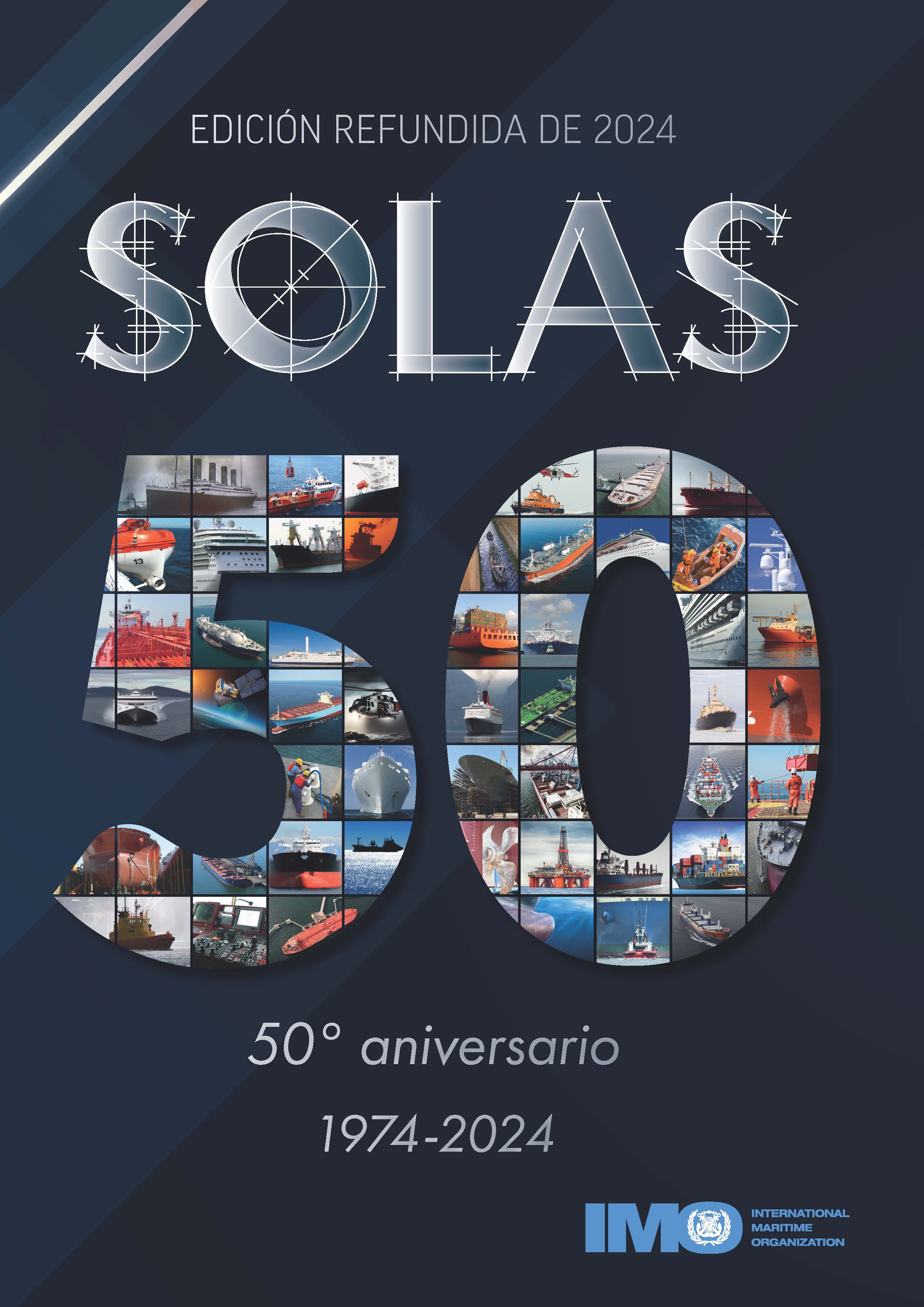
SOLAS
show More to view fulltext, buy and share links for:SOLAS show Less to hide fulltext, buy and share links for: SOLASDe todos los convenios internacionales que tratan de la seguridad marítima, el más importante es el Convenio internacional para la seguridad de la vida humana en el mar, más conocido como Convenio SOLAS, que abarca una gran variedad de medidas destinadas a acrecentar la seguridad de la navegación.
El Convenio es también uno de los más antiguos en su género: la primera versión se adoptó en 1914 tras el hundimiento del Titanic, que costó la vida a más de 1 500 personas. Desde entonces ha habido cuatro versiones más. La presente versión se adoptó en 1974 y entró en vigor en 1980. En esta edición se conmemora el 50º aniversario de la adopción del Convenio SOLAS 1974, un instrumento internacional prominente para la seguridad marítima.
A fin de facilitar la consulta de todas las prescripciones del Convenio SOLAS aplicables a partir del 1 de julio de 2024, esta edición contiene el texto refundido del Convenio, su Protocolo de 1988 y todas las enmiendas en vigor en esa fecha. Asimismo, la presente edición contiene las interpretaciones unificadas de las reglas del Convenio SOLAS, que fueron adoptadas por el Comité de Seguridad Marítima.
-
-
-
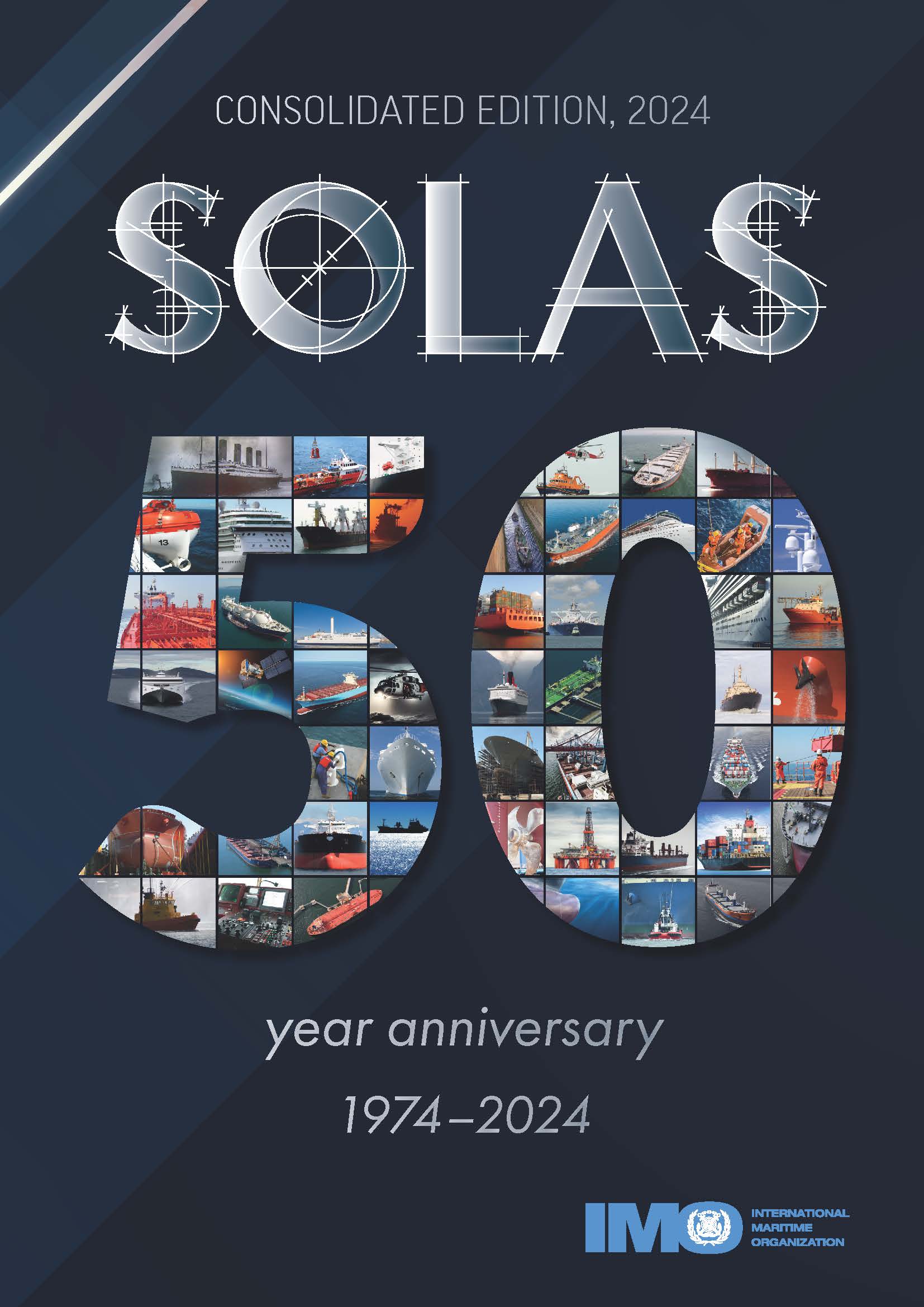
SOLAS
show More to view fulltext, buy and share links for:SOLAS show Less to hide fulltext, buy and share links for: SOLASBy clicking on the "Read" button on this page you will be accessing the PDF of the full book. To access the Full-Text version and PDFs of the individual chapters, click on the “Chapters” tab and select the chapter you would like to read.
Of all the international conventions dealing with maritime safety, the most important is the International Convention for the Safety of Life at Sea, better known as SOLAS, which covers a wide range of measures designed to improve the safety of shipping.
The Convention is also one of the oldest of its kind: the first version was adopted in 1914 following the sinking of the Titanic with the loss of more than 1,500 lives. Since then, there have been four more versions of SOLAS. The present version was adopted in 1974 and entered into force in 1980. This publication commemorates the 50th anniversary of the adoption of the 1974 SOLAS Convention, a prominent international instrument for maritime safety.
This edition of the publication presents a consolidated text of the Convention, its Protocol of 1988 and all amendments that have entered into force on or before 1 July 2024. Additionally, this edition includes the unified interpretations of SOLAS regulations approved by the Maritime Safety Committee.
-
-
-
GMDSS Manual
show More to view fulltext, buy and share links for:GMDSS Manual show Less to hide fulltext, buy and share links for: GMDSS ManualThe GMDSS Manual provides, in a single comprehensive publication, an explanation of the principles upon which the GMDSS is based, including the radiocommunication requirements and recommendations for its implementation, the operational performance standards and technical specifications to be met by GMDSS equipment, and the procedures for and method of operation of the various radio services that form the GMDSS and the Master Plan for the GMDSS.
The 2024 edition contains the latest information emanating from the IMO project on the modernization of the GMDSS, which was completed in 2022 and led to the overall revision of relevant SOLAS regulations and many other mandatory and non-mandatory IMO instruments related to the GMDSS. This edition also includes:
- An introduction to the GMDSS, including a description of the GMDSS concept;
- A description of the components of the GMDSS, carriage requirements and operational procedures;
- Detailed information regarding terrestrial and satellite-based radiocommunication systems used in the GMDSS;
- Information concerning ongoing work at IMO related to future radiocommunication systems and services;
- Information on promulgation of Maritime safety information and Search and rescue related information, including NAVTEX and enhanced group call services;
- Excerpts from the relevant SOLAS regulations for the GMDSS;
- Supporting IMO resolutions relevant to the GMDSS;
- The current GMDSS Master Plan, giving the details of the coastal infrastructure and services provided by Member States; and
- Extracts from the ITU-R Radio Regulations giving the radio regulatory background.
The Manual is intended for use by ship personnel, shore operators, trainers, administrations, regulators and anyone concerned with ship radiocommunications.
-
-
-
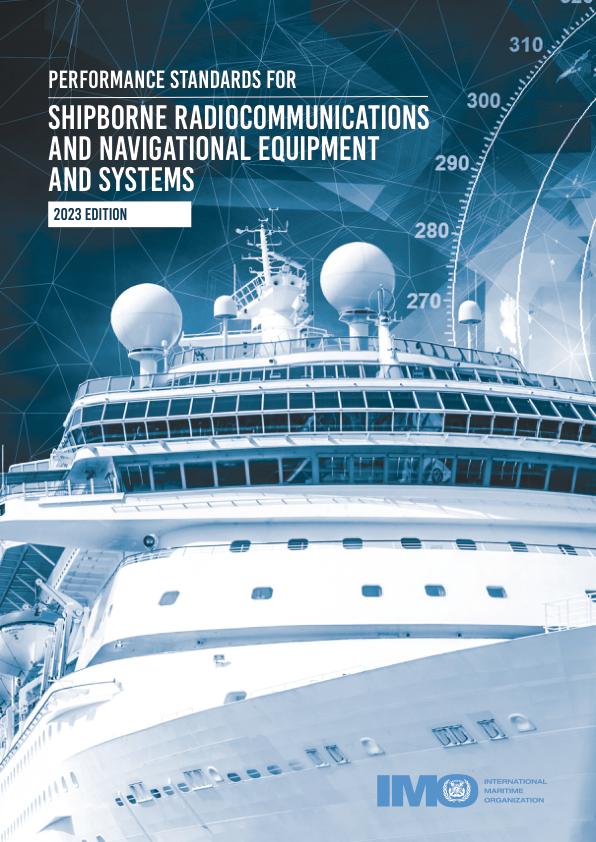
Performance Standards for Shipborne Radiocommunications and Navigational Equipment and Systems
show More to view fulltext, buy and share links for:Performance Standards for Shipborne Radiocommunications and Navigational Equipment and Systems show Less to hide fulltext, buy and share links for: Performance Standards for Shipborne Radiocommunications and Navigational Equipment and SystemsAs a result of the modernization of the Global Maritime Distress and Safety System (GMDSS) in 2022, several performance standards have been revised, consolidated, revoked or newly adopted. Most of these performance standards will be implemented as from 1 January 2024, in line with the entry into force of the amendments to SOLAS chapter IV and other related instruments.
The latest developments under SOLAS chapter V include amendments to the performance standards for shipborne voyage data recorders and simplified voyage data recorders, and revised performance standards for electronic chart display and information systems, which will introduce new IHO S-100 product specifications.
The present publication incorporates all performance standards for shipborne radiocommunications and navigational equipment and systems, including revisions or amendments thereto adopted up to June 2023.
-
-
-
Bridge Resource Management
show More to view fulltext, buy and share links for:Bridge Resource Management show Less to hide fulltext, buy and share links for: Bridge Resource ManagementThis model course is practical and theoretical, and consists of a series of exercises performed on a ship handling simulator. Classroom lectures, to provide the necessary theoretical background for the exercises, are included. Particular items dealt with in these lectures are illustrated either by including them as part of an exercise or by a separate simulator demonstration. Bridge teamwork is dealt with either as interactive Computer Based Training (CBT) or lecture.
-
-
-
Manual Navtex
show More to view fulltext, buy and share links for:Manual Navtex show Less to hide fulltext, buy and share links for: Manual NavtexNAVTEX es un servicio internacional automatizado de impresión directa para la difusión de radioavisos náuticos y meteorológicos y otros mensajes de información urgente dirigida a los buques. Es el método principal utilizado para transmitir información sobre seguridad marítima de conformidad con las disposiciones del Convenio internacional para la seguridad de la vida humana en el mar, 1974. Se creó para disponer de un medio económico, sencillo y automático de recibir información sobre seguridad marítima y alertas de búsqueda y salvamento en los buques que naveguen en alta mar y en aguas costeras. En esta edición se incluye el procedimiento para la retirada de las estaciones NAVTEX existentes, si un Estado costero decide hacerlo.
El presente manual está destinado a las Administraciones marítimas, la gente de mar, los propietarios de buques y otras partes interesadas que participan en la preparación, la transmisión y la recepción de información sobre seguridad marítima.
La edición de 2023 del Manual entró en vigor el 1 de enero de 2023 y contiene las Normas de funcionamiento revisadas para la recepción de información sobre seguridad marítima e información relacionada con la búsqueda y el salvamento en ondas hectométricas (NAVTEX) y ondas decamétricas (resolución MSC.508(105)) y el texto revisado de los Criterios aplicables cuando se provea un servicio NAVTEX (resolución MSC.509(105)).
-
-
-
Manuel NAVTEX
show More to view fulltext, buy and share links for:Manuel NAVTEX show Less to hide fulltext, buy and share links for: Manuel NAVTEXLe service NAVTEX est un service automatique d’impression directe destiné à être utilisé dans le monde entier pour l’émission d’avertissements concernant la navigation et la météorologie et d’informations urgentes à l’intention des navires. Il s’agit de la principale méthode utilisée pour la diffusion des renseignements sur la sécurité maritime et d’alertes de recherche et de sauvetage en cas d’incident, conformément aux dispositions de la Convention internationale de 1974 pour la sauvegarde de la vie humaine en mer. II a été mis au point pour que les navires puissent disposer d’un moyen simple, peu coûteux et automatique leur permettant de recevoir à bord, lorsqu’ils naviguent en mer et dans les eaux côtières, des renseignements sur la sécurité maritime.
La présente édition comprend notamment la procédure de retrait des stations NAVTEX existantes, si un État côtier en décide ainsi.
Le présent Manuel a été établi essentiellement à l’intention des Administrations maritimes, des gens de mer, des armateurs et d’autres parties s’occupant de la mise au point, de la diffusion et de la réception de renseignements sur la sécurité maritime.
L’édition de 2023 du Manuel est entrée en vigueur le 1er janvier 2023 et comprend le texte révisé des Normes de fonctionnement pour la réception de renseignements sur la sécurité maritime et de renseignements relatifs à la recherche et au sauvetage sur ondes hectométriques (NAVTEX) et sur ondes décamétriques (résolution MSC.508(105)) ainsi que le texte révisé des Critères à appliquer pour assurer un service NAVTEX (résolution MSC.509(105), annexe 4).
-
-
-
NAVTEX Manual
show More to view fulltext, buy and share links for:NAVTEX Manual show Less to hide fulltext, buy and share links for: NAVTEX ManualNAVTEX is an international automated directprinting service for promulgation of Maritime safety information such as navigational warnings and meteorological information to ships. It is a principle method for broadcasting maritime safety information, and Search and rescue alerts when there is an incident, in accordance with the provisions of the International Convention for the Safety of Life at Sea, 1974. It has been developed to provide a low-cost, simple and automated means of receiving Maritime safety information on board ships at sea and in coastal waters. This edition includes, in particular, the procedure to withdraw existing NAVTEX stations, should a coastal State decide to do so.
This Manual is intended for use by maritime Administrations, seafarers, shipowners and others concerned with preparing, broadcasting and receiving Maritime safety information. The 2023 edition of the Manual came into effect on 1 January 2023 and includes the revised Performance standards for the reception of Maritime safety information and Search and rescue related information by MF (NAVTEX) and HF (resolution MSC.508(105)) and the revised Criteria for use when providing a NAVTEX service (resolution MSC.509(105), annex 4).
-