


Maritime safety
Collection Contents
51 - 100 of 133 results
-
-
Passenger Ship Crisis Management and Human Behaviour Training
show More to view fulltext, buy and share links for:Passenger Ship Crisis Management and Human Behaviour Training show Less to hide fulltext, buy and share links for: Passenger Ship Crisis Management and Human Behaviour TrainingThis model course aims to meet the mandatory minimum requirements for the training of personnel in crisis management during emergency situations on board Passenger ships. Trainees gain competence in passenger ship crisis management and human behaviour training in accordance with section A-V/2, paragraph 4 and table A-V/2-2 of the STCW Code, demonstrating the ability to organize shipboard emergency procedures; optimize the use of resources; control responses to emergencies; control passengers and other personnel during emergency situations; and establish and maintain effective communications.
-
-
-
Passenger Ship Crowd Management Training
show More to view fulltext, buy and share links for:Passenger Ship Crowd Management Training show Less to hide fulltext, buy and share links for: Passenger Ship Crowd Management TrainingThe model course is designed to provide trainees with knowledge and skills in managing crowds. This covers the mandatory competences and the required knowledge, understanding and proficiencies specified in paragraph 3 of section A-V/2 and table A-V/2-1 of the STCW Code. On completion, the trainee should be able to demonstrate the ability to contribute to the implementation of shipboard emergency plans and procedures to muster and evacuate passengers as well as assisting passengers en route to muster and embarkation stations.
-
-
-
Safety Training for Personnel Providing Direct Service to Passengers in Passenger Spaces
show More to view fulltext, buy and share links for:Safety Training for Personnel Providing Direct Service to Passengers in Passenger Spaces show Less to hide fulltext, buy and share links for: Safety Training for Personnel Providing Direct Service to Passengers in Passenger SpacesThis model course aims to meet the mandatory minimum requirements for the training of personnel providing direct service to passengers in passenger spaces on board Passenger ships specified in regulation V/2 and section A-V/2 of the STCW Code. On successful completion, trainees should be able to communicate with passengers during an emergency, demonstrate personal Life-saving appliances and embark and disembark passengers, in particular caring for those needing special assistance.
-
-
-
Security Awareness Training for Port Facility Personnel with Designated Security Duties
show More to view fulltext, buy and share links for:Security Awareness Training for Port Facility Personnel with Designated Security Duties show Less to hide fulltext, buy and share links for: Security Awareness Training for Port Facility Personnel with Designated Security DutiesThis model course is intended to provide the knowledge required for port facility personnel with designated security duties, such as guards, access control officers, training officers and relevant port facility managers, in connection with a Port Facility Security Plan (PFSP) to perform their duties in accordance with the requirements of SOLAS, chapter XI-2, the ISPS Code, the IMDG Code, the IMO/ILO Code of Practice on Security in Ports, and guidance contained in IMO MSC.1/Circ.1341 on Guidelines on Security-related training and familiarization for port facility personnel.
-
-
-
Use of Leadership and Managerial Skills
show More to view fulltext, buy and share links for:Use of Leadership and Managerial Skills show Less to hide fulltext, buy and share links for: Use of Leadership and Managerial SkillsSuccessful completion of this course enables seafarers to meet the mandatory minimum standards of competence in the use of leadership and managerial skills specified in Function: Controlling the operation of the ship and caring for persons on board at the management level in tables A-II/2 and A-III/2 of the STCW Code.
-
-
-
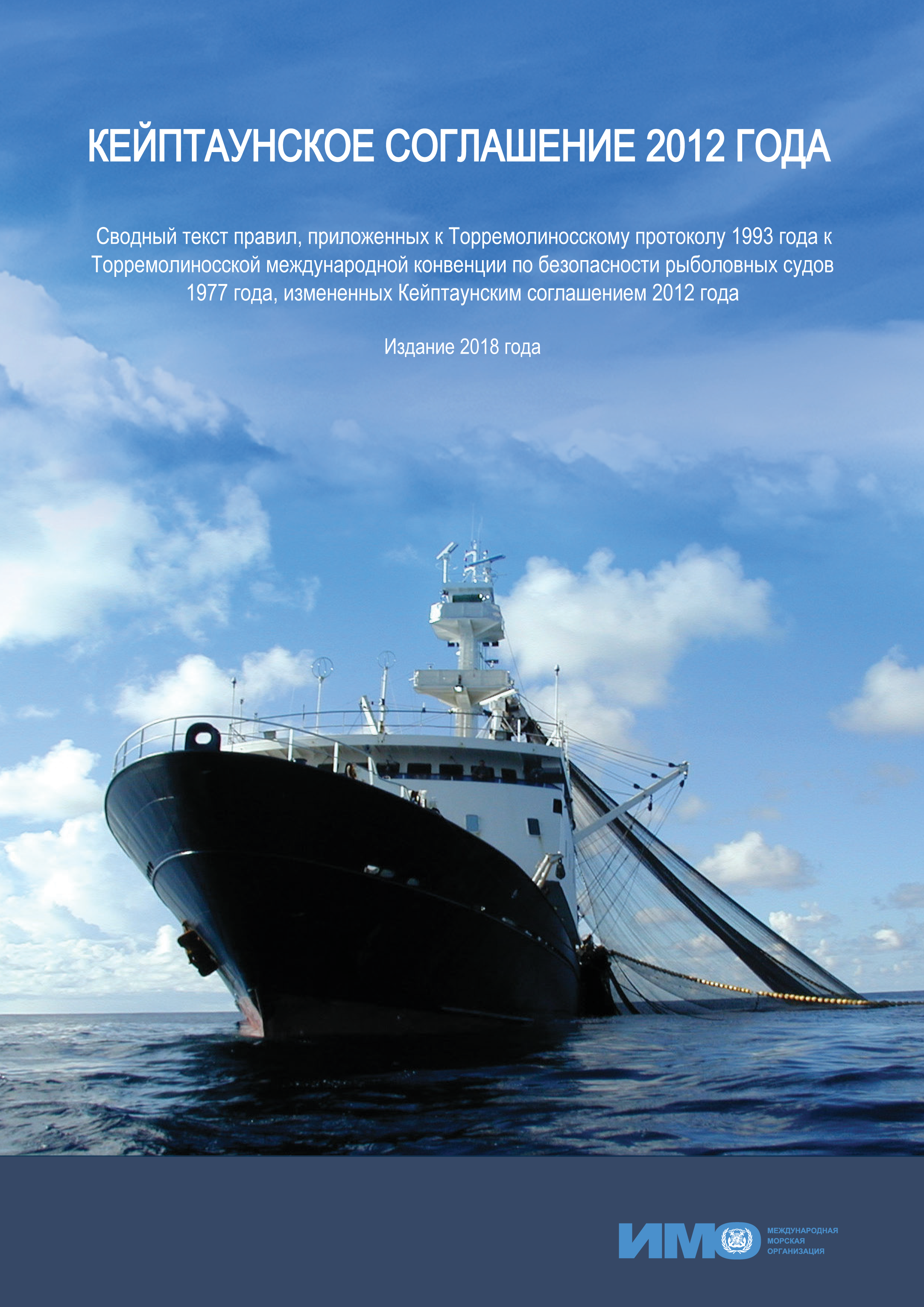
Кейптаунское Соглашение 2012 Года
show More to view fulltext, buy and share links for:Кейптаунское Соглашение 2012 Года show Less to hide fulltext, buy and share links for: Кейптаунское Соглашение 2012 ГодаРезультат упорной работы и интенсивных обсуждений в течение пятилетнего периода, Кейптаунское соглашение 2012 года об осуществлении положений Торремолиносского протокола 1993 года к Торремолиносской международной конвенции по безопасности рыболовных судов 1977 года (Соглашение) было принято Международной конференцией по безопасности рыболовных судов, которая состоялась 9-11 октября 2012 года в Кейптауне, Южная Африка, под эгидой Международной морской организации (ИМО).
Безопасность рыбаков и рыболовных судов составляет неотъемлемую часть компетенции ИМО, однако для рыболовной отрасли в глобальной перспективе не отмечены приемлемые показатели безопасности, и хотя свою роль в этом сыграли множество факторов, не остается сомнений в том, что на существующее положение дел серьезное влияние оказал факт отсутствия эффективного международного режима регулирования обязательного характера. В этом контексте необходимо отметить, что вследствие ряда затруднений технического и юридического характера ни Торремолиносская международная конвенция по безопасности рыболовных судов, принятая в 1977 году, ни Торремолиносский протокол 1993 года не вступили в силу. Соглашение представляет собой возобновленное обязательство о введении в действие положений Торремолиносского протокола 1993 года, оно должно сыграть важную роль в повышении стандартов безопасности и снижении количества случаев гибели в рыболовном секторе.
Кейптаунское соглашение 2012 года вступит в силу через 12 месяцев после даты, в которую не менее 22 государств, рыболовный флот которых в совокупности составляет не менее 3600 судов длиной 24 м и более, эксплуатирующихся в открытом море, выразят свое согласие на его обязательность для них.
-
-
-
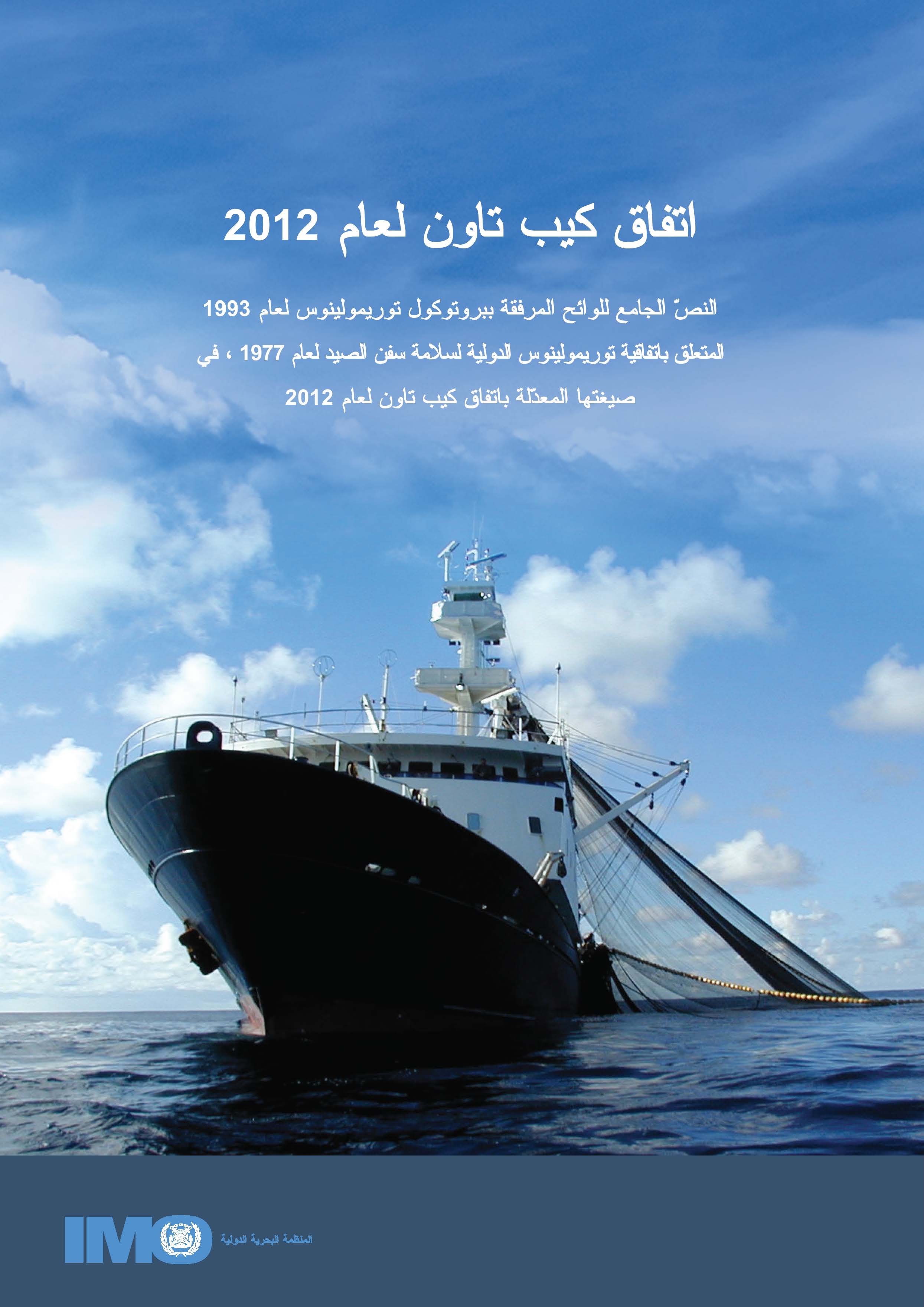
ﺍﺗﻔﺎﻕ ﻛﻴﺐ ﺗﺎﻭﻥ ﻟـﻌﺎﻡ 2012
show More to view fulltext, buy and share links for:ﺍﺗﻔﺎﻕ ﻛﻴﺐ ﺗﺎﻭﻥ ﻟـﻌﺎﻡ 2012 show Less to hide fulltext, buy and share links for: ﺍﺗﻔﺎﻕ ﻛﻴﺐ ﺗﺎﻭﻥ ﻟـﻌﺎﻡ 2012اعتُمِدَ اتفاق كيب تاون لعام 2012 بشأن تتفيذ أحكام بروتوكول توريمولينوس لعام 1993 المتعلق باتفاقية توريمولينوس الدولية لسلامة سفن الصيد لعام 1977 (الاتفاق) من قِبل المؤتمر الدولي بشأن سلامة سفن الصيد ، الذي عُقِدَ في الفترة من 9 إلى 11 تشرين الأول/أكتوبر 2012 ، في كيب تاون ، جنوب أفريقيا ، برعاية المنظمة البحرية الدولية (IMO) ، نتيجةَ عمل شاق ومناقشات مكثفة على مدى خمس سنوات .
وتشكّل سلامة الصيادين وسخن الصيد جزءاً لا يتجزأ من المهام الموكلة إلى المنظمة البحرية الدولية ؛ وعلى أي حال ، فإن قطاع صيد الأسماك لا يمتلك ، من منظور عالمي ، سجلاً مقبولاً للسلامة · وفي حين أنه قد يكون هناك عدد من العوامل اٍلتي أسهمت في ذلك ، ليس هناك أدنى شك في أن عدم وجود نظام قانوني ملزم دولياً قد لعب دورا كبيراً في الوضع الراهن . وفي هذا السياق ، لم تدخل اتفاقية توريمولينوس الدولية لسلامة سفن الصيد ، التي اعتُمِدَت في عام 1977 ، و لا بروتوكول توريمولينوس ، الذي اعتُمِدَ في عام 1993 ، حيّز التنفيذ نظراً لمجموعة متنوعة من القيود التقنية والقانونية . وما هذا الاتفاق سوى التزام متجدد بأن تدخل أحكام بروتوكول توريمولينوس لعام 1993 حيّز التنفيذ ، ومن المتوقع أن يقوم بدور هام في تحسين معايير السلامة والحد من الخسائر في الأرواح في قطاع صيد الأسماك .
ويسري مفعول اتفاق كيب تاون ن لعام 2012 بعد انقضاء 12 شهراً على تاريخ قيام ما لا يقل عن 22 دولة من الدول التي لا يقلّ مجموع عدد ما لديها من سفن صيد يبلغ طولها 24 متراً فأكثر وتعمل في أعالي البحار عن 3600 سفينة بالإعراب عن مو افقتها على الالتزام به .
-
-
-
Advanced Training for Ships Operating in Polar Waters
show More to view fulltext, buy and share links for:Advanced Training for Ships Operating in Polar Waters show Less to hide fulltext, buy and share links for: Advanced Training for Ships Operating in Polar WatersThis “advanced” course provides training to navigation officers to operate ships in Polar waters and to address those additional provisions deemed necessary for consideration beyond existing requirements of the SOLAS and MARPOL Conventions, in order to take into account the climatic conditions of Polar waters and to meet appropriate standards of Maritime safety and pollution prevention.
-
-
-
Assessment, Examination and Certification of Seafarers
show More to view fulltext, buy and share links for:Assessment, Examination and Certification of Seafarers show Less to hide fulltext, buy and share links for: Assessment, Examination and Certification of SeafarersThe model course includes introductory classroom instruction on the assessment, examination and certification of seafarers (in particular masters, chief engineers, deck and engineer officers), covering the provisions for training, assessment, examination and certification of masters, officers and ratings of the STCW Convention; the implementation of these provisions under national law; the selection of assessment methods; the organization of assessments, and the issue and control of certificates.
-
-
-
Basic Training for Ships Operating in Polar Waters
show More to view fulltext, buy and share links for:Basic Training for Ships Operating in Polar Waters show Less to hide fulltext, buy and share links for: Basic Training for Ships Operating in Polar WatersThis “basic” course provides training to navigation officers to operate ships in Polar waters and to address those additional provisions deemed necessary for consideration beyond existing requirements of the SOLAS and MARPOL Conventions, in order to take into account the climatic conditions of Polar waters and to meet appropriate standards of Maritime safety and pollution prevention.
-
-
-
Engine-Room Simulator
show More to view fulltext, buy and share links for:Engine-Room Simulator show Less to hide fulltext, buy and share links for: Engine-Room SimulatorThis model course is essentially a practical one, consisting of a series of exercises structured around the operation of a ship’s machinery installation and carried out in conjunction with an engine-room simulator.
-
-
-
Onboard Assessment
show More to view fulltext, buy and share links for:Onboard Assessment show Less to hide fulltext, buy and share links for: Onboard AssessmentThis course is primarily intended for any person conducting in-service assessment of competence of a seafarer on board. These would usually comprise senior shipboard officers (management level) but may also be suitable for shipboard personnel at operational level or experienced shore-based instructors with sufficient onboard expertise.
-
-
-
Ratings Forming Part of a Watch in a Manned Engine-room or Designated to Perform Duties in a Periodically Unmanned Engine-room
show More to view fulltext, buy and share links for:Ratings Forming Part of a Watch in a Manned Engine-room or Designated to Perform Duties in a Periodically Unmanned Engine-room show Less to hide fulltext, buy and share links for: Ratings Forming Part of a Watch in a Manned Engine-room or Designated to Perform Duties in a Periodically Unmanned Engine-roomThis course is principally intended for candidates for certification as ratings forming part of a watch in a manned engine-room or designated to perform duties in a periodically unmanned engine-room.
-
-
-
Ratings as Able Seafarer Deck
show More to view fulltext, buy and share links for:Ratings as Able Seafarer Deck show Less to hide fulltext, buy and share links for: Ratings as Able Seafarer DeckThe course is organized under four functions (Navigation; Cargo Handling and Stowage; Controlling the Operation of the Ship and Care for Persons on Board; and Maintenance and Repair) at the support level to cover the minimum standard of competence of ratings as able seafarer deck on ships of 500 gross tonnage or more. On successful completion of the training and assessment trainees should be competent to carry out safely the duties of ratings as able seafarer deck.
-
-
-
Training Course for Instructors
show More to view fulltext, buy and share links for:Training Course for Instructors show Less to hide fulltext, buy and share links for: Training Course for InstructorsThis course is designed to facilitate the delivery of training in the competence standards required by the STCW Convention. It will also provide a sound basis for the delivery of other training programmes.
-
-
-
International Health Regulations (2005)
show More to view fulltext, buy and share links for:International Health Regulations (2005) show Less to hide fulltext, buy and share links for: International Health Regulations (2005)Published by WHO, this third edition contains the first amendment to the IHR (2005): a revision to Annex 7 adopted by the Sixty-seventh World Health Assembly in 2014 that entered into force for all State Parties on 11 July 2016. This e-reader edition also updates Appendix 1 containing the list of IHR (2005) States Parties (to include Liechtenstein and South Sudan).
-
-
-
POLAR Code
show More to view fulltext, buy and share links for:POLAR Code show Less to hide fulltext, buy and share links for: POLAR CodeThe International Code for Ships Operating in Polar Waters (Polar Code) has been developed to supplement existing IMO instruments in order to provide a more comprehensive set of provisions to address the increased interests and traffic in the polar regions, and the unique operational, environmental and search and rescue concerns peculiar to these areas, taking into account that the consequences of any major safety or pollution incident in polar waters are likely to cause widespread harm to these pristine environments.
The Polar Code covers the full range of design, construction, equipment, operational, training, search and rescue and environmental protection matters relevant to ships operating in waters surrounding the two poles. It includes mandatory measures covering safety (part I-A) and pollution prevention (part II-A) and recommendatory provisions for both (parts I-B and II-B).
-
-
-
Código Polar
show More to view fulltext, buy and share links for:Código Polar show Less to hide fulltext, buy and share links for: Código PolarEl Código internacional para los buques que operen en aguas polares se ha elaborado como complemento de los instrumentos actuales de la OMI con objeto de incrementar la seguridad de las operaciones de los buques y reducir sus repercusiones en las personas y el medio ambiente en las aguas polares, remotas, vulnerables y posiblemente inhóspitas.
-
-
-
Personal Safety and Social Responsibilities
show More to view fulltext, buy and share links for:Personal Safety and Social Responsibilities show Less to hide fulltext, buy and share links for: Personal Safety and Social ResponsibilitiesThis model course aims to meet the mandatory minimum standards of competence in personal safety and social responsibilities in accordance with section A-VI/1 of the STCW Code, table A-VI/1-4. The course is designed to prepare new recruits for life on a ship at sea where they will experience a vastly different living and working environment compared to that if they were living and working ashore.
-
-
-
Recueil sur la navigation polaire
show More to view fulltext, buy and share links for:Recueil sur la navigation polaire show Less to hide fulltext, buy and share links for: Recueil sur la navigation polaireLe Recueil international de règles applicables aux navires exploités dans les eaux polaires (Recueil sur la navigation polaire) a été élaboré pour compléter les instruments de l’OMI existants afin de renforcer la sécurité de l’exploitation des navires et d’atténuer son impact sur les gens et l’environnement dans les eaux polaires, qui sont éloignées, vulnérables et peuvent être inhospitalières.
Le Recueil sur la navigation polaire traite l'ensemble des questions de conception, de construction, d'armement, d'exploitation, de formation et de recherche et de sauvetage qui intéressent les navires exploités dans les eaux polaires. Il comprend des mesures obligatoires portant sur la sécurité (partie I-A) et la prévention de la pollution (partie II-A) et des dispositions ayant valeur de recommandation (parties I-B et II-B).
-
-
-
Código SSCI
show More to view fulltext, buy and share links for:Código SSCI show Less to hide fulltext, buy and share links for: Código SSCILa presente publicación contiene especificaciones técnicas para los sistemas y equipos de seguridad contra incendios prescritos en el capítulo II-2 del Convenio SOLAS sobre:
- conexiones internacionales a tierra
- protección del personal
- extintores de incendios
- sistemas fijos de extinción de incendios por gas
- sistemas fijos de extinción de incendios a base de espuma
- sistemas fijos de extinción de incendios por aspersión de agua a presión y por nebulización
- sistemas automáticos de rociadores, de detección de incendios y de alarma contraincendios
- sistemas fijos de detección de incendios y de alarma contraincendios
- sistemas de detección de humo por extracción de muestras
- sistemas de alumbrado a baja altura
- bombas fijas contraincendios de emergencia
- disposición de los medios de evacuación
- sistemas fijos a base de espuma instalados en cubierta
- sistemas de gas inerte
- sistemas fijos de detección de gases de hidrocarburos
En esta edición se incluyen también resoluciones y circulares de la OMI que guardan relación con el Código.
-
-
-
FSS Code
show More to view fulltext, buy and share links for:FSS Code show Less to hide fulltext, buy and share links for: FSS CodeThe International Code for Fire Safety Systems (FSS Code) presents engineering specifications for fire safety equipment and systems required by SOLAS chapter II-2 including, among others: international shore connections; personnel protection: fire extinguishers: fixed gas fire-extinguishing systems; fixed foam fire-extinguishing systems; fixed pressure water-spraying and watermist fire-extinguishing systems; automatic sprinkler, fire detection and fire alarm systems; fixed fire detection and fire alarm systems; sample extraction smoke detection systems; low-location lighting systems; fixed emergency fire pumps; arrangement of means of escape; fixed deck foam systems; inert gas systems; and fixed hydrocarbon gas detection systems.
-
-
-
IMSAS
show More to view fulltext, buy and share links for:IMSAS show Less to hide fulltext, buy and share links for: IMSASIMO Member State Audit Scheme (IMSAS) contains all relevant resolutions adopted by the International Maritime Organization (IMO) in the process of the institutionalization of the IMO Member State Audit Scheme (IMSAS), as well as other documents developed to support its effective implementation. It includes:
- Framework and Procedures for IMSAS
- IMO Instruments Implementation Code (III Code)
- 2013 non-exhaustive list of obligations under instruments relevant to the III Code
- Amendments to conventions making the use of the III Code mandatory in audits of Member States
- Other resolutions
- Auditor’s Manual for IMSAS.
-
-
-
Recueil FSS
show More to view fulltext, buy and share links for:Recueil FSS show Less to hide fulltext, buy and share links for: Recueil FSSLe Recueil international de règles applicables aux systèmes de protection contre l’incendie (Recueil FSS) contient les spécifications techniques applicables au matériel et aux systèmes de protection contre l’incendie prescrites par le chapitre II-2 de la Convention SOLAS qui concernent :
- les raccords internationaux de jonction avec la terre
- la protection du personnel
- les extincteurs d’incendie
- les dispositifs fixes d’extinction de l’incendie par le gaz
- les dispositifs fixes d’extinction de l’incendie à mousse
- les dispositifs fixes d’extinction de l’incendie par projection d’eau diffusée sous pression et par diffusion d’eau en brouillard
- les dispositifs automatiques d’extinction de l’incendie par eau diffusée, de détection et d’alarme d’incendie
- les dispositifs fixes de détection et d’alarme d’incendie
- les dispositifs de détection de la fumée par prélèvement d’échantillons d’air
- le système d’éclairage à faible hauteur
- la disposition des pompes d’incendie de secours fixes
- l’aménagement des moyens d’évacuation
- les dispositifs fixes à mousse sur pont
- les dispositifs à gaz inerte
- les dispositifs fixes de détection des gaz d’hydrocarbure
La présente édition contient également des résolutions de l’OMI et circulaires relatives au Recueil.
-
-
-
Chief Engineer Officer and Second Engineer Officer
show More to view fulltext, buy and share links for:Chief Engineer Officer and Second Engineer Officer show Less to hide fulltext, buy and share links for: Chief Engineer Officer and Second Engineer OfficerThis model course aims to meet the mandatory minimum requirements for knowledge, understanding and proficiency in Table A-Ill/2 of STCW Code for the function Marine Engineering at the Management Level, for the function Electrical, Electronic and Control Engineering at the Management Level, for the function Maintenance and Repair at the Management Level and the background knowledge to support Controlling the Operation of the Ship and Care for Persons on Board at the Management Level.
-
-
-
Code on Noise Levels on Board Ships
show More to view fulltext, buy and share links for:Code on Noise Levels on Board Ships show Less to hide fulltext, buy and share links for: Code on Noise Levels on Board ShipsThe Code includes: a format for noise survey reports; guidance on the inclusion of noise issues in safety management systems; suggested methods of attenuating noise; and a simplified procedure for determining noise exposure. These regulations, recommendations and advice are intended to provide Administrations with the tools to promote “hearing saving” environments on board ships.
Although legally treated as a mandatory instrument under the SOLAS Convention, certain provisions of the Code remain recommendatory or informative. The Code applies to new ships of a gross tonnage of 1,600 and above. The specific provisions relating to potentially hazardous noise levels, mitigation and personal protective gear contained in the Code may be applied to existing ships of a gross tonnage of 1,600 and above, as far as reasonable and practical, to the satisfaction of the Administration.
-
-
-
Código sobre niveles de ruido a bordo de los buques
show More to view fulltext, buy and share links for:Código sobre niveles de ruido a bordo de los buques show Less to hide fulltext, buy and share links for: Código sobre niveles de ruido a bordo de los buquesEl Código sobre niveles de ruido a bordo de los buques se ha elaborado con el fin de proporcionar normas internacionales para la protección contra el ruido en virtud de lo dispuesto en la regla II-1/3-12 del Convenio SOLAS. En el Código, que se adoptó mediante la resolución MSC.337(91) y que entrará en vigor el 1 de julio de 2014, se reconoce la necesidad de establecer límites obligatorios para el nivel de ruido en los espacios de máquinas, puestos de control, talleres, alojamientos y otros espacios a bordo de los buques.
El Código incluye:
- un formato para el informe sobre el estudio de ruidos;
- orientaciones sobre la inclusión de cuestiones relacionadas con el ruido en los sistemas de gestión de la seguridad;
- métodos propuestos de reducción del ruido; y
- un procedimiento simplificado para determinar la exposición al ruido.
- Estas reglas, recomendaciones e indicaciones tienen por finalidad facilitar a las Administraciones herramientas destinadas a fomentar entornos para «preservar la facultad auditiva» a bordo de los buques. Aunque el Código se considera jurídicamente como un instrumento obligatorio en virtud del Convenio SOLAS, determinadas disposiciones del mismo tienen carácter recomendatorio o informativo.
-
-
-
Electro-Technical Officer
show More to view fulltext, buy and share links for:Electro-Technical Officer show Less to hide fulltext, buy and share links for: Electro-Technical OfficerThis model course aims to meet the mandatory minimum requirements for knowledge, understanding and proficiency in Table A-III/6 of STCW Code for the function Electrical, Electronic and Control Engineering at the Operational Level, for the function Maintenance and Repair at the Operational Level and the background knowledge to support Controlling the Operation of the Ship and Care for Persons on Board at the Operational Level.
-
-
-
Leadership and Teamwork
show More to view fulltext, buy and share links for:Leadership and Teamwork show Less to hide fulltext, buy and share links for: Leadership and TeamworkThe course is designed to meet STCW requirements for the application of leadership and team-working skills, in accordance with the 2010 Manila Amendments, specifically as stated in table A-II/1, A-III/1 and A-III/6, Function: Controlling the operation of the ship and care for persons on board at the operational level. The course aims to provide the knowledge, skill and understanding of leadership and teamwork at the operational level on board ship.
-
-
-
Master and Chief Mate
show More to view fulltext, buy and share links for:Master and Chief Mate show Less to hide fulltext, buy and share links for: Master and Chief MateThis model course aims to meet the mandatory minimum requirements for knowledge, understanding and proficiency in Table A-ll/2 of STCW Code for the function Navigation at the Management Level, for the function Cargo Handling and Stowage at the Management Level and the background knowledge to support Controlling the Operation of the Ship and Care for Persons on Board at the Management Level.
-
-
-
Officer in Charge of a Navigational Watch
show More to view fulltext, buy and share links for:Officer in Charge of a Navigational Watch show Less to hide fulltext, buy and share links for: Officer in Charge of a Navigational WatchThis model course comprises three functions at the operational level. On successful completion of the training and assessment trainees should be competent to carry out safely the watchkeeping duties of an officer in charge of a navigational watch, both at sea and in port. In particular, they will be fully conversant with the basic principles to be observed in keeping a navigational watch as per STCW Regulation VIII/2 and STCW Code Chapter VIII.
-
-
-
Officer in Charge of an Engineering Watch
show More to view fulltext, buy and share links for:Officer in Charge of an Engineering Watch show Less to hide fulltext, buy and share links for: Officer in Charge of an Engineering WatchThis model course aims to meet the mandatory minimum requirements for knowledge, understanding and proficiency in Table A-III/1 of STCW Code for the function Marine Engineering, Electrical, Electronic and Control Engineering, Maintenance and Repair and Controlling the Operation of the Ship and Care for Persons on Board at the Operational Level.
-
-
-
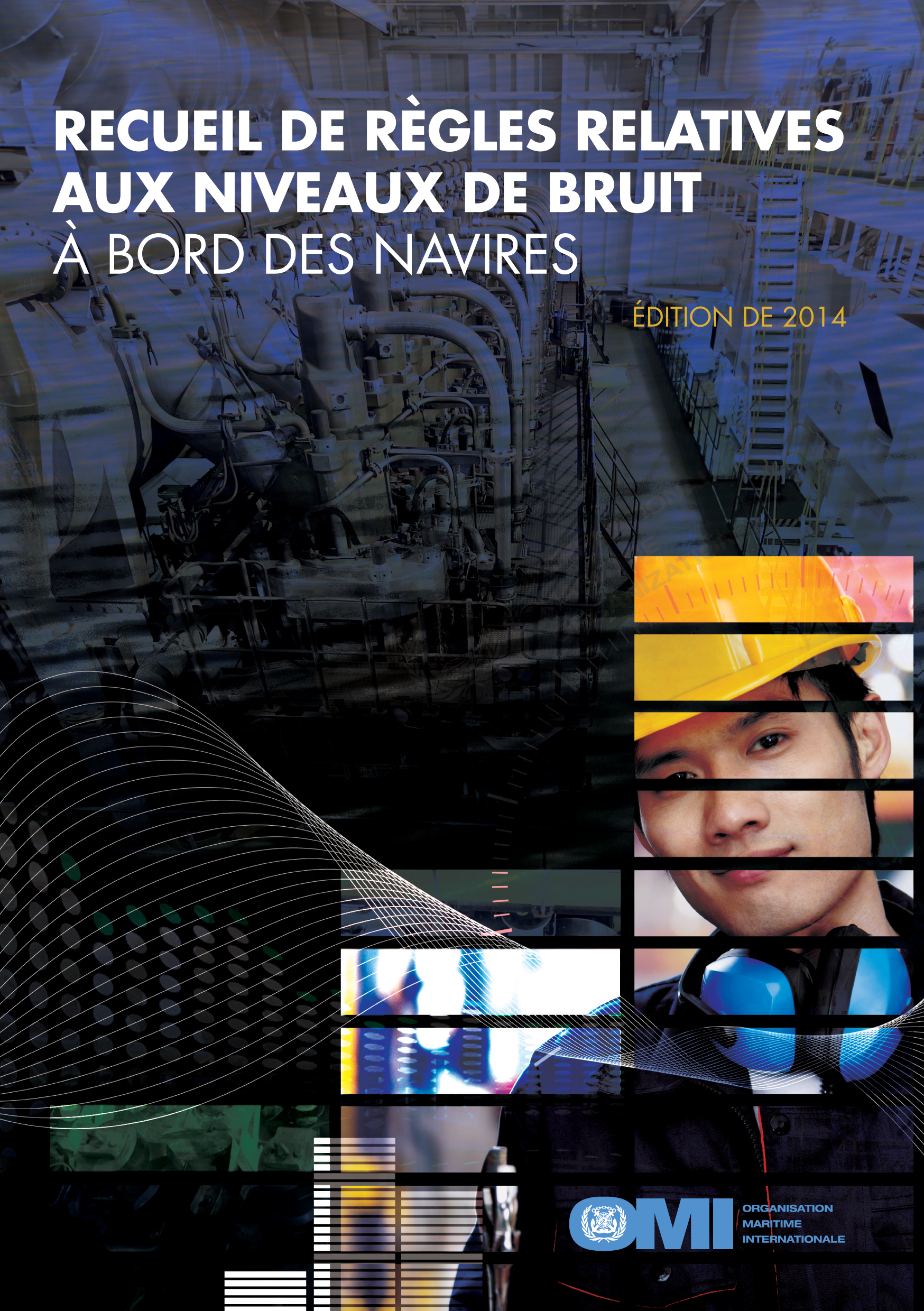
Recueil de règles relatives aux niveaux de bruit à bord des navires
show More to view fulltext, buy and share links for:Recueil de règles relatives aux niveaux de bruit à bord des navires show Less to hide fulltext, buy and share links for: Recueil de règles relatives aux niveaux de bruit à bord des naviresLe Recueil de règles relatives aux niveaux de bruit à bord des navires a pour objet de fournir des normes internationales pour la protection contre le bruit réglementée par la règle II-1/3-12 de la Convention SOLAS, telle que modifiée. Le Recueil, qui entre en vigueur le 1er juillet 2014, a été adopté par la résolution MSC.337(91), dans laquelle il a été reconnu qu’il était nécessaire d’établir des niveaux limites de bruit obligatoires dans les locaux de machines, les postes de sécurité, les ateliers, les locaux d’habitation et autres locaux à bord des navires.
Le Recueil comprend :
- un modèle de rapport sur la mesure du bruit;
- des directives sur l’inclusion des problèmes de bruit dans les systèmes de gestion de la sécurité;
- des méthodes suggérées pour atténuer le bruit; et
- une méthode simplifiée pour déterminer l’exposition au bruit.
Les présentes règles, recommandations et conseils sont censés fournir aux Administrations les outils nécessaires pour promouvoir des environnements «préservant l’acuité auditive» à bord des navires. Bien que le présent Recueil soit juridiquement considéré comme étant un instrument obligatoire en vertu de la Convention SOLAS, certaines de ses dispositions conservent une valeur de recommandation ou d’information.
-
-
-
Safety Investigation into Marine Casualties and Marine Incidents
show More to view fulltext, buy and share links for:Safety Investigation into Marine Casualties and Marine Incidents show Less to hide fulltext, buy and share links for: Safety Investigation into Marine Casualties and Marine IncidentsThe course is essentially balanced between theory (lecture material), practical group exercises and case studies. It consists of a series of exercises structured around the requirements of the international legislation, IMO conventions and instruments, and the required common and homogeneous approach, application of consistent methodology and no blame culture to adopt in the conduct of Maritime safety investigations into marine casualties and marine incidents; as well as to provide reports to the Organization.
-
-
-
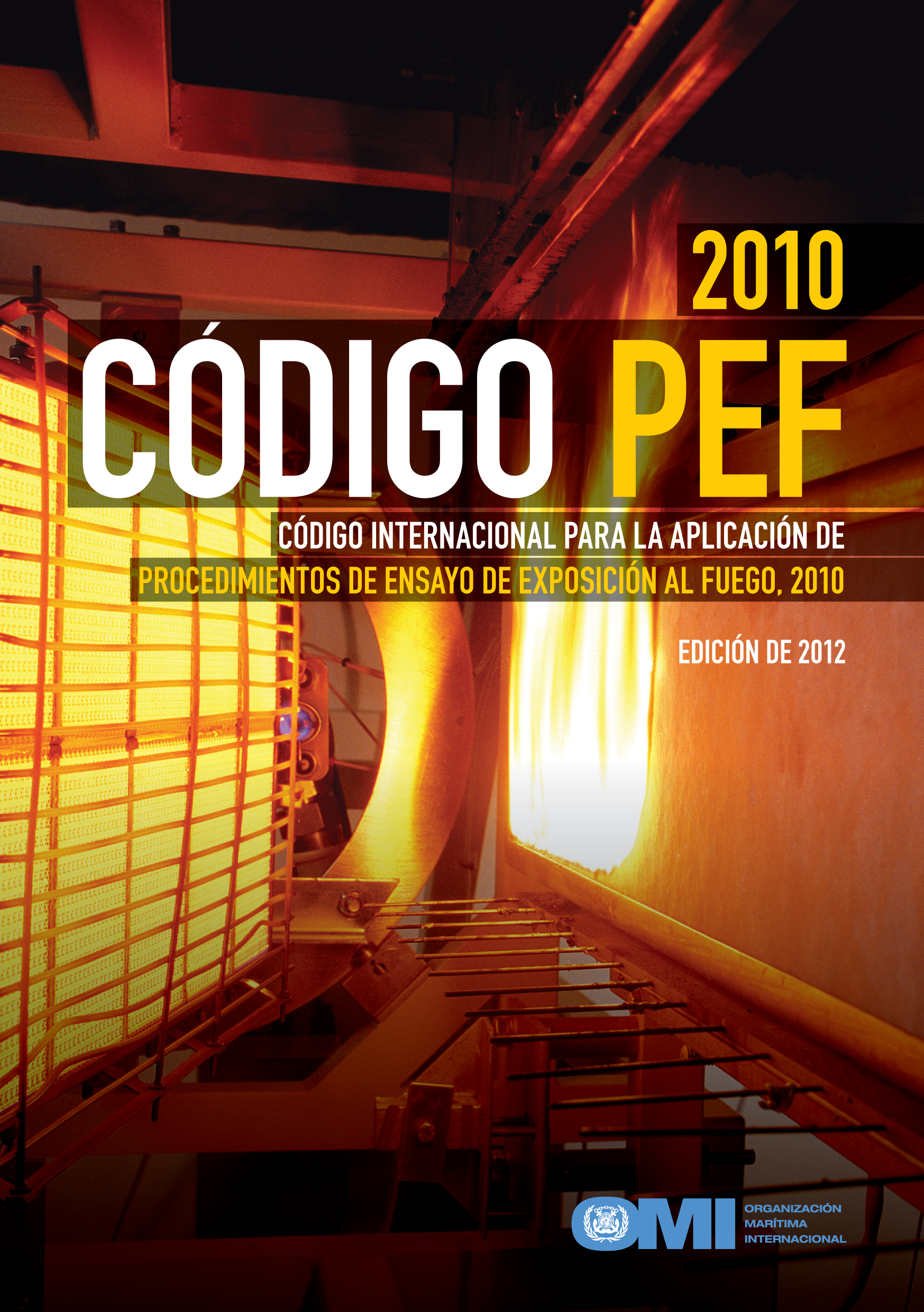
2010 Código PEF
show More to view fulltext, buy and share links for:2010 Código PEF show Less to hide fulltext, buy and share links for: 2010 Código PEFEl Código PEF 2010, junto con las enmiendas pertinentes del Convenio SOLAS, entró en vigor el 1 de julio de 2012. Incluye prescripciones internacionales para los laboratorios de ensayo y la homologación y procedimientos de ensayo de exposición al fuego para productos enumerados en el capítulo II-2 del Convenio SOLAS. Revisa y actualiza la edición de 1966 del Código PEF exhaustivamente.
El Código incluye:
- ensayos de incombustibilidad
- ensayos de producción de humo y toxicidad
- ensayos para divisiones de clase «A», «B» y «F»
- ensayos de los sistemas de control de las puertas contraincendios
- ensayos de infl amabilidad de las superfi cies
- ensayos de textiles y películas colocados verticalmente
- ensayos de mobiliario tapizado
- ensayos de artículos de cama
- ensayos de materiales pirorrestrictivos para naves de gran velocidad, y
- ensayos de las divisiones pirorresistentes de las naves de gran velocidad
También contiene anexos sobre productos que se pueden instalar sin ser objeto de ensayo o aprobación y sobre materiales de protección contra incendios y métodos de ensayo prescritos para su aprobación.
-
-
-
2010 FTP Code
show More to view fulltext, buy and share links for:2010 FTP Code show Less to hide fulltext, buy and share links for: 2010 FTP CodeThe International Code for Application of Fire Test Procedures, (2010 FTP Code) was developed with the aim to enhance user friendliness, ensure more uniform application of the requirements on fire testing and generalize the experience gained so far from the application of resolution MSC.61(67). Bearing in mind the intent of developers to formulate the requirements for fire test procedures in a form which would be as close to general industry’s procedures as possible, one of the aims of the Code was to update references to all ISO applicable standards. The present Code contains requirements for the testing process itself: testing laboratories, format of test reports, and provides procedures of type and case-by-case approval of materials, components and structures intended for maritime applications. Taking due account of alternative designs and arrangements which have been made possible by virtue of SOLAS regulation II-2/17, adopted by resolution MSC.99(73) in 2000, the Code also provides for the possibility of conducting alternative tests on a proviso that the level of safety of the tested materials, components and structures set by the Convention is not compromised and corresponds to at least that contained in its prescriptive requirements.
-
-
-
Code FTP de 2010
show More to view fulltext, buy and share links for:Code FTP de 2010 show Less to hide fulltext, buy and share links for: Code FTP de 2010Le Code FTP de 2010 et les amendements correspondants à la Convention SOLAS sont entrés en vigueur le 1er juillet 2012. Ils contiennent les prescriptions internationales relatives aux essais en laboratoire, aux procédures d’approbation par type et aux méthodes d’essai au feu pour les produits visés au chapitre II-2 de la Convention SOLAS. Il révise et actualise entièrement le Code FTP de 1996.
Le Code FTP de 2010 contient les essais suivants :
- essai d’incombustibilité;
- essai portant sur le dégagement de fumée et la toxicité;
- essai pour cloisonnements des types «A», «B» et «F»;
- essai pour dispositifs de commande des portes d’incendie;
- essai d’inflammabilité des surfaces;
- essai pour textiles et voilages maintenus en position verticale;
- essai pour meubles capitonnés;
- essai pour éléments de literie;
- essai pour les matériaux antifeu pour engins à grande vitesse; et
- essai pour les cloisonnements d’incendie des engins à grande vitesse.
Il contient également des annexes relatives aux produits pouvant être installés sans avoir été mis à l’essai et/ou sans avoir été approuvés, ainsi qu’aux matériaux de protection contre l’incendie et aux méthodes d’essai prescrites pour leur approbation.
-
-
-
Oficial de Protección del Buque
show More to view fulltext, buy and share links for:Oficial de Protección del Buque show Less to hide fulltext, buy and share links for: Oficial de Protección del BuqueThis model course is intended to provide knowledge to those who may be designated to perform the duties and responsibilities of a Ship Security Officer (SSO), as defined in section A/2.1.6 (and section A/12) of the ISPS Code and in section A-VI/5 of the STCW Code, as amended, and in particular the duties and responsibilities with respect to the security of a ship, for implementing and maintaining a Ship Security Plan and for liaising with the Company Security Officer (CSO) and with Port Facility Security Officers (PFSOs).
-
-
-
Ship Security Officer
show More to view fulltext, buy and share links for:Ship Security Officer show Less to hide fulltext, buy and share links for: Ship Security OfficerThis model course is intended to provide knowledge to those who may be designated to perform the duties and responsibilities of a Ship Security Officer (SSO), as defined in section A/2.1.6 (and section A/12) of the ISPS Code and in section A-VI/5 of the STCW Code, as amended, and in particular the duties and responsibilities with respect to the security of a ship, for implementing and maintaining a Ship Security Plan and for liaising with the Company Security Officer (CSO) and with Port Facility Security Officers (PFSOs).
-
-
-
Train the Simulator Trainer and Assessor
show More to view fulltext, buy and share links for:Train the Simulator Trainer and Assessor show Less to hide fulltext, buy and share links for: Train the Simulator Trainer and AssessorThe course includes technical aspects of teaching that have a direct relation with the maritime simulator world. Without delving into the details at this stage, it is however emphasized that the simulator pedagogy, as well as psychology of learning forms an important element of the course.
-
-
-
Visites de la Coque et de la Structure
show More to view fulltext, buy and share links for:Visites de la Coque et de la Structure show Less to hide fulltext, buy and share links for: Visites de la Coque et de la StructureLe présent cours type composé de trois volumes couvre les exigences relatives aux structures de la coque lors des visites initiales, annuelles, intermédiaires, périodiques, de renouvellement et supplémentaires, telles que spécifiées dans la Convention SOLAS, telle que modifiée jusqu'à son Protocole de 1988, et dans la Convention de 1966 sur les lignes de charge, y compris son Protocole de 1988.
-
-
-
Guide to Ship Sanitation
show More to view fulltext, buy and share links for:Guide to Ship Sanitation show Less to hide fulltext, buy and share links for: Guide to Ship SanitationThe primary aim of the revised Guide to Ship Sanitation, published by WHO, is to present the public health significance of ships in terms of disease and to highlight the importance of applying appropriate control measures. This guide, in e-reader format only, is intended to be used as a basis for the development of national approaches to controlling the hazards that may be encountered on ships, as well as providing a framework for policy-making and local decision-making.
-
-
-
Actions to be Taken to Prevent Acts of Piracy and Armed Robbery
show More to view fulltext, buy and share links for:Actions to be Taken to Prevent Acts of Piracy and Armed Robbery show Less to hide fulltext, buy and share links for: Actions to be Taken to Prevent Acts of Piracy and Armed RobberyThe emphasis of this model course is not on training to fight pirates, but rather to assist trainees to identify, deter or mitigate such events through proper planning, preparation and coordination with various entities.
-
-
-
Reconocimientos de Casco y Estructuras
show More to view fulltext, buy and share links for:Reconocimientos de Casco y Estructuras show Less to hide fulltext, buy and share links for: Reconocimientos de Casco y EstructurasThis three-volume course covers the requirements for hull structures at initial, annual, intermediate, periodical and renewal and additional surveys, as specified in SOLAS, as amended up to its 1988 Protocol, and in the 1966 Load Lines Convention, including its 1988 Protocol.
-
-
-
Quantification Addendum: International Medical Guide for Ships
show More to view fulltext, buy and share links for:Quantification Addendum: International Medical Guide for Ships show Less to hide fulltext, buy and share links for: Quantification Addendum: International Medical Guide for ShipsThis volume contains recommended quantities, indications and dosing for 55 medicines listed in the International Medical Guide for Ships, 3rd edition. The quantities are based on three types of ships:
- ocean-going ships with crews of 25–40 and no doctor (Category A)
- coastal ships with crews of up to 25 that travel no more than 24 hours from a port of call (Category B)
- small boats and private craft with crews of 15 or less, and usually travelling no more than a few hours from a port of call (Category C)
-
-
-
International Medical Guide for Ships
show More to view fulltext, buy and share links for:International Medical Guide for Ships show Less to hide fulltext, buy and share links for: International Medical Guide for ShipsThe third edition of the (ILO/IMO/WHO) International Medical Guide for Ships shows designated first-aid providers how to diagnose, treat, and prevent the health problems of seafarers on board ship. This edition contains fully updated recommendations aimed to promote and protect the health of seafarers, and is consistent with the latest revisions of both the WHO Model List of Essential Medicines and the International Health Regulations. The International Labour Organization’s Maritime Labour Convention 2006 stipulates that all ships shall carry a medicine chest, medical equipment and a medical guide.
-
-
-
Visites Relatives aux Dispositifs de Lutte contre l’Incendie et à Leurs Installations
show More to view fulltext, buy and share links for:Visites Relatives aux Dispositifs de Lutte contre l’Incendie et à Leurs Installations show Less to hide fulltext, buy and share links for: Visites Relatives aux Dispositifs de Lutte contre l’Incendie et à Leurs InstallationsLe présent cours type, présenté en double volume, couvre les prescriptions concernant les visites initiales, annuelles, intermédiaires et périodiques décrites dans la Convention SOLAS de 1974. Il ne couvre pas les domaines de la conception préliminaire et de l'approbation des plans, et ne concerne pas les visites ou inspections des chimiquiers, transporteurs de gaz, navires spéciaux ou unités mobiles au large.
-
-
-
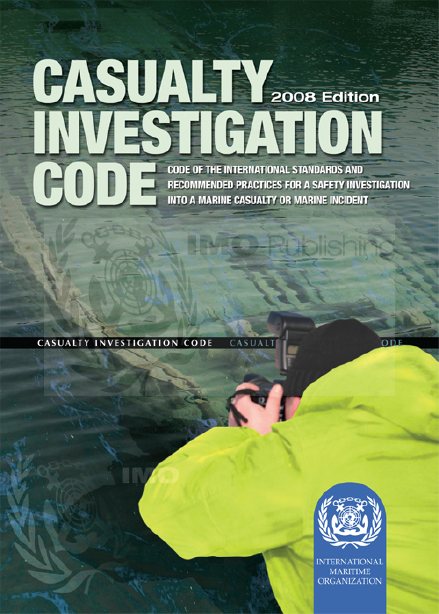
Casualty Investigation Code
show More to view fulltext, buy and share links for:Casualty Investigation Code show Less to hide fulltext, buy and share links for: Casualty Investigation CodeThe Code of the International Standards and Recommended Practices for a Safety Investigation into a Marine Casualty or Marine Incident requires a Maritime safety investigation to be conducted into every “very serious marine casualty”, which is defined as a marine casualty involving the total loss of the ship or a death or severe damage to the environment.
The Code also recommends an investigation into other marine casualties and incidents, by the flag State of a ship involved, if it is considered likely that it would provide information that could be used to prevent future accidents.
-
-
-
Chief Engineer Officer and Second Engineer Officer on a Fishing Vessel
show More to view fulltext, buy and share links for:Chief Engineer Officer and Second Engineer Officer on a Fishing Vessel show Less to hide fulltext, buy and share links for: Chief Engineer Officer and Second Engineer Officer on a Fishing VesselThe course is organized under three functions at the management level of responsibility to cover all the required functional elements. Specifically, this course covers the minimum standard of competence for chief engineer officers and second engineer officers on Fishing vessels powered by main propulsion machinery of 750 kW propulsion power or more required by regulation II/5 of STCW-F.
-
-
-
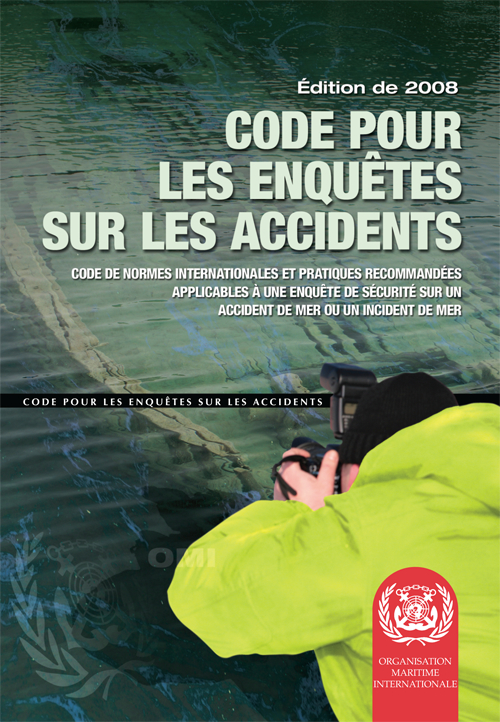
Code pour les enquêtes sur les accidents
show More to view fulltext, buy and share links for:Code pour les enquêtes sur les accidents show Less to hide fulltext, buy and share links for: Code pour les enquêtes sur les accidentsLe présent Code reprend, en les complétant, les meilleures pratiques en matière d'enquête sur les accidents de mer et incidents de mer établies par le Code pour la conduite des enquêtes sur les accidents et les incidents de mer, que l'Organisation maritime internationale (l'Organisation) avait adopté en novembre 1997 par la résolution A.849(20) et qui visait à promouvoir la coopération entre États et une approche commune en matière d'enquête sur les accidents et incidents de mer.
-