


Maritime safety
Collection Contents
1 - 50 of 133 results
-
-
Port Facility Security Officer
show More to view fulltext, buy and share links for:Port Facility Security Officer show Less to hide fulltext, buy and share links for: Port Facility Security OfficerThis course aims to facilitate the training of port facility security officers in accordance with the minimum knowledge, understanding and proficiencies (KUPs) in the Guidelines on training and certification for port facility security officers (MSC.1/Circ.1188) to meet the duties and responsibilities required by the International Ship and Port Facility Security (ISPS) Code, part A.
-
-
-
Company Security Officer
show More to view fulltext, buy and share links for:Company Security Officer show Less to hide fulltext, buy and share links for: Company Security OfficerThis course aims to facilitate the training for company security officers so they can meet the mandatory minimum standards of competence in training and certification in accordance with Guidelines on training and certification for company security officers (MSC.1/Circ.1154) and the ISPS Code, Part A.
-
-
-
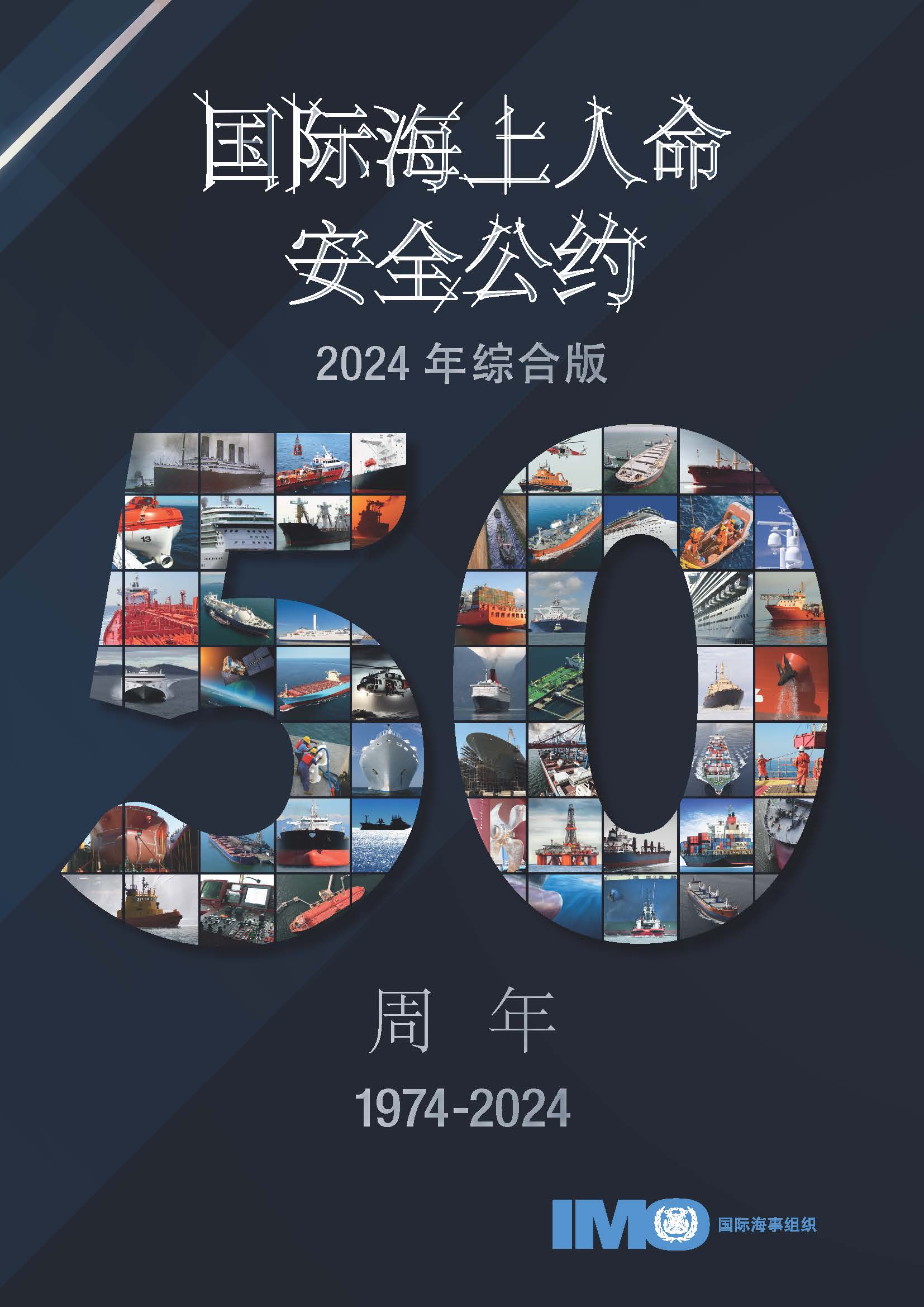
国际海上人命安全公约
show More to view fulltext, buy and share links for:国际海上人命安全公约 show Less to hide fulltext, buy and share links for: 国际海上人命安全公约在所有涉及海上安全的国际公约中,最重要的当属《国际海上人命安全公约》(简称《安全公约》),该公约涵盖了一系列旨在提升航运安全的措施。
该公约也是同类公约中历史最悠久的公约之一:首个版本于1914年泰坦尼克号沉没、造成1500多人丧生后通过。此后,《安全公约》又经历了四次修订。现行版本于1974年通过,并于1980年生效。本出版物旨在纪念《1974年安全公约》通过50周年,该公约是一份重要的国际海上安全文书。
本出版物收录了该公约、其《1988年议定书》以及2024年7月1日或之前生效的所有修正案的综合文本。此外,本版本还收录了海上安全委员会批准的《安全公约》规则的统一解释。
-
-
-
Survey of Electrical Installations
show More to view fulltext, buy and share links for:Survey of Electrical Installations show Less to hide fulltext, buy and share links for: Survey of Electrical InstallationsThis course aims to meet the mandatory standards of competence in conducting surveys of electrical installations, particularly in verifying compliance with IMO conventions related to ship safety. Tailored to the trainees’ needs and experience levels, the course is a key resource to aid trainees in mastering essential survey procedures and verification techniques in compliance with international standards.
-
-
-
Guidelines on fair treatment of seafarers detained in connection with alleged crimes
show More to view fulltext, buy and share links for:Guidelines on fair treatment of seafarers detained in connection with alleged crimes show Less to hide fulltext, buy and share links for: Guidelines on fair treatment of seafarers detained in connection with alleged crimesThe PDF of this publication is available for download under the Supplements tab
Seafarers are recognized as a special category of worker and many countries have designated them as key workers in accordance with the adoption of a joint statement by the International Labour Organization (ILO), the International Maritime Organization (IMO), the United Nations Conference on Trade and Development (UNCTAD) and the World Health Organization (WHO).
Given the global nature of the shipping industry and the different jurisdictions with which seafarers may be brought into contact, they need special protection, especially in relation to contacts with public authorities. The objective of these Guidelines is to ensure that seafarers detained on suspicion of committing a crime are treated fairly during any investigation and detention by public authorities, and that detention is for no longer than necessary.
-
-
-
Directives sur le traitement équitable des gens de mer détenus pour des infractions présumées
show More to view fulltext, buy and share links for:Directives sur le traitement équitable des gens de mer détenus pour des infractions présumées show Less to hide fulltext, buy and share links for: Directives sur le traitement équitable des gens de mer détenus pour des infractions présuméesLe PDF de cette publication est disponible en téléchargement dans l’onglet Suppléments
Il est reconnu que les gens de mer constituent une catégorie spéciale de travailleurs, et de nombreux pays leur ont accordé le statut de travailleurs essentiels suite à l’adoption d’une déclaration conjointe par l’Organisation internationale du travail (OIT), l’Organisation maritime internationale (OMI), la Conférence des Nations Unies sur le commerce et le développement (CNUCED) et l’Organisation mondiale de la santé (OMS). Étant donné le caractère mondial du secteur des transports maritimes et les différentes juridictions auxquelles les gens de mer pourraient se trouver confrontés, ils ont besoin d’une protection spéciale, en particulier dans leurs rapports avec les autorités publiques.
Les présentes directives ont pour objet de faire en sorte que les gens de mer détenus pour des infractions présumées bénéficient d’un traitement équitable pendant l’enquête et la détention par les autorités publiques et que la détention ne dure pas plus longtemps que nécessaire.
-
-
-
Directrices sobre el trato justo de la gente de mar detenida por presuntos delitos
show More to view fulltext, buy and share links for:Directrices sobre el trato justo de la gente de mar detenida por presuntos delitos show Less to hide fulltext, buy and share links for: Directrices sobre el trato justo de la gente de mar detenida por presuntos delitosEl PDF de esta publicación está disponible para descargar en la pestaña de Suplementos.
Se reconoce que la gente de mar constituye una categoría especial de trabajadores, y muchos países los han calificado de trabajadores esenciales, de conformidad con la Declaración conjunta adoptada por la OIT, la Organización Marítima Internacional (OMI), la Conferencia de las Naciones Unidas sobre Comercio y Desarrollo (UNCTAD) y la Organización Mundial de la Salud (OMS). Dada la naturaleza mundial del sector del transporte marítimo y la diversidad de jurisdicciones con las que es posible que la gente de mar entre en contacto, esta necesita una protección especial, en concreto por lo que respecta a los contactos con las autoridades públicas.
El objetivo de las presentes Directrices es velar por que a la gente de mar detenida como sospechosa de haber cometido un delito se le otorgue un trato justo durante toda investigación y detención por parte de autoridades públicas, y que la detención no se prolongue más allá de lo necesario.
-
-
-
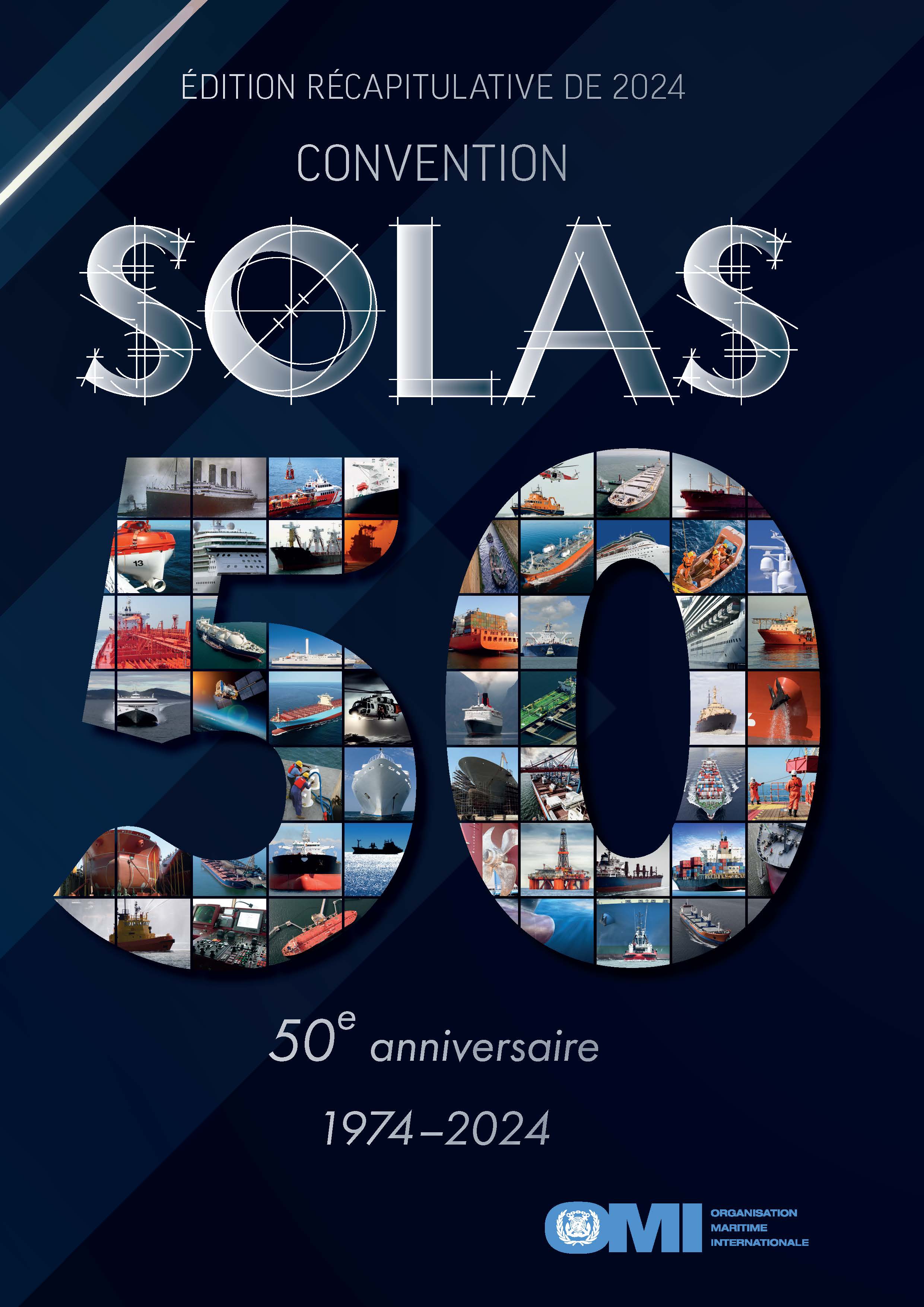
Convention SOLAS
show More to view fulltext, buy and share links for:Convention SOLAS show Less to hide fulltext, buy and share links for: Convention SOLASDe toutes les conventions internationales ayant trait à la sécurité maritime, la plus importante est la Convention internationale de 1974 pour la sauvegarde de la vie humaine en mer, mieux connue sous le nom de Convention SOLAS, qui couvre une large gamme de mesures destinées à améliorer la sécurité de la navigation.
La Convention est aussi la plus ancienne : la première version fut adoptée en 1914 à la suite du naufrage du Titanic qui entraîna la perte de plus de 1 500 vies humaines. Par la suite, quatre nouvelles versions de la Convention SOLAS ont été élaborées. La version actuelle a été adoptée en 1974 et est entrée en vigueur en 1980. La présente publication commémore le 50e anniversaire de l’adoption de la Convention SOLAS de 1974, un instrument international de premier plan en matière de sécurité maritime.
La présente édition reproduit le texte récapitulatif de la Convention, son Protocole de 1988 et tous les amendements entrés en vigueur au plus tard le 1er juillet 2024. En outre, cette édition comprend les Interprétations uniformes aux règles de la Convention SOLAS, qui ont été adoptées par le Comité de la sécurité maritime.
-
-
-
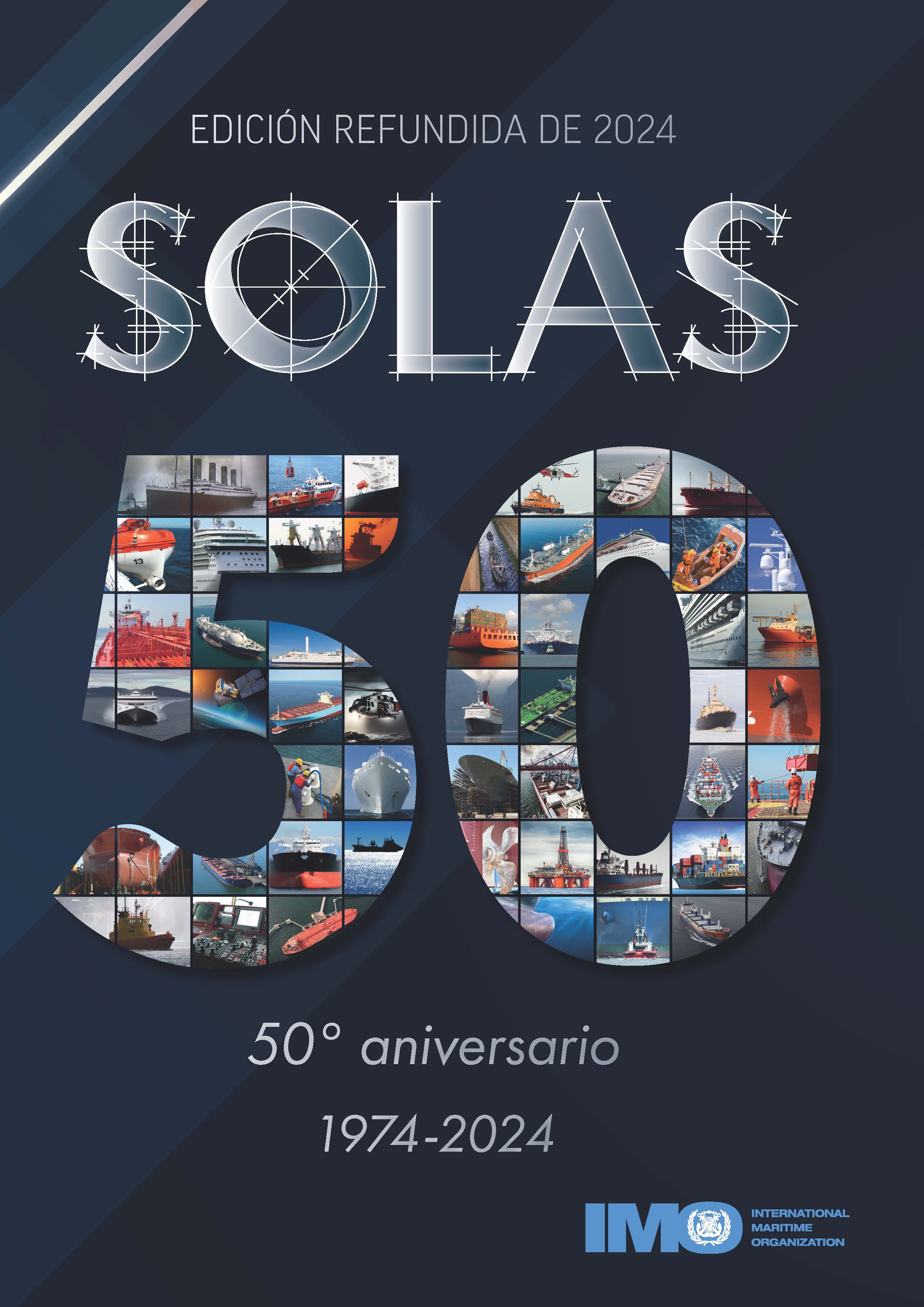
SOLAS
show More to view fulltext, buy and share links for:SOLAS show Less to hide fulltext, buy and share links for: SOLASDe todos los convenios internacionales que tratan de la seguridad marítima, el más importante es el Convenio internacional para la seguridad de la vida humana en el mar, más conocido como Convenio SOLAS, que abarca una gran variedad de medidas destinadas a acrecentar la seguridad de la navegación.
El Convenio es también uno de los más antiguos en su género: la primera versión se adoptó en 1914 tras el hundimiento del Titanic, que costó la vida a más de 1 500 personas. Desde entonces ha habido cuatro versiones más. La presente versión se adoptó en 1974 y entró en vigor en 1980. En esta edición se conmemora el 50º aniversario de la adopción del Convenio SOLAS 1974, un instrumento internacional prominente para la seguridad marítima.
A fin de facilitar la consulta de todas las prescripciones del Convenio SOLAS aplicables a partir del 1 de julio de 2024, esta edición contiene el texto refundido del Convenio, su Protocolo de 1988 y todas las enmiendas en vigor en esa fecha. Asimismo, la presente edición contiene las interpretaciones unificadas de las reglas del Convenio SOLAS, que fueron adoptadas por el Comité de Seguridad Marítima.
-
-
-
Código SPS y Código IP
show More to view fulltext, buy and share links for:Código SPS y Código IP show Less to hide fulltext, buy and share links for: Código SPS y Código IPLa presente publicación contiene el Código de seguridad aplicable a los buques para fines especiales, 2008 (Código SPS 2008); el nuevo Código internacional de seguridad para los buques que transportan personal industrial (Código IP) y el capítulo XV del Convenio SOLAS sobre medidas de seguridad para los buques que transportan personal industrial.
El Código SPS 2008 establece normas de seguridad aplicables a los buques para fines especiales que transportan «personal especial», como científicos o técnicos que participan en tareas específicas a bordo. El Código IP, que entró en vigor el 1 de julio de 2024, amplía estos principios de seguridad básicos a los buques que transportan «personal industrial». Este nuevo código aborda las prescripciones de seguridad para los sectores mar adentro y de la energía, a fin de garantizar el transporte y el transbordo más seguros del personal que participa en actividades industriales mar adentro.
-
-
-
Recueil SPS et Recueil IP
show More to view fulltext, buy and share links for:Recueil SPS et Recueil IP show Less to hide fulltext, buy and share links for: Recueil SPS et Recueil IPLa présente publication contient le Recueil de règles de sécurité applicables aux navires spéciaux, 2008 (Recueil SPS de 2008), le nouveau Recueil international de règles de sécurité applicables aux navires qui transportent du personnel industriel (Receuil IP) et le chapitre XV de la Convention SOLAS portant sur les Mesures de sécurité applicables aux navires transportant du personnel industriel.
Le Recueil SPS 2008 établit une norme de sécurité applicable aux navires spéciaux qui transportent du "personnel spécial", tel que des chercheurs et des techniciens qui participent à des activités spécifiques à bord. Le Recueil IP, qui est entré en vigueur le 1er juillet 2024, étend ces principes de sécurité de base aux navires transportant du "personnel industriel". Ce nouveau recueil répond aux prescriptions de sécurité pour les secteurs de l'énergie et offshore, garantissant le transport et le transfert en toute sécurité des membres du personnel qui participent aux activités industrielles au large.
-
-
-
SOLAS
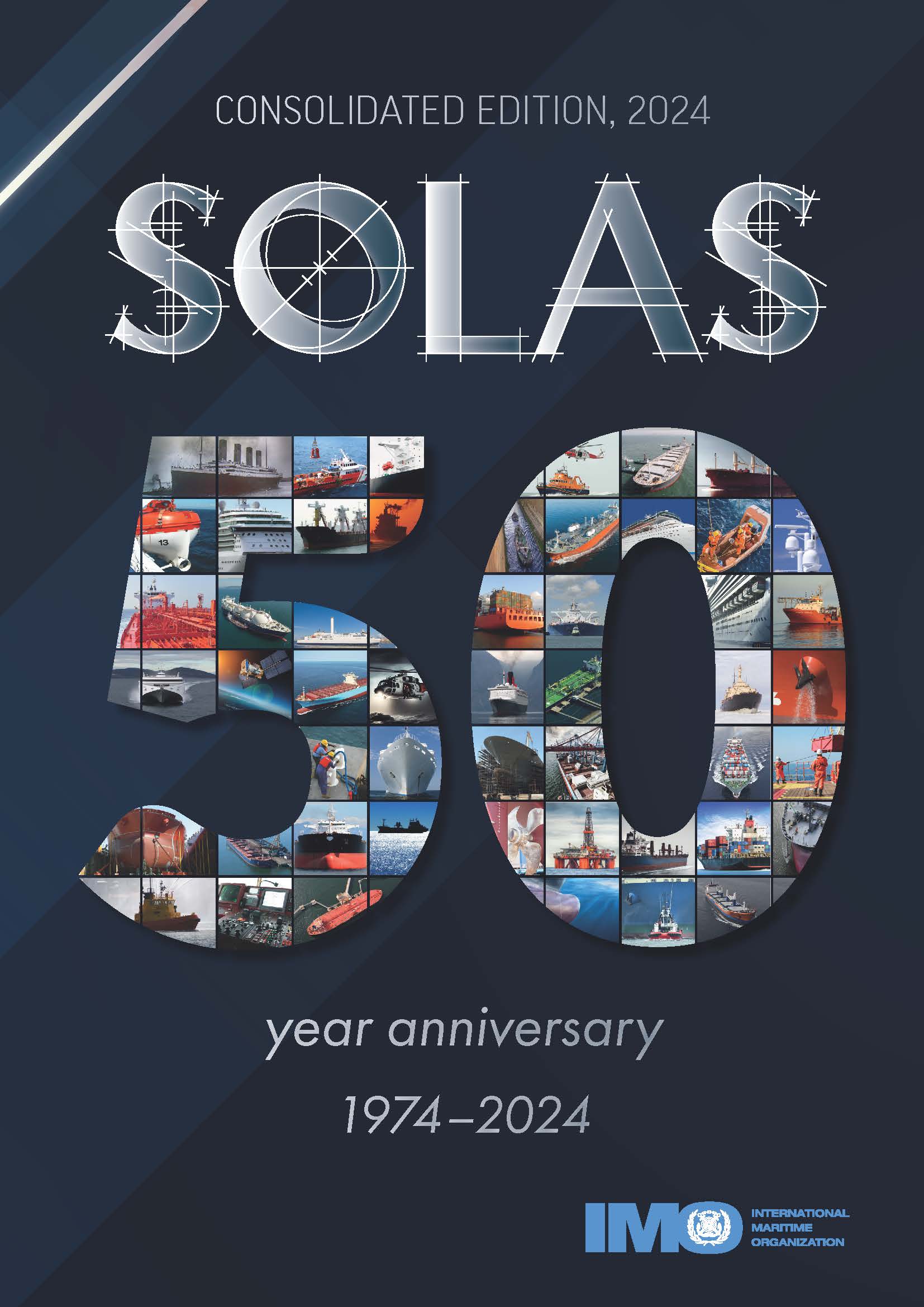
show More to view fulltext, buy and share links for:SOLAS show Less to hide fulltext, buy and share links for: SOLASBy clicking on the "Read" button on this page you will be accessing the PDF of the full book. To access the Full-Text version and PDFs of the individual chapters, click on the “Chapters” tab and select the chapter you would like to read.
Of all the international conventions dealing with maritime safety, the most important is the International Convention for the Safety of Life at Sea, better known as SOLAS, which covers a wide range of measures designed to improve the safety of shipping.
The Convention is also one of the oldest of its kind: the first version was adopted in 1914 following the sinking of the Titanic with the loss of more than 1,500 lives. Since then, there have been four more versions of SOLAS. The present version was adopted in 1974 and entered into force in 1980. This publication commemorates the 50th anniversary of the adoption of the 1974 SOLAS Convention, a prominent international instrument for maritime safety.
This edition of the publication presents a consolidated text of the Convention, its Protocol of 1988 and all amendments that have entered into force on or before 1 July 2024. Additionally, this edition includes the unified interpretations of SOLAS regulations approved by the Maritime Safety Committee.
-
-
-
SPS Code and IP Code
show More to view fulltext, buy and share links for:SPS Code and IP Code show Less to hide fulltext, buy and share links for: SPS Code and IP CodeThis publication includes the Code of Safety for Special Purpose Ships, 2008 (2008 SPS Code), the new International Code of Safety for Ships Carrying Industrial Personnel (IP Code), and SOLAS chapter XV on safety measures for ships carrying industrial personnel.
The 2008 SPS Code sets safety standards for special purpose ships carrying ‘special personnel’ such as scientists and technicians involved in specific onboard activities. The IP Code, which came into force on 1 July 2024, extends these safety principles to ships transporting ‘industrial personnel’. This new code addresses the safety requirements for the offshore and energy sectors, ensuring safer transport and transfer of personnel involved in offshore industrial activities.
-
-
-
Survey of Machinery Installations and Compendium
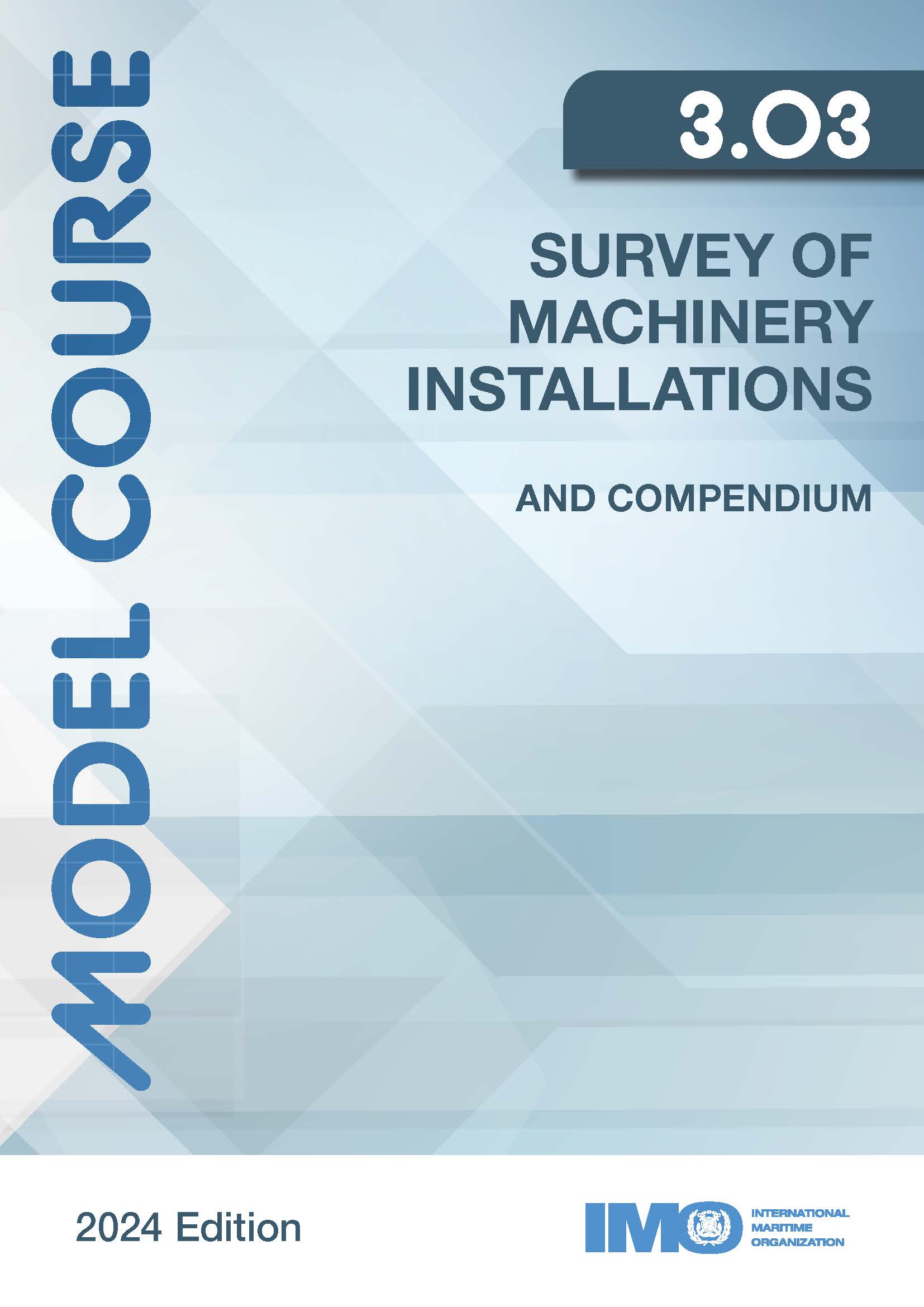
show More to view fulltext, buy and share links for:Survey of Machinery Installations and Compendium show Less to hide fulltext, buy and share links for: Survey of Machinery Installations and CompendiumThis two-volume course covers the requirements of initial, annual, intermediate, and periodical and renewal surveys, as specified in SOLAS. It does not cover preliminary design or plan approvals, nor does it cover the survey or inspection of chemical tankers, Gas carriers, special purpose ships or mobile offshore units.
-
-
-
2023 Diving Code
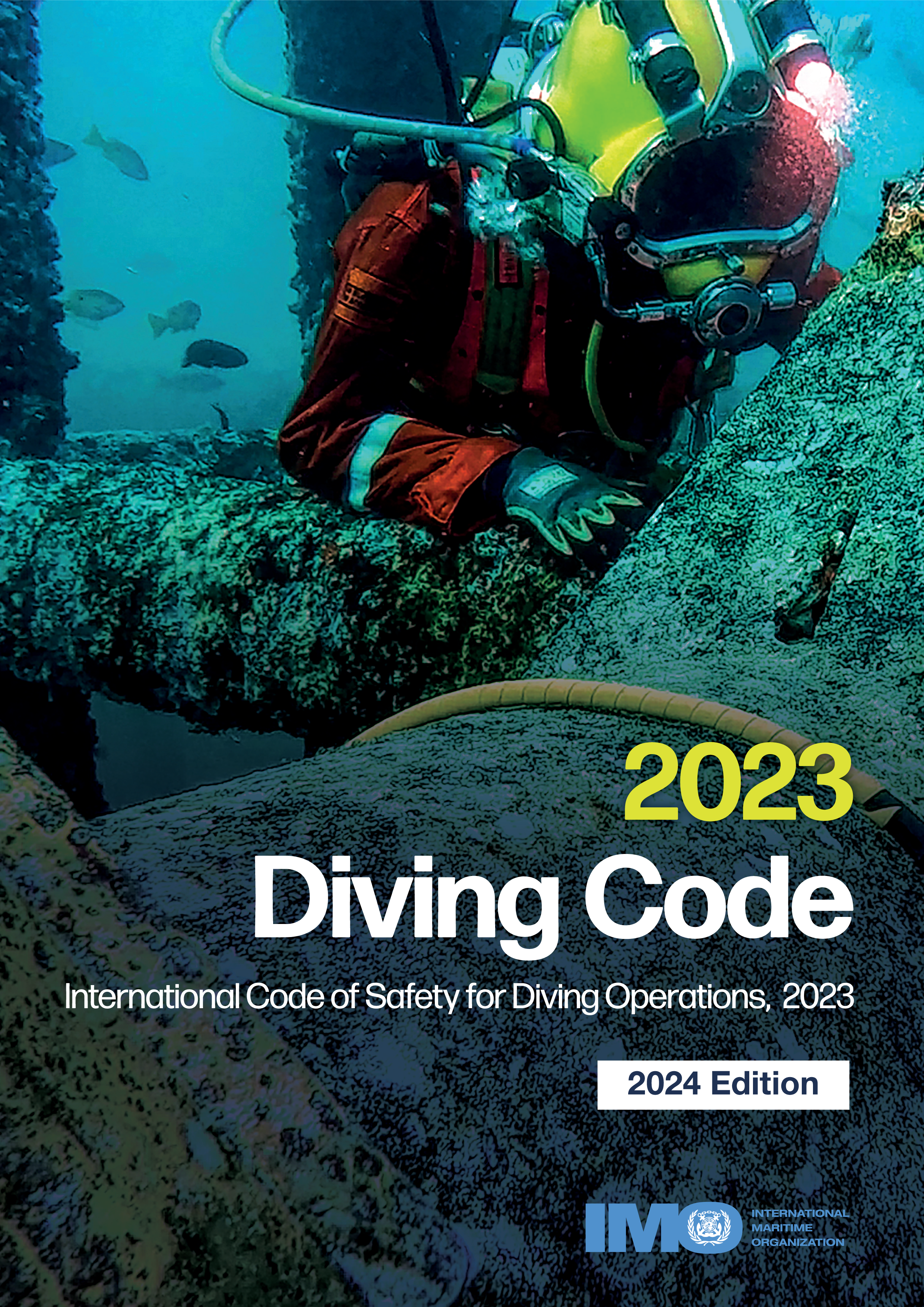
show More to view fulltext, buy and share links for:2023 Diving Code show Less to hide fulltext, buy and share links for: 2023 Diving CodeThis publication contains the International Code of Safety for Diving Operations, 2023 (2023 Diving Code), which has been developed to enhance the safety of divers and diving support personnel, to facilitate the international movement and operation of diving units, and to provide a minimum international standard for the design, construction and survey of diving units to safely support diving operations.
The 2023 Diving Code was adopted by resolution MSC.548(107) and applies to ships of not less than 500 gross tonnage that have a diving system installed on or after 1 January 2024.
-
-
-
Código de buceo de 2023
show More to view fulltext, buy and share links for:Código de buceo de 2023 show Less to hide fulltext, buy and share links for: Código de buceo de 2023La presente publicación contiene el Código internacional de seguridad para las operaciones de buceo, 2023 (Código de buceo de 2023), que ha sido elaborado para aumentar la seguridad de los buzos y de su personal deapoyo, facilitar el traslado y la utilización en el ámbito internacional de las unidades de buceo y proporcionaruna norma internacional mínima para el proyecto, la construcción y el reconocimiento de las unidades debuceo a fin de prestar apoyo a las operaciones de buceoen condiciones de seguridad.
El Código de buceo de 2023 fue adoptado mediante la resolución MSC.548(107) y se aplica a los buques de arqueo bruto no inferior a 500 que tengan un sistema de buceo instalado el 1 de enero de 2024 o posteriormente.
-
-
-
Recueil de plongée de 2023
show More to view fulltext, buy and share links for:Recueil de plongée de 2023 show Less to hide fulltext, buy and share links for: Recueil de plongée de 2023Le Recueil international de règles de sécurité applicables aux opérations de plongée, 2023 (Recueil de plongée de 2023) a pour objet d’améliorer la sécurité des plongeurs et du personnel d’appui à la plongée, de faciliter le mouvement et l’exploitation des unités de plongée et d’offrir une norme internationale minimale relative à la conception, à la construction et à la visite des unités de plongée afin de contribuer à la sécurité des opérations de plongée.
Le Recueil de plongée de 2023 a été adopté par la résolution MSC.548(107) et s’applique aux navires d’une jauge brute égale ou supérieure à 500 qui disposent d’un système de plongée installé le 1er janvier 2024 ou après cette date.
-
-
-
Fire Prevention and Fire Fighting
show More to view fulltext, buy and share links for:Fire Prevention and Fire Fighting show Less to hide fulltext, buy and share links for: Fire Prevention and Fire FightingThis course provides mandatory minimum training in fire prevention and fire fighting and is based on the provisions of table A-VI/1-2 of the STCW Code.
-
-
-
Advanced Training in Fire Fighting
show More to view fulltext, buy and share links for:Advanced Training in Fire Fighting show Less to hide fulltext, buy and share links for: Advanced Training in Fire FightingThis course covers training in fire fighting and is based on the provisions of table A-VI/3 of the STCW Code.
-
-
-
Security Awareness Training for All Port Facility Personnel
show More to view fulltext, buy and share links for:Security Awareness Training for All Port Facility Personnel show Less to hide fulltext, buy and share links for: Security Awareness Training for All Port Facility PersonnelThis model course is intended to provide the knowledge required to enable personnel without designated security duties in connection with a Port Facility Security Plan (PFSP) to enhance security in accordance with the requirements of Chapter XI-2 of SOLAS 74 as amended, the ISPS Code, the IMDG Code, the IMO/ILO Code of Practice on Security in Ports, and guidance contained in IMO MSC.1/Circ.1341. Successful trainees should contribute to the enhancement of maritime security through heightened awareness and the ability to recognize security threats and respond appropriately.
-
-
-
Security Awareness Training for All Seafarers
show More to view fulltext, buy and share links for:Security Awareness Training for All Seafarers show Less to hide fulltext, buy and share links for: Security Awareness Training for All SeafarersThis model course is intended to provide the knowledge required to enable personnel without designated security duties in connection with a Ship Security Plan (SSP) to enhance ship security in accordance with the requirements of chapter XI-2 of SOLAS 74 as amended, the ISPS Code, and section A-VI/6-1 of the STCW Code, as amended.
Those who successfully complete this course should achieve the required standard of competence enabling them to contribute to the enhancement of maritime security through heightened awareness and the ability to recognize security threats and to respond appropriately.
-
-
-
Security Training for Seafarers with Designated Security Duties
show More to view fulltext, buy and share links for:Security Training for Seafarers with Designated Security Duties show Less to hide fulltext, buy and share links for: Security Training for Seafarers with Designated Security DutiesThis model course is intended to provide the knowledge required for seafarers with designated security duties in connection with a Ship Security Plan (SSP) to perform their duties in accordance with the requirements of chapter XI-2 of SOLAS 74 as amended, the ISPS Code, and section A-VI/6 of the STCW Code, as amended.
-
-
-
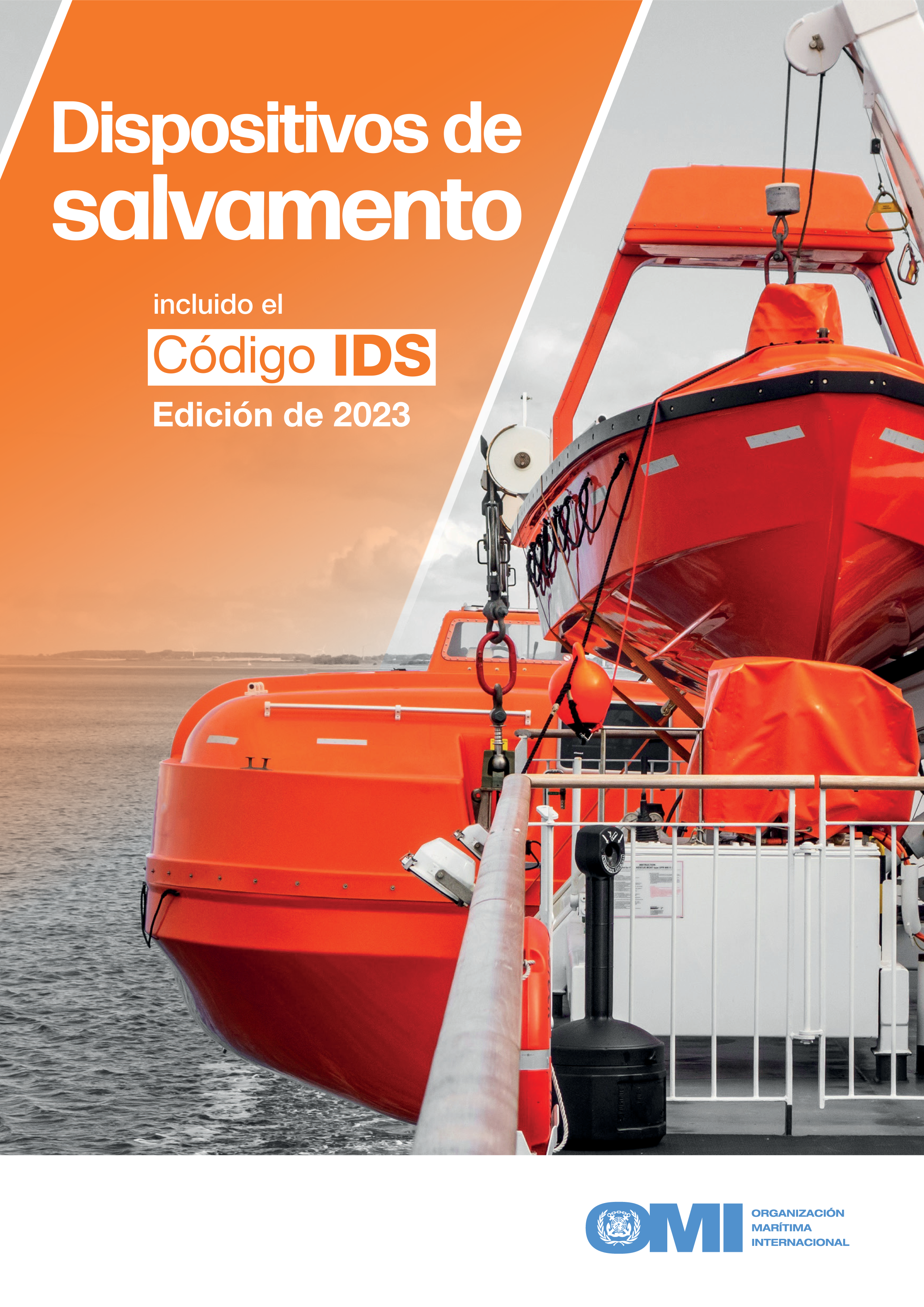
Dispositivos de salvamento incluido el Código IDS
show More to view fulltext, buy and share links for:Dispositivos de salvamento incluido el Código IDS show Less to hide fulltext, buy and share links for: Dispositivos de salvamento incluido el Código IDSLa presente publicación contiene la versión actualizada de los tres instrumentos más importantes de la OMI que tratan de los dispositivos de salvamento, es decir:
- el Código internacional de dispositivos de salvamento (Código IDS) (resolución MSC.48(66));
- la Recomendación revisada sobre las pruebas de los dispositivos de salvamento (resolución MSC.81(70)); y
- el Código de prácticas para la evaluación, la prueba y la aceptación de prototipos de dispositivos y medios de salvamento de carácter innovador (resolución A.520(13)).
-
-
-
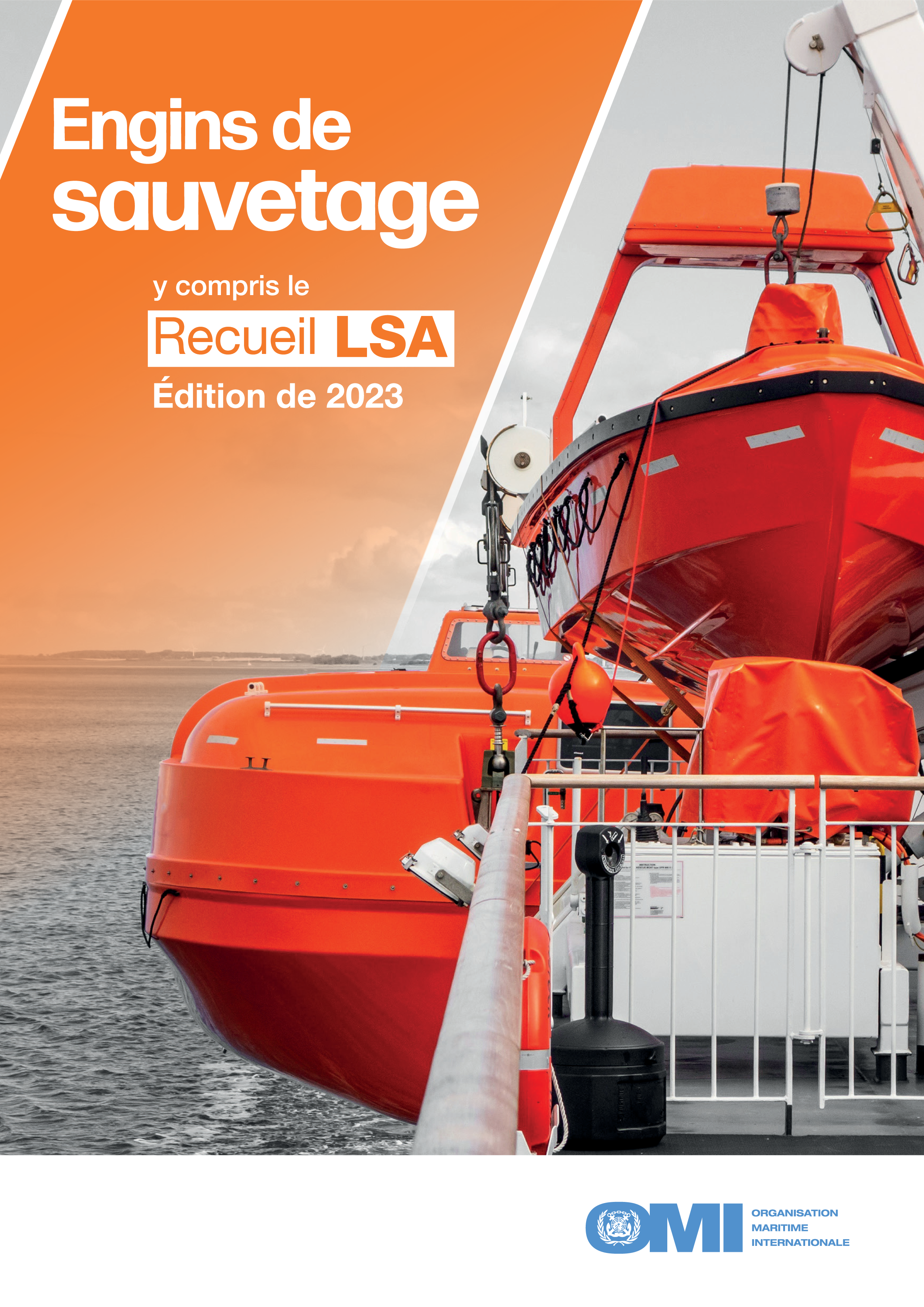
Engins de sauvetage, y compris le Recueil LSA
show More to view fulltext, buy and share links for:Engins de sauvetage, y compris le Recueil LSA show Less to hide fulltext, buy and share links for: Engins de sauvetage, y compris le Recueil LSALa présente publication comprend la version actualisée des trois instruments de l’Organisation maritime internationale (OMI) les plus importants traitant des engins de sauvetage, à savoir :
- le Recueil international de règles relatives aux engins de sauvetage (Recueil LSA) (résolution MSC.48(66));
- la Recommandation révisée sur la mise à l’essai des engins de sauvetage (résolution MSC.81(70)); et
- le Recueil de règles pratiques pour l’évaluation, la mise à l’essai et l’acceptation de prototypes d’engins et de dispositifs de sauvetage nouveaux (résolution A.520(13)).
-
-
-
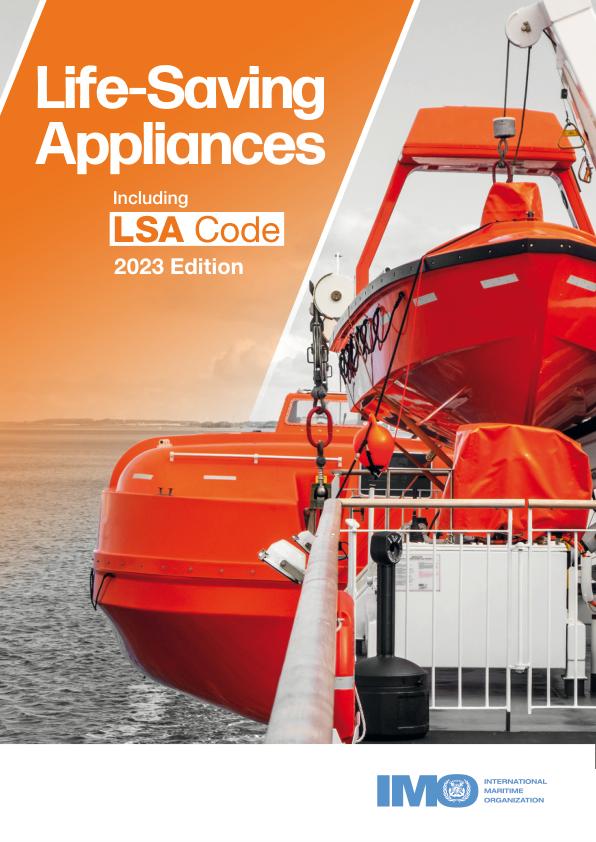
Life-saving Appliances Including LSA Code
show More to view fulltext, buy and share links for:Life-saving Appliances Including LSA Code show Less to hide fulltext, buy and share links for: Life-saving Appliances Including LSA CodeThis publication contains the three most important IMO instruments dealing with life-saving appliances, as updated, namely:
- the International Life-Saving Appliance (LSA) Code (resolution MSC.48(66));
- the Revised recommendation on testing of life-saving appliances (resolution MSC.81(70)); and
- the Code of Practice for the Evaluation, Testing and Acceptance of Prototype Novel Life-saving appliances and Arrangements (resolution A.520(13)).
-
-
-
Engine-Room Resource Management
show More to view fulltext, buy and share links for:Engine-Room Resource Management show Less to hide fulltext, buy and share links for: Engine-Room Resource ManagementThe overall aim of this model course is to meet the mandatory minimum standard of competence for seafarers for the following competence: Maintain a safe engineering watch, in particular engine-room resource management, in column 2, table A-III/1 of the STCW Code, under the function marine engineering at the operational level. This course is theoretical and practical, including simulator exercises, taking into account table A-III/1 and the relevant parts of section A-VIII/2 of the STCW Code.
-
-
-
Passenger safety, cargo safety and hull integrity training
show More to view fulltext, buy and share links for:Passenger safety, cargo safety and hull integrity training show Less to hide fulltext, buy and share links for: Passenger safety, cargo safety and hull integrity trainingThis IMO Model course addresses the competences and training that are required to achieve the standards for knowledge, understanding and proficiencies (KUPs) set out in paragraph 5 of section A-V/2 of the STCW Code.
-
-
-
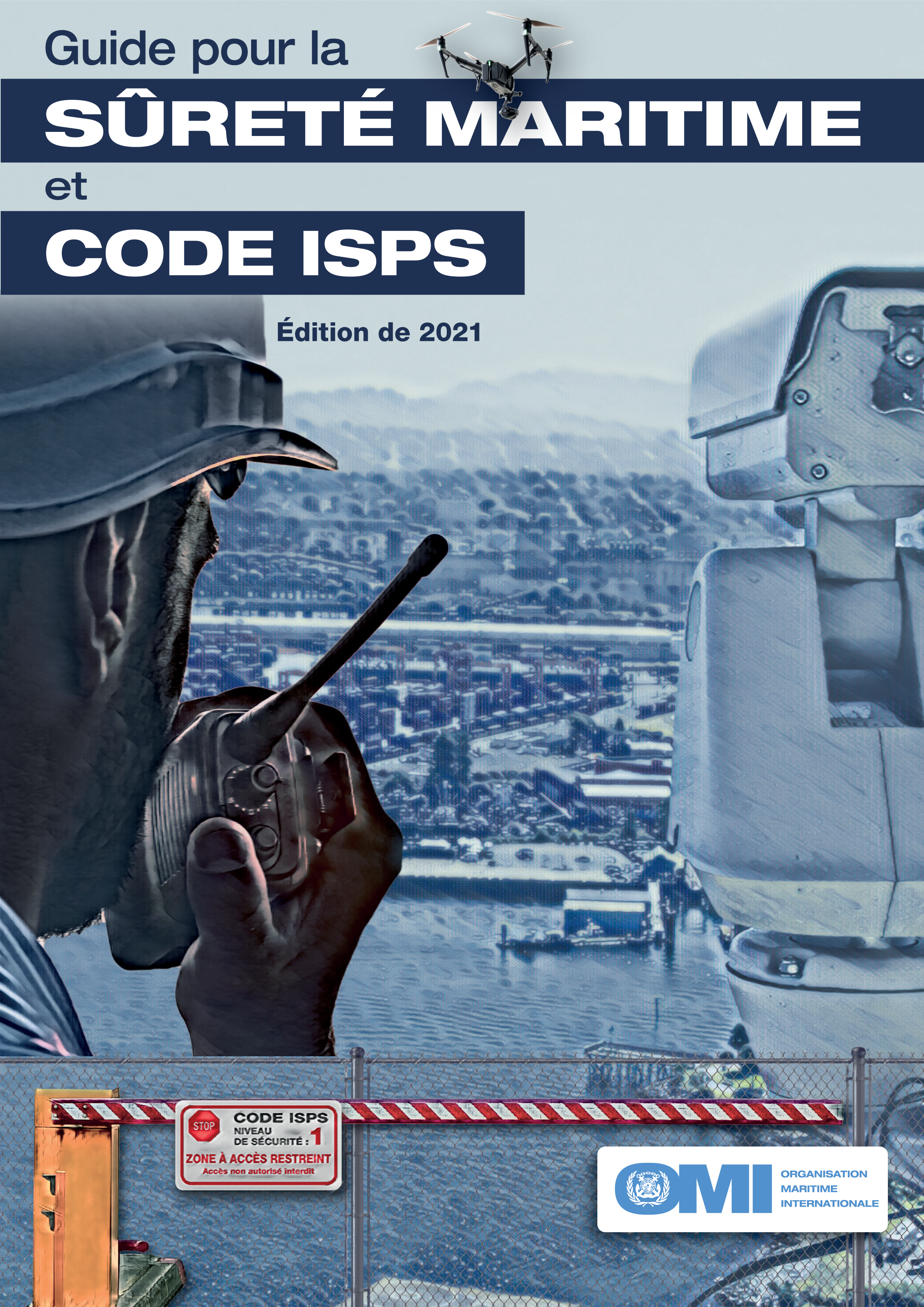
Guide pour la sûreté maritime et Code ISPS
show More to view fulltext, buy and share links for:Guide pour la sûreté maritime et Code ISPS show Less to hide fulltext, buy and share links for: Guide pour la sûreté maritime et Code ISPSLe présent Guide a été élaboré dans le but de regrouper les textes existants de l’Organisation maritime internationale (OMI) relatifs à la sûreté maritime dans un vade-mecum facile à consulter du chapitre XI-2 de la Convention internationale de 1974 pour la sauvegarde de la vie humaine en mer (Convention SOLAS) et du Code international pour la sûreté des navires et des installations portuaires (Code ISPS) en vue d’aider les États à promouvoir la sûreté maritime en mettant en place le cadre juridique, les pratiques et les procédures administratives connexes, ainsi que les ressources matérielles techniques et humaines nécessaires.
Il a pour double objectif d’aider les Gouvernements contractants à la Convention SOLAS à mettre en œuvre et à faire appliquer les dispositions du chapitre XI-2 de la Convention SOLAS et du Code ISPS et à en vérifier le respect et de servir d’aide et de référence à ceux qui exécutent des activités de renforcement des capacités dans le domaine de la sûreté maritime.
Dans cette deuxième édition, les recommandations approuvées par le Comité de la sécurité maritime (MSC) sur l’élaboration d’une législation en matière de sûreté maritime ainsi que sur la gestion des cyber-risques maritimes ont été incorporées et des références renvoyant à des renseignements complémentaires ont été révisées et mises à jour afin d’appuyer la mise en œuvre du Code ISPS.
-
-
-
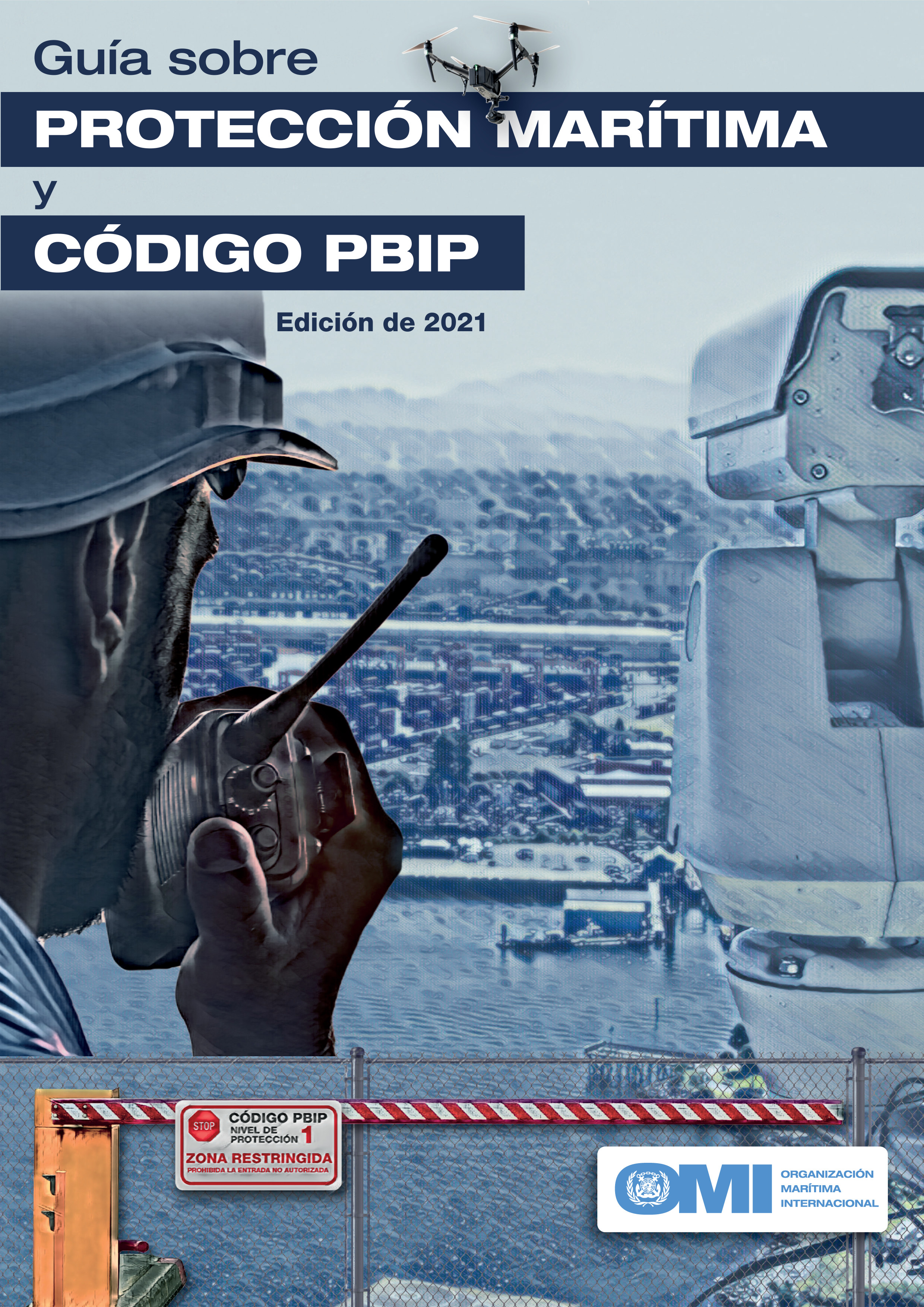
Guía sobre protección marítima y Código PBIP
show More to view fulltext, buy and share links for:Guía sobre protección marítima y Código PBIP show Less to hide fulltext, buy and share links for: Guía sobre protección marítima y Código PBIPLa presente publicación tiene por objeto refundir el material de la Organización Marítima Internacional (OMI) existente relacionado con la protección marítima en una guía que facilita la lectura del capítulo XI-2 del Convenio internacional para la seguridad de la vida humana en el mar, 1974 (Convenio SOLAS) y el Código internacional para la protección de los buques y de las instalaciones portuarias (Código PBIP), a fin de ayudar a los Estados a promover la protección marítima mediante la elaboración del marco jurídico requerido, prácticas y procedimientos, así como los recursos humanos y técnicos necesarios.
La Guía está destinada a asistir a los Gobiernos Contratantes del Convenio SOLAS en la implantación, verificación, cumplimiento y aplicación de las disposiciones del capítulo XI-2 del Convenio SOLAS y del Código PBIP. También debería servir de ayuda y referencia para las personas encargadas de llevar a cabo actividades de creación de capacidad en el ámbito de la protección marítima.
En esta segunda edición de la Guía se han incorporado orientaciones aprobadas por el Comité de seguridad marítima (MSC) respecto de la elaboración de legislación marítima, así como de la gestión de los riesgos cibernéticos marítimos, y se incluyen referencias actualizadas a información adicional para respaldar la implantación del Código PBIP.
-
-
-
Guide to Maritime Security and the ISPS Code
show More to view fulltext, buy and share links for:Guide to Maritime Security and the ISPS Code show Less to hide fulltext, buy and share links for: Guide to Maritime Security and the ISPS CodeThis Guide has been developed to consolidate existing IMO maritime security-related material into an easily read companion guide to SOLAS chapter XI-2 and the ISPS Code in order to assist States in promoting maritime security through development in the requisite legal framework, associated administrative practices, procedures and technical and human resources.
It is intended both to assist SOLAS Contracting Governments in the implementation, verification, compliance with, and enforcement of, the provisions of SOLAS chapter XI-2 and the ISPS Code. It should also serve as an aid and reference for those engaged in delivering capacity-building activities in the field of maritime security.
This second edition of the Guide incorporates guidance approved by the Maritime Safety Committee on the development of maritime security legislation as well as maritime cyber risk management and includes updated sources for further information to support the implementation of the ISPS Code.
-
-
-
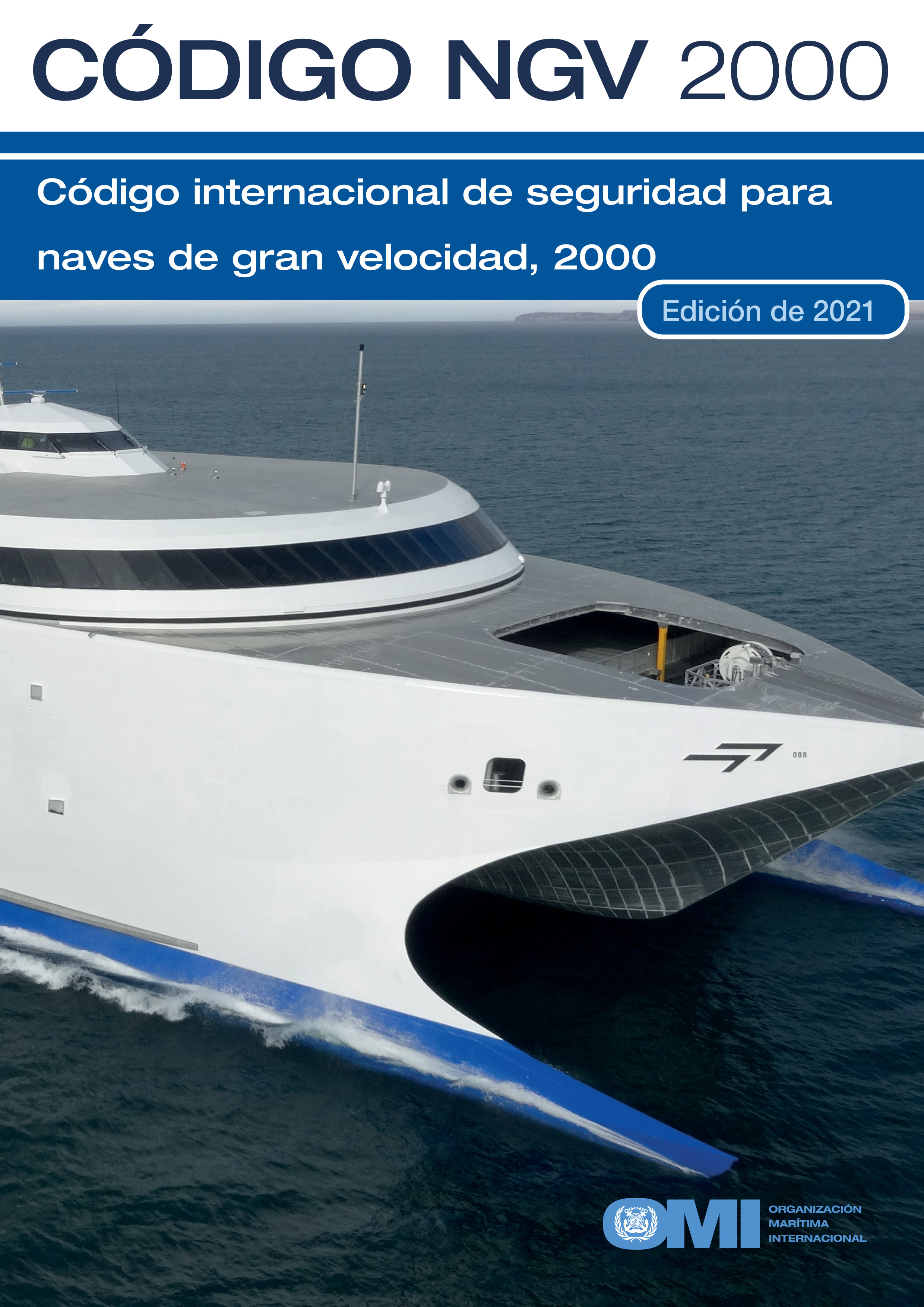
Código NGV 2000
show More to view fulltext, buy and share links for:Código NGV 2000 show Less to hide fulltext, buy and share links for: Código NGV 2000El Comité de seguridad marítima adoptó el Código internacional de seguridad para naves de gran velocidad, 2000 (Código NGV 2000) en diciembre de 2000 mediante la resolución MSC.97(73). El Código adquirió carácter obligatorio en virtud del capítulo X (Medidas de seguridad aplicables a las naves de gran velocidad) del Convenio SOLAS 1974 y se aplica a toda nave de gran velocidad que realice viajes internacionales y cuya quilla haya sido colocada, o cuya construcción se halle en una fase equivalente, el 1 de julio de 2002 o posteriormente.
La edición de 2021 contiene el texto refundido del Código NGV 2000, que incorpora las enmiendas adoptadas por el Comité de seguridad marítima mediante las resoluciones MSC.175(79), MSC.222(82), MSC.260(84), MSC.271(85), MSC.326(90), MSC.352(92), MSC.424(98) y MSC.439(99). También incluye interpretaciones unificadas del Código NGV 2000, las Directrices sobre la determinación de limitaciones operacionales uniformes para las naves de gran velocidad (MSC.1/Circ.1329) y el capítulo X del Convenio SOLAS.
-
-
-
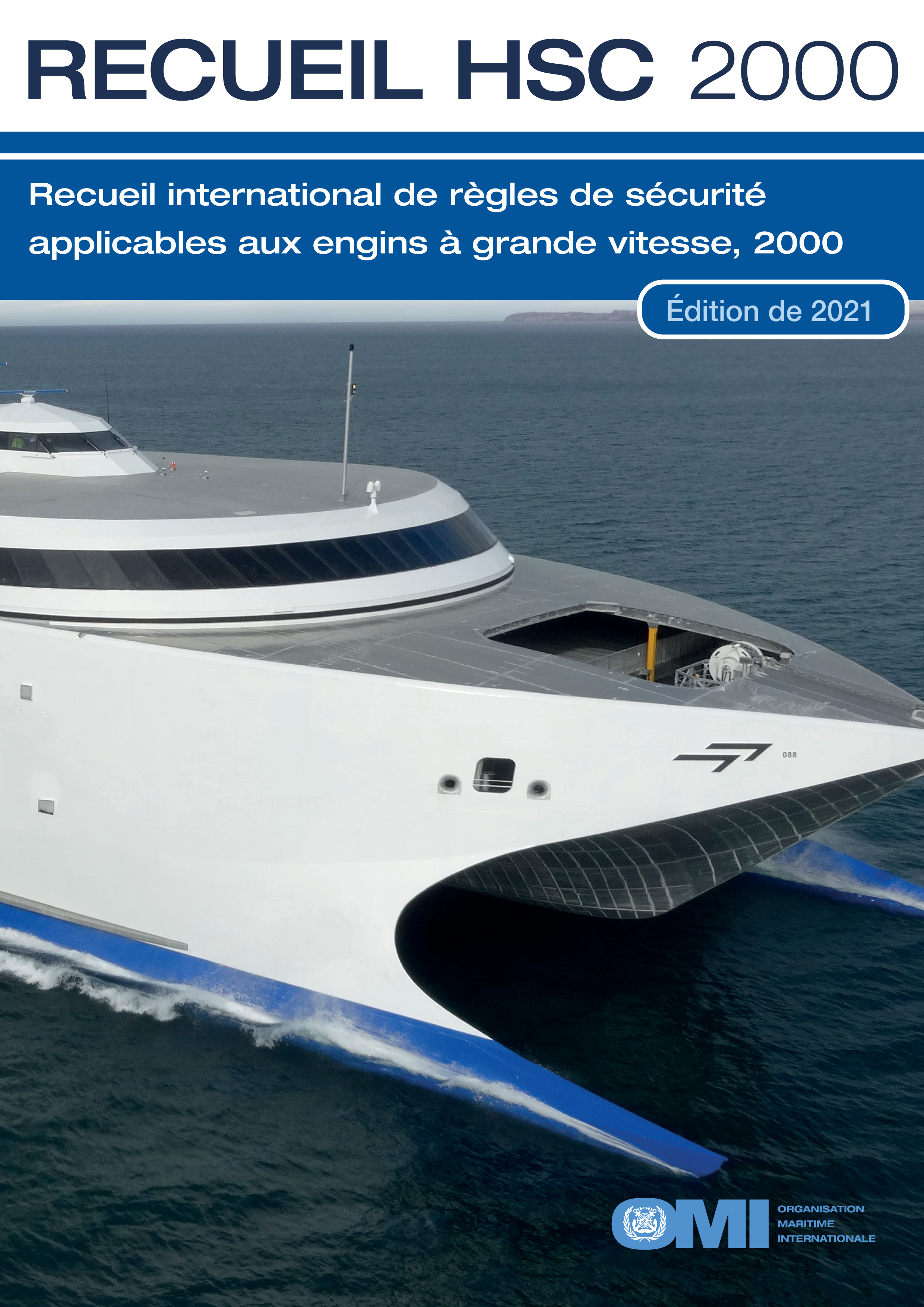
Recueil HSC 2000
show More to view fulltext, buy and share links for:Recueil HSC 2000 show Less to hide fulltext, buy and share links for: Recueil HSC 2000Le Recueil international de règles de sécurité applicables aux engins à grande vitesse, 2000 (Recueil HSC 2000) a été adopté par le Comité de la sécurité maritime, en décembre 2000, par la résolution MSC.97(73). Le Recueil HSC 2000 est obligatoire en vertu du chapitre X (Mesures de sécurité applicables aux engins à grande vitesse) de la Convention SOLAS de 1974 et s’applique aux engins à grande vitesse effectuant des voyages internationaux dont la quille a été posée ou dont la construction se trouvait à un stade équivalent le 1er juillet 2002 ou après cette date.
L’édition de 2021 contient le texte récapitulatif du Recueil HSC 2000, qui incorpore les amendements adoptés par le Comité de la sécurité maritime par les résolutions MSC.175(79), MSC.222(82), MSC.260(84), MSC.271(85), MSC.326(90), MSC.352(92), MSC.424(98) et MSC.439(99). Elle contient également les Interprétations uniformes des chapitres au Recueil HSC 2000, les Directives pour l’harmonisation des limites imposées à l’exploitation des engins à grande vitesse (MSC.1/Circ.1329) et le chapitre X de la Convention SOLAS.
-
-
-
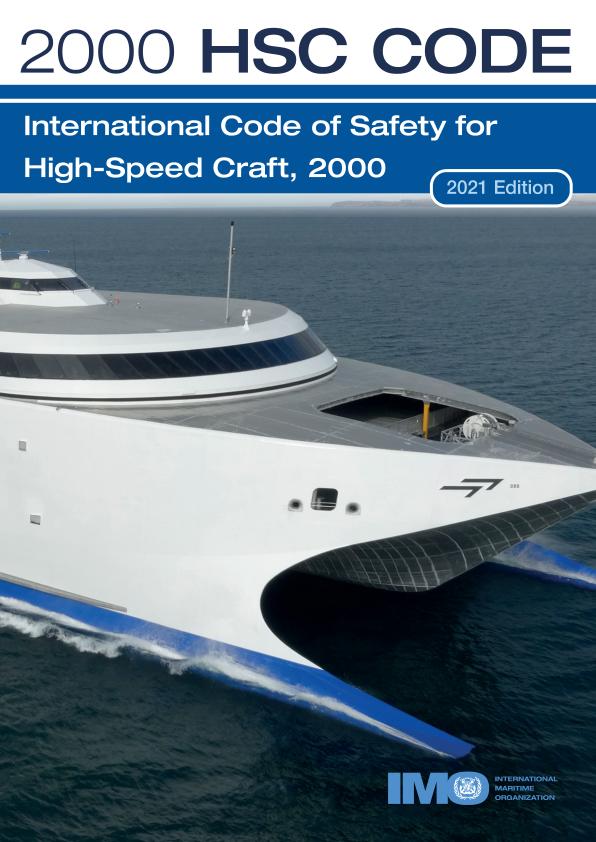
2000 HSC Code
show More to view fulltext, buy and share links for:2000 HSC Code show Less to hide fulltext, buy and share links for: 2000 HSC CodeThe International Code of Safety for High-Speed Craft, 2000 (2000 HSC Code) applies to high-speed craft that are involved in international voyages and for which the keels were laid after 1 January 1996. The 2000 HSC Code applies to craft for which the keels were laid, or which were at a similar stage of construction, on or after 1 July 2002. The application of both HSC Codes is mandatory under chapter X of the SOLAS Convention.
-
-
-
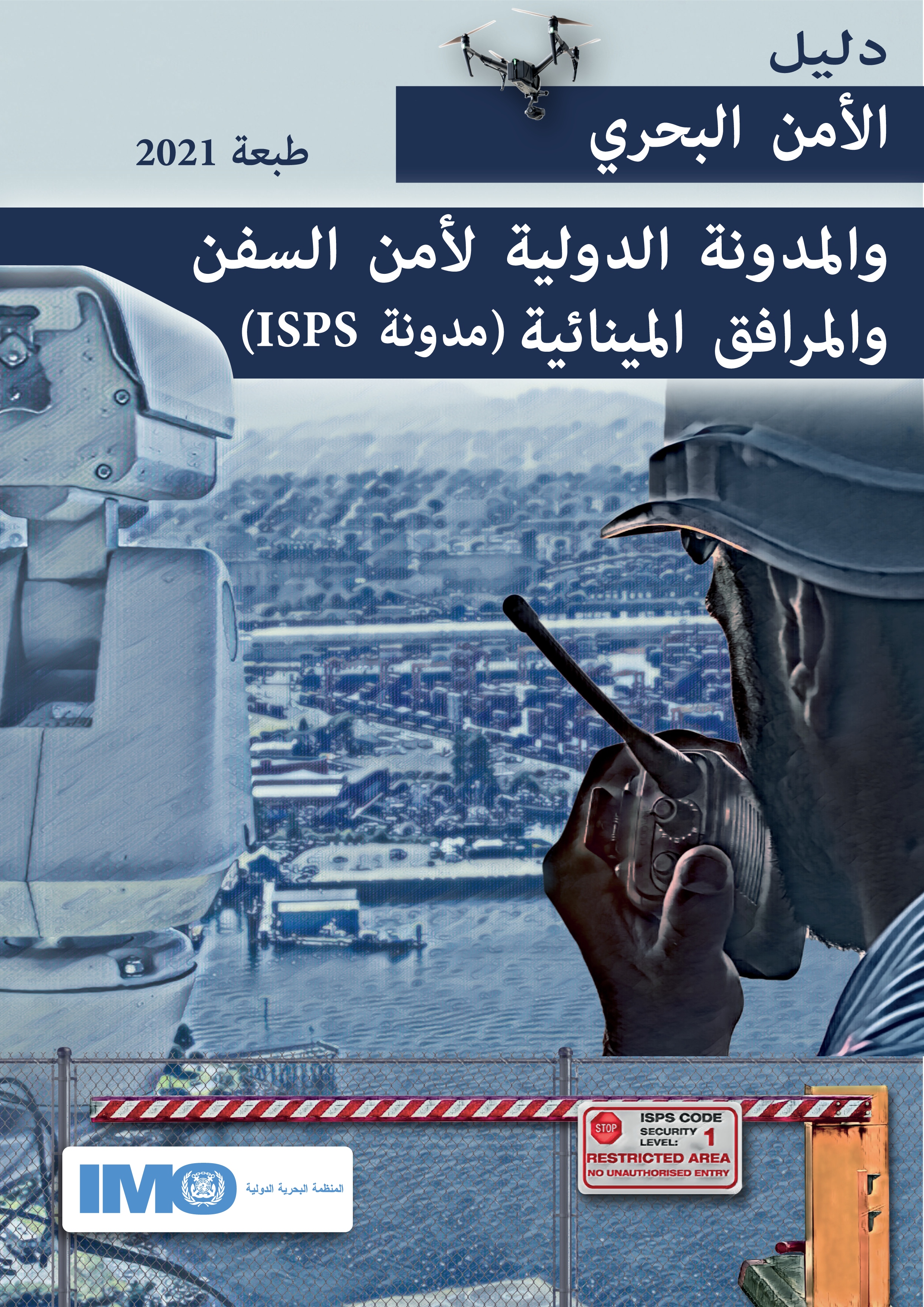
دليل الأمن البحري والمدونة الدولية لأمن السفن والمرافق المينائية (ISPS مدونة )
show More to view fulltext, buy and share links for:دليل الأمن البحري والمدونة الدولية لأمن السفن والمرافق المينائية (ISPS مدونة ) show Less to hide fulltext, buy and share links for: دليل الأمن البحري والمدونة الدولية لأمن السفن والمرافق المينائية (ISPS مدونة )أُعِدَّ هذا الدليل من أجل جمع مواد المنظمة البحرية الدولية المتعلّقة بالأمن في دليل مرشد سهل القراءة إلى الفصل 2-XI من اتفاقية سولاس والمدونة الدولية لأمن السفن والمرافق المينائية (مدونة ISPS ) بغية مساعدة الدول على تعزيز الأمن البحري، من خلال وضع الإطار القانوني اللازم والممارسات والتدابير الإدارية المتصلة بذلك، وتأمين الموارد المادية والبشرية والتقنية الضرورية.
والقصد من هذا الدليل مساعدة الحكومات المتعاقدة في اتفاقية سولاس على تنفيذ أحكام الفصل 2-XI من هذه الاتفاقية ومدونة ISPS والتحقّق من ذلك وضمان الامتثال لأحكامهما وإنفاذها، وأن يكون أيضاً عوناً ومرجعاً لَمنْ يشاركون في تنفيذ أنشطة بناء القدرات في ميدان الأمن البحري.
وفي هذه الطبعة الثانية من الإرشادات، تمّ إدماج الإرشادات التي اعتمدتها لجنة السلامة بشأن إعداد التشريعات في مجال الأمن البحري والتصدي للمخاطر السيبرانية، وتمّت مراجعة الإحالات إلى معلومات إضافية وتحديثها من أجل دعم تطبيق مدونة ISPS .
تصريح
-
-
-
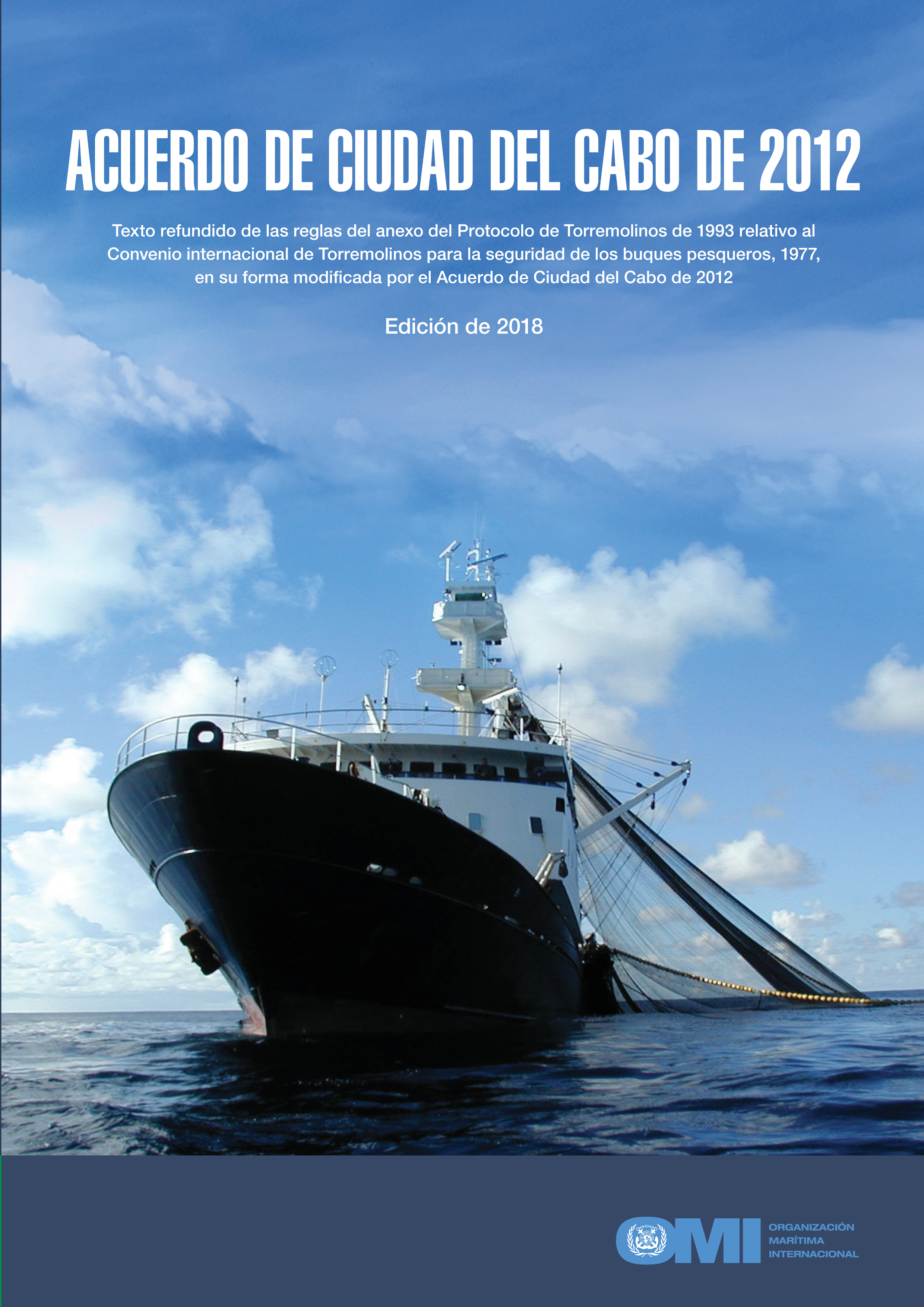
Acuerdo de Ciudad del Cabo de 2012
show More to view fulltext, buy and share links for:Acuerdo de Ciudad del Cabo de 2012 show Less to hide fulltext, buy and share links for: Acuerdo de Ciudad del Cabo de 2012El Acuerdo de Ciudad del Cabo de 2012 sobre la implantación de las disposiciones del Protocolo de Torremolinos de 1993 relativo al Convenio internacional de Torremolinos para la seguridad de los buques pesqueros, 1977 (el Acuerdo) fue adoptado por la Conferencia internacional sobre la seguridad de los buques pesqueros, celebrada del 9 al 11 de octubre de 2012 en Ciudad del Cabo (Sudáfrica), bajo los auspicios de la Organización Marítima Internacional (OMI), como resultado de la ardua labor realizada y los intensos debates mantenidos a lo largo de cinco años.
La seguridad de los pescadores y de los buques de pesca forma parte integrante del mandato de la OMI, sin embargo, desde una perspectiva mundial, el sector pesquero no cuenta con un historial de seguridad aceptable; y aunque varios factores han contribuido a ello, no hay duda que la falta de un regimen normativo vinculante a nivel internacional ha desempeñado un papel significante en la situación actual. En este contexto, ni el Convenio internacional de Torremolinos para la seguridad de los buques pesqueros, 1977, ni el Protocolo de Torremolinos, adoptado en 1993, llegaron a entrar en vigor debido a varias restricciones de índole técnica y jurídica. El Acuerdo supuso la renovación de las disposiciones de entrada en vigor del Protocolo de Torremolinos de 1993, y se espera que desempeñe una función importante en la mejora de las normas de seguridad y la reducción de la pérdida de vidas humanas en el sector de la pesca.
El Acuerdo de Ciudad del Cabo de 2012 entrará en vigor 12 meses después de la fecha en que por lo menos 22 Estados que tengan como mínimo 3 600 buques pesqueros de eslora igual o superior a 24 m que operen en alta mar en total hayan manifestado su consentimiento en obligarse por él.
-
-
-
Advanced Training for Masters, Officers, Ratings and Other Personnel on Ships Subject to the IGF Code
show More to view fulltext, buy and share links for:Advanced Training for Masters, Officers, Ratings and Other Personnel on Ships Subject to the IGF Code show Less to hide fulltext, buy and share links for: Advanced Training for Masters, Officers, Ratings and Other Personnel on Ships Subject to the IGF CodeThis course comprises an advanced training programme and qualification for personnel with immediate responsibility for the care and use of fuels and fuel systems on ships subject to the IGF Code, and builds upon the learning outcomes of the basic course. The course addresses trainees’ duties to apply a safety culture on board and be familiar with the properties of liquefied gas fuels, take precautions to prevent hazards, apply health and safety precautions and Fire safety measures, respond to emergencies, prevent pollution of the environment, and monitor and control compliance with legislative requirements.
-
-
-
Automatic Identification Systems (AIS)
show More to view fulltext, buy and share links for:Automatic Identification Systems (AIS) show Less to hide fulltext, buy and share links for: Automatic Identification Systems (AIS)This course provides information on the generic use of AIS, and is designed for officers in charge of a navigational watch on ships that are fitted with such equipment. Its main aims are to increase safety and security and to protect the environment by giving instruction on the understanding and safe use of such systems, including illustrations of dangerous or improper use.
This model course aims to meet the mandatory minimum requirements for knowledge, understanding and proficiency in table A-II/1 of the STCW Code and takes into account all relevant IMO resolutions and guidelines on AIS available at the time the model course was prepared.
-
-
-
Basic Training for Masters, Officers, Ratings and Other Personnel on Ships Subject to the IGF Code
show More to view fulltext, buy and share links for:Basic Training for Masters, Officers, Ratings and Other Personnel on Ships Subject to the IGF Code show Less to hide fulltext, buy and share links for: Basic Training for Masters, Officers, Ratings and Other Personnel on Ships Subject to the IGF CodeThis course gives practical guidance, training and basic qualifications for seafarers responsible for the care and use of, and in-emergency response to, the fuel on board ships subject to the International Code of Safety for Ships using Gases or other Low-flashpoint Fuels (IGF Code). It contains exercises structured around the safe operation of ships, their installations of systems for propulsion machinery and auxiliary power generation machinery using gas or other low-flashpoint fuel.
-
-
-
Electro-Technical Rating
show More to view fulltext, buy and share links for:Electro-Technical Rating show Less to hide fulltext, buy and share links for: Electro-Technical RatingThe aim of this model course is to meet the mandatory minimum standards of competence for seafarers as electro-technical ratings, in the following functions: electrical, electronic and control engineering; maintenance and repair; and controlling the operation of the ship and care for persons on board, at the support level specified in table A-III/7 of the STCW Code.
-
-
-
Formación Avanzada para Buques que Operen en Aguas Polares
show More to view fulltext, buy and share links for:Formación Avanzada para Buques que Operen en Aguas Polares show Less to hide fulltext, buy and share links for: Formación Avanzada para Buques que Operen en Aguas PolaresThis “advanced” course provides training to navigation officers to operate ships in Polar waters and to address those additional provisions deemed necessary for consideration beyond existing requirements of the SOLAS and MARPOL Conventions, in order to take into account the climatic conditions of Polar waters and to meet appropriate standards of Maritime safety and pollution prevention.
-
-
-
Formación Básica para Buques que Operen en Aguas Polares
show More to view fulltext, buy and share links for:Formación Básica para Buques que Operen en Aguas Polares show Less to hide fulltext, buy and share links for: Formación Básica para Buques que Operen en Aguas PolaresThis “basic” course provides training to navigation officers to operate ships in Polar waters and to address those additional provisions deemed necessary for consideration beyond existing requirements of the SOLAS and MARPOL Conventions, in order to take into account the climatic conditions of Polar waters and to meet appropriate standards of Maritime safety and pollution prevention.
-
-
-
Proficiency in Personal Survival Techniques
show More to view fulltext, buy and share links for:Proficiency in Personal Survival Techniques show Less to hide fulltext, buy and share links for: Proficiency in Personal Survival TechniquesThis course should be taken by every prospective seafarer in order to meet minimum standards of competence in safety familiarization, basic training and instruction in personal survival techniques. The course is based on the provisions of table A-VI/1-1 of the STCW Code.
-
-
-
Ratings as Able Seafarer Engine in a Manned Engine-Room or Designated to Perform Duties in a Periodically Unmanned Engine-Room
show More to view fulltext, buy and share links for:Ratings as Able Seafarer Engine in a Manned Engine-Room or Designated to Perform Duties in a Periodically Unmanned Engine-Room show Less to hide fulltext, buy and share links for: Ratings as Able Seafarer Engine in a Manned Engine-Room or Designated to Perform Duties in a Periodically Unmanned Engine-RoomThis model course aims to meet the mandatory minimum requirements for the knowledge, understanding and proficiency in table A-III/5 of the STCW Code. The course comprises four functions at the support level: Marine engineering; Electrical, electronic and control engineering; Maintenance and repair; and Controlling the operation of the ship and care for persons on board.
On successful completion of the training and assessment trainees should be competent to carry out safely the duties of ratings as able seafarer engine (AB engine).
-
-
-
Safe Handling and Transport of Solid Bulk Cargoes
show More to view fulltext, buy and share links for:Safe Handling and Transport of Solid Bulk Cargoes show Less to hide fulltext, buy and share links for: Safe Handling and Transport of Solid Bulk CargoesThe course is intended for seafarers on board ships carrying solid bulk cargoes, and personnel involved in the transport chain of solid bulk cargoes, such as officials of the competent authorities, port authorities, port terminals, mine operators, shippers, technicians and shipping company’s representatives, as well as all personnel involved in the assessment of acceptability of consignments of solid bulk cargoes according to the IMSBC Code.
-
-
-
ISM Code
show More to view fulltext, buy and share links for:ISM Code show Less to hide fulltext, buy and share links for: ISM CodeThe International Safety Management (ISM) Code with guidelines for its implementation provides an international standard for the safe management and operation of ships and for pollution prevention. It is an essential reference for maritime administrations, shipowners and operators, shipping companies, training providers and education institutes, shipbuilders, engine and equipment manufacturers and others with interest in ensuring safety at sea and prevention of damage to the environment.
This publication includes the texts of SOLAS chapter IX and the ISM Code. Additionally, Guidelines for the operational implementation of the International Safety Management (ISM) Code by Companies (MSC-MEPC.7/Circ.8), Guidance on the qualifications, training and experience necessary for undertaking the role of the designated person under the provisions of the ISM Code (MSC-MEPC.7/Circ.6), Guidance on near-miss reporting (MSC-MEPC.7/Circ.7), Guidelines on Maritime Cyber Risk Management (MSC-FAL.1/Circ.3) and resolution MSC.428(98) on Maritime Cyber Risk Management in Safety Management Systems are included.
-
-
-
2012年开普敦协定
show More to view fulltext, buy and share links for:2012年开普敦协定 show Less to hide fulltext, buy and share links for: 2012年开普敦协定经过五年的艰苦工作和深入讨论,《实施1977年托雷莫利诺斯国际渔船安全公约1933年托雷莫利诺斯议定书>规定的2012年开普敦协定》(协定)于2012年10月9至11日由国际海事组织(IMO)在南非开普敦举行的渔船安全国际会议上通过。
渔民和渔船的安全是国际海事组织职责的组成部分;然而,从全球的角度来看,渔业尚未有可接受的安全记录,虽然可能有诸多因素造成这一现状,但毫无疑问,缺乏有效的具有国际约束力的监管制度是造成该现状的重要因素。在这种背景下,由于各种技术和法律限制,1977年通过的《托雷莫利诺斯国际渔船安全公约》和1993年通过的《托雷莫利诺斯议定书》,均未能生效。本协定是对《1993年托雷莫利诺斯议定书》规定的生效再次做出承诺,预期在渔业领域提高安全标准和减少生命损失发挥重要作用。
《2012年开普敦协定》将在合计不少于3,600艘24米及以上长度的在公海作业的渔船的不少于22个国家表示同意受本协定约束之日后12个月生效。
-
-
-
Accord du Cap de 2012
show More to view fulltext, buy and share links for:Accord du Cap de 2012 show Less to hide fulltext, buy and share links for: Accord du Cap de 2012L’Accord du Cap de 2012 sur la mise en œuvre des dispositions du Protocole de Torremolinos de 1993 relatif à la Convention internationale de Torremolinos sur la sécurité des navires de pêche, 1977 a été adopté par la Conférence internationale sur la sécurité des navires de pêche, tenue du 9 au 11 octobre 2012 au Cap (Afrique du Sud), sous les auspices de l’Organisation maritime internationale (OMI), aux termes de travaux soutenus et d’un échange de vues approfondi sur une période de cinq ans.
La sécurité des pêcheurs et des navires de pêche fait partie intégrante du mandat de l’OMI; toutefois, le secteur de la pêche, d’un point de vue mondial, ne fournit pas un bilan de sécurité acceptable et, s’il est vrai qu’un bon nombre de facteurs y ont contribué, il ne fait aucun doute que l’absence d’un régime réglementaire international efficace et obligatoire a joué un rôle non négligeable pour préserver le statu quo. Dans ce contexte, ni la Convention internationale de Torremolinos sur la sécurité des navires de pêche, adoptée en 1977 ni le Protocole de Torremolinos adopté en 1993, ne sont entrés en vigueur en raison de diverses contraintes d’ordre juridique et technique. L’Accord marquait un engagement renouvelé en faveur de l’entrée en vigueur des dispositions du Protocole de Torremolinos de 1993 et il devrait jouer un rôle majeur dans l’amélioration des normes de sécurité et la réduction des pertes en vies humaines dans le secteur halieutique.
L’Accord du Cap de 2012 entrera en vigueur 12 mois après la date à laquelle le consentement à être lié par lui aura été exprimé par au moins 22 États dont le nombre total de navires de pêche d’une longueur égale ou supérieure à 24 m exploités en haute mer est au moins égal à 3 600.
-
-
-
Cape Town Agreement of 2012
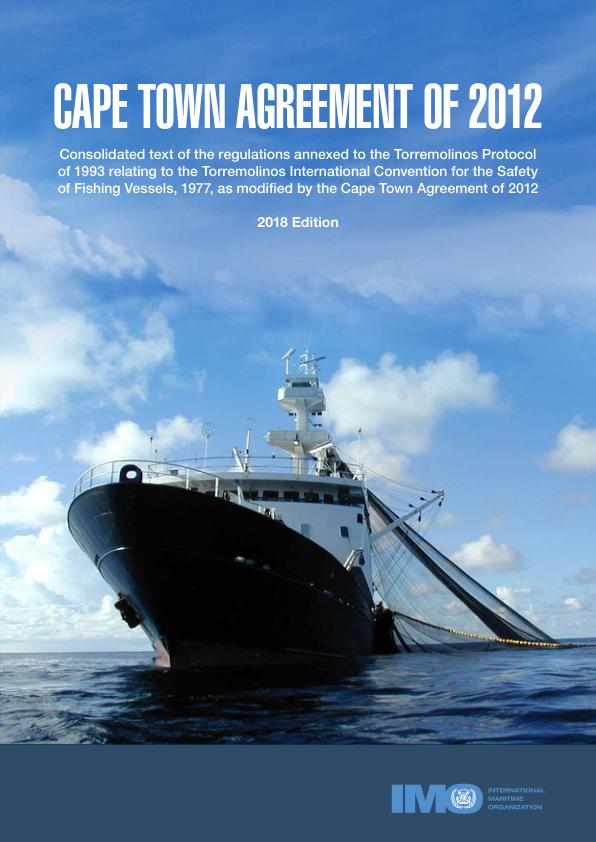
show More to view fulltext, buy and share links for:Cape Town Agreement of 2012 show Less to hide fulltext, buy and share links for: Cape Town Agreement of 2012The safety of fishers and fishing vessels forms an integral part of IMO’s mandate; however, the fishing industry, from a global perspective, does not have an acceptable safety record and, while there may be a number of factors that have contributed to this, there can be no doubt that the lack of an effective internationally binding regulatory regime has played a significant part in the status quo. The Cape Town Agreement of 2012 was a renewed commitment for the provisions of the 1993 Torremolinos Protocol to come into force and is expected to play an important part in improving safety standards and reducing the loss of life in the fisheries sector.
-
-
-
Code ISM
show More to view fulltext, buy and share links for:Code ISM show Less to hide fulltext, buy and share links for: Code ISMLe Code international de gestion pour la sécurité de l’exploitation des navires et la prévention de la pollution (Code international de gestion de la sécurité (Code ISM)) établit une norme internationale pour la sécurité de la gestion et de l’exploitation des navires et pour la prévention de la pollution. Il est un outil de référence essentiel pour les administrations maritimes, les propriétaires et les exploitants de navires, les compagnies maritimes, les formateurs spécialisés et établissements d’enseignement, les constructeurs, les fabricants de machines et de matériel et ceux qui sont soucieux de garantir la sécurité en mer et de prévenir les dommages à l’environnement.
La présente publication inclut les textes du chapitre IX de la Convention SOLAS et du Code ISM. Sont également inclues dans la publication les Directives pour l’application opérationnelle du Code international de gestion de la sécurité (Code ISM) pour les compagnies (MSC-MEPC.7/Circ.8), les Directives sur les qualifications, la formation et l’expérience requises pour s’acquitter du rôle de personne désignée en vertu des dispositions du Code international de gestion de la sécurité (Code ISM) (MSC-MEPC.7/Circ.6), les Recommandations concernant la notification des quasi-accidents (MSC-MEPC.7/Circ.7), la Gestion des cyber-risques maritimes dans le cadre des systèmes de gestion de la sécurité (résolution MSC.428(98) et les Directives sur la gestion des cyber-risques maritmes (MSC-FAL.1/Circ.3).
-
-
-
Código IGS
show More to view fulltext, buy and share links for:Código IGS show Less to hide fulltext, buy and share links for: Código IGSEl Código internacional de gestión de la seguridad operacional del buque y la prevención de la contaminación (Código internacional de gestión de la seguridad (Código IGS)) constituye una norma internacional para la gestión y la explotación de los buques en condiciones de seguridad y la prevención de la contaminación. Es una obra de consulta esencial para las administraciones marítimas, los constructores de buques, los propietarios y armadores, las compañías navieras, los centros de enseñanza, los fabricantes de motores y equipo y todo aquel que esté interesado en garantizar la seguridad marítima y evitar daños al medio ambiente.
La presente publicación contiene los textos del capítulo IX del Convenio SOLAS y el Código IGS. Asimismo, se incluyen las Directrices revisadas para la implantación operacional del Código internacional de gestión de la seguridad (Código IGS) por las compañías (MSC-MEPC.7/Circ.8), las Orientaciones sobre la titulación, formación y experiencia necesarias para desempeñar la función de persona designada en virtud de lo dispuesto en el Código internacional de gestión de la seguridad (Código IGS) (MSC-MEPC.7/Circ.6), las Orientaciones sobre la notificación de cuasiaccidentes (MSC-MEPC.7/Circ.7), la Gestión de los riesgos cibernéticos marítimos en los sistemas de gestión de la seguridad (resolución MSC.428(98)) y las Directrices sobre la gestión de los riesgos cibernéticos marítimos (MSC-FAL.1/Circ.3).
-