


Maritime safety
Collection Contents
61 - 80 of 133 results
-
-
Engine-Room Simulator
show More to view fulltext, buy and share links for:Engine-Room Simulator show Less to hide fulltext, buy and share links for: Engine-Room SimulatorThis model course is essentially a practical one, consisting of a series of exercises structured around the operation of a ship’s machinery installation and carried out in conjunction with an engine-room simulator.
-
-
-
Onboard Assessment
show More to view fulltext, buy and share links for:Onboard Assessment show Less to hide fulltext, buy and share links for: Onboard AssessmentThis course is primarily intended for any person conducting in-service assessment of competence of a seafarer on board. These would usually comprise senior shipboard officers (management level) but may also be suitable for shipboard personnel at operational level or experienced shore-based instructors with sufficient onboard expertise.
-
-
-
Ratings Forming Part of a Watch in a Manned Engine-room or Designated to Perform Duties in a Periodically Unmanned Engine-room
show More to view fulltext, buy and share links for:Ratings Forming Part of a Watch in a Manned Engine-room or Designated to Perform Duties in a Periodically Unmanned Engine-room show Less to hide fulltext, buy and share links for: Ratings Forming Part of a Watch in a Manned Engine-room or Designated to Perform Duties in a Periodically Unmanned Engine-roomThis course is principally intended for candidates for certification as ratings forming part of a watch in a manned engine-room or designated to perform duties in a periodically unmanned engine-room.
-
-
-
Ratings as Able Seafarer Deck
show More to view fulltext, buy and share links for:Ratings as Able Seafarer Deck show Less to hide fulltext, buy and share links for: Ratings as Able Seafarer DeckThe course is organized under four functions (Navigation; Cargo Handling and Stowage; Controlling the Operation of the Ship and Care for Persons on Board; and Maintenance and Repair) at the support level to cover the minimum standard of competence of ratings as able seafarer deck on ships of 500 gross tonnage or more. On successful completion of the training and assessment trainees should be competent to carry out safely the duties of ratings as able seafarer deck.
-
-
-
Training Course for Instructors
show More to view fulltext, buy and share links for:Training Course for Instructors show Less to hide fulltext, buy and share links for: Training Course for InstructorsThis course is designed to facilitate the delivery of training in the competence standards required by the STCW Convention. It will also provide a sound basis for the delivery of other training programmes.
-
-
-
International Health Regulations (2005)
show More to view fulltext, buy and share links for:International Health Regulations (2005) show Less to hide fulltext, buy and share links for: International Health Regulations (2005)Published by WHO, this third edition contains the first amendment to the IHR (2005): a revision to Annex 7 adopted by the Sixty-seventh World Health Assembly in 2014 that entered into force for all State Parties on 11 July 2016. This e-reader edition also updates Appendix 1 containing the list of IHR (2005) States Parties (to include Liechtenstein and South Sudan).
-
-
-
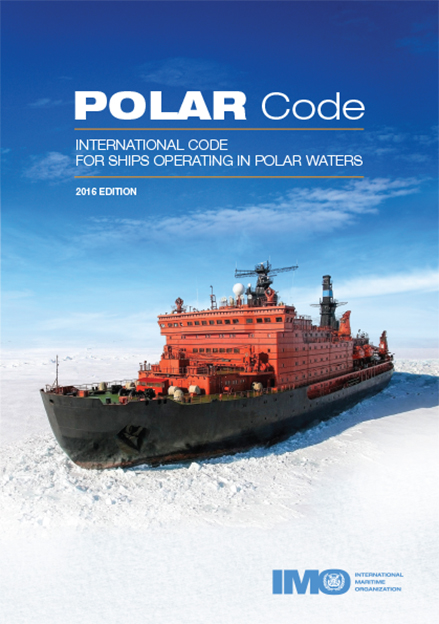
POLAR Code
show More to view fulltext, buy and share links for:POLAR Code show Less to hide fulltext, buy and share links for: POLAR CodeThe International Code for Ships Operating in Polar Waters (Polar Code) has been developed to supplement existing IMO instruments in order to provide a more comprehensive set of provisions to address the increased interests and traffic in the polar regions, and the unique operational, environmental and search and rescue concerns peculiar to these areas, taking into account that the consequences of any major safety or pollution incident in polar waters are likely to cause widespread harm to these pristine environments.
The Polar Code covers the full range of design, construction, equipment, operational, training, search and rescue and environmental protection matters relevant to ships operating in waters surrounding the two poles. It includes mandatory measures covering safety (part I-A) and pollution prevention (part II-A) and recommendatory provisions for both (parts I-B and II-B).
-
-
-
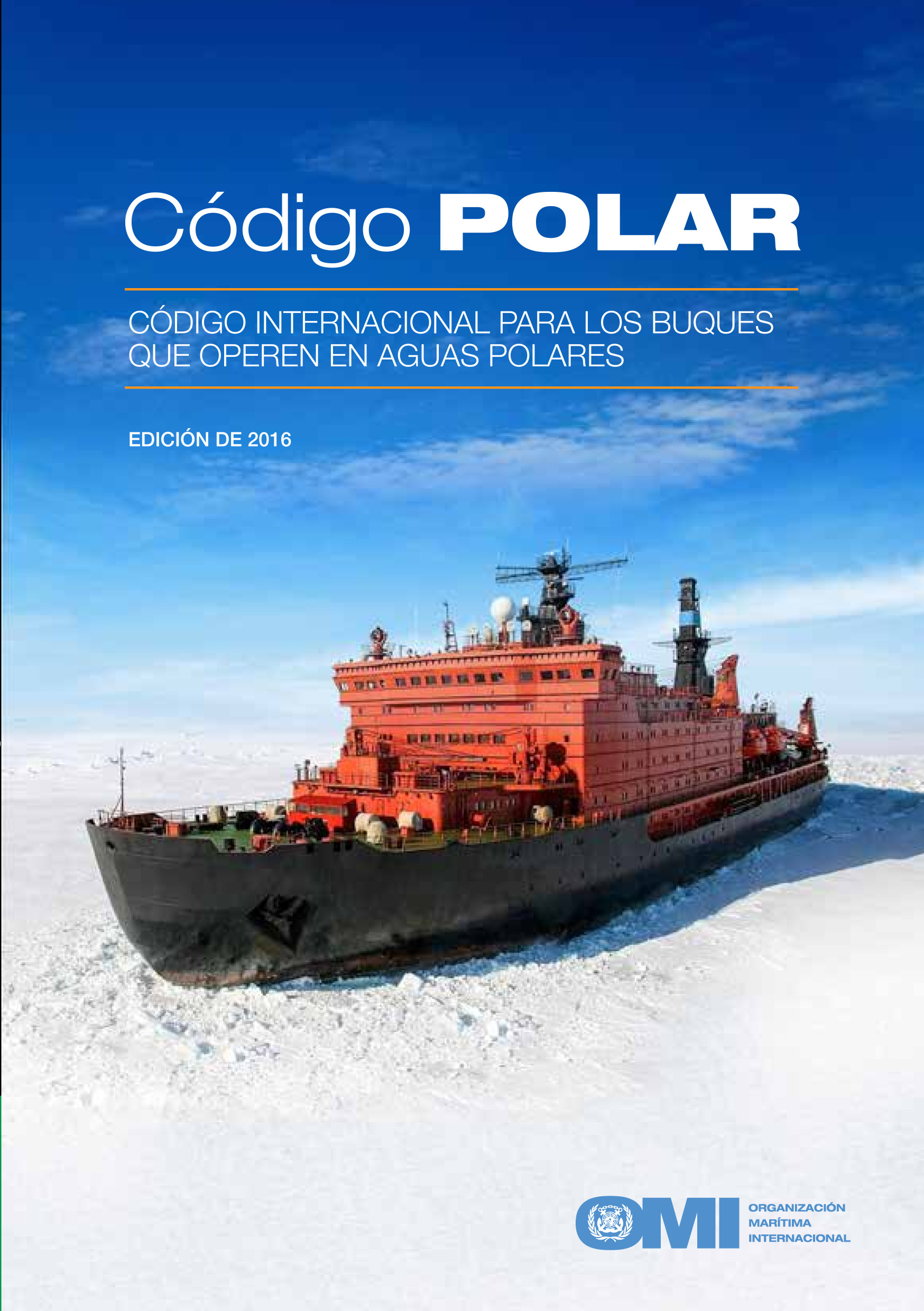
Código Polar
show More to view fulltext, buy and share links for:Código Polar show Less to hide fulltext, buy and share links for: Código PolarEl Código internacional para los buques que operen en aguas polares se ha elaborado como complemento de los instrumentos actuales de la OMI con objeto de incrementar la seguridad de las operaciones de los buques y reducir sus repercusiones en las personas y el medio ambiente en las aguas polares, remotas, vulnerables y posiblemente inhóspitas.
-
-
-
Personal Safety and Social Responsibilities
show More to view fulltext, buy and share links for:Personal Safety and Social Responsibilities show Less to hide fulltext, buy and share links for: Personal Safety and Social ResponsibilitiesThis model course aims to meet the mandatory minimum standards of competence in personal safety and social responsibilities in accordance with section A-VI/1 of the STCW Code, table A-VI/1-4. The course is designed to prepare new recruits for life on a ship at sea where they will experience a vastly different living and working environment compared to that if they were living and working ashore.
-
-
-
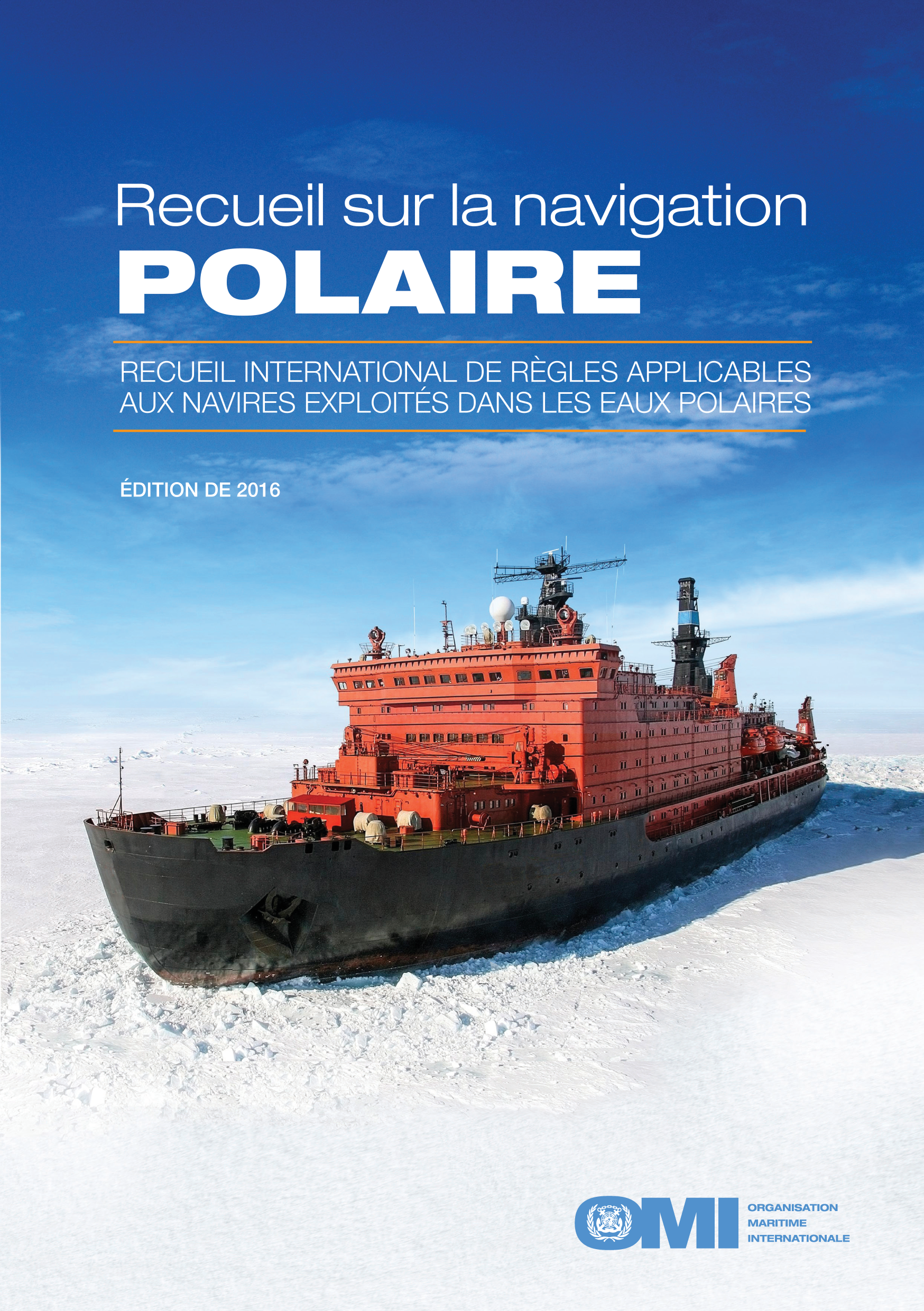
Recueil sur la navigation polaire
show More to view fulltext, buy and share links for:Recueil sur la navigation polaire show Less to hide fulltext, buy and share links for: Recueil sur la navigation polaireLe Recueil international de règles applicables aux navires exploités dans les eaux polaires (Recueil sur la navigation polaire) a été élaboré pour compléter les instruments de l’OMI existants afin de renforcer la sécurité de l’exploitation des navires et d’atténuer son impact sur les gens et l’environnement dans les eaux polaires, qui sont éloignées, vulnérables et peuvent être inhospitalières.
Le Recueil sur la navigation polaire traite l'ensemble des questions de conception, de construction, d'armement, d'exploitation, de formation et de recherche et de sauvetage qui intéressent les navires exploités dans les eaux polaires. Il comprend des mesures obligatoires portant sur la sécurité (partie I-A) et la prévention de la pollution (partie II-A) et des dispositions ayant valeur de recommandation (parties I-B et II-B).
-
-
-
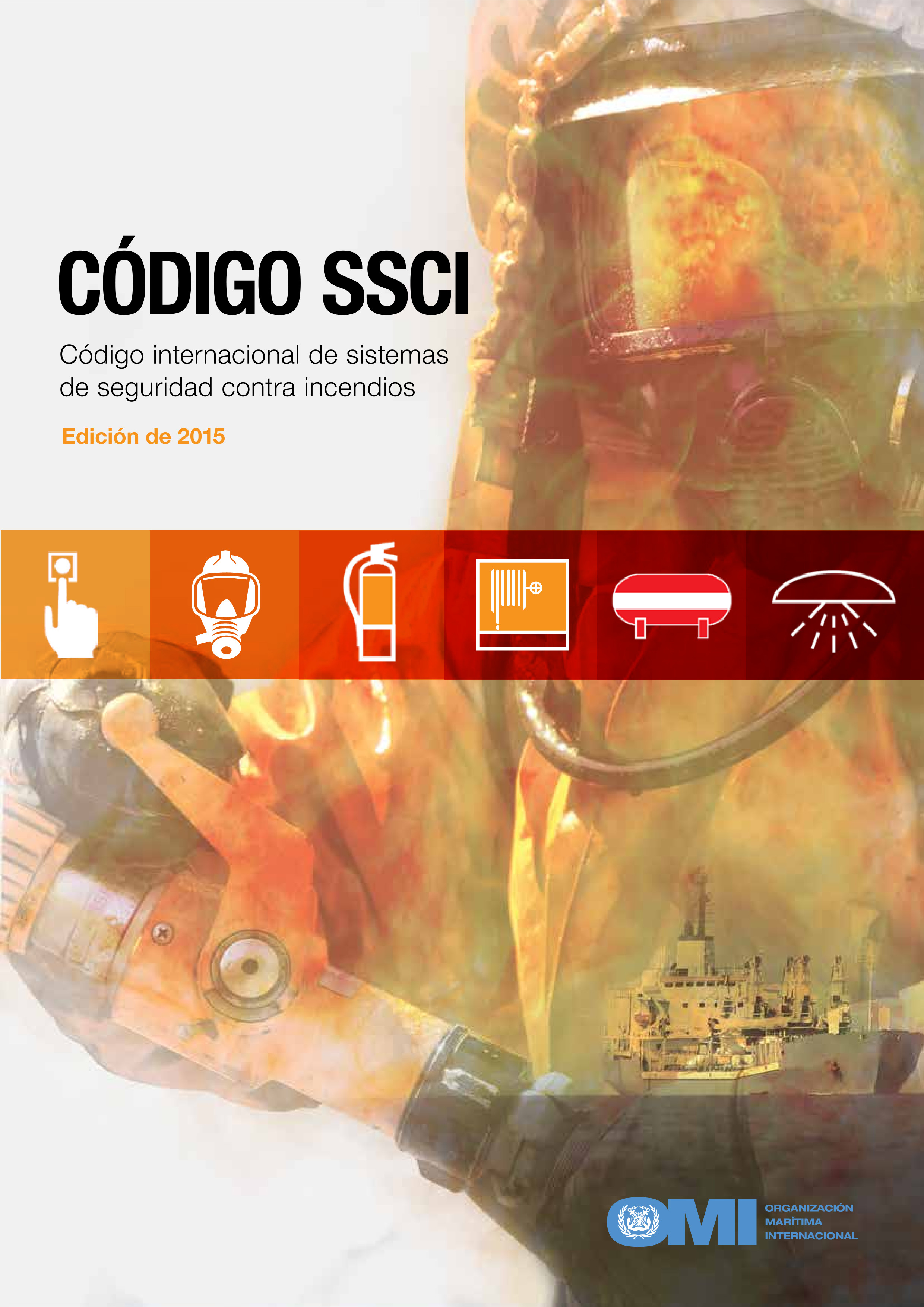
Código SSCI
show More to view fulltext, buy and share links for:Código SSCI show Less to hide fulltext, buy and share links for: Código SSCILa presente publicación contiene especificaciones técnicas para los sistemas y equipos de seguridad contra incendios prescritos en el capítulo II-2 del Convenio SOLAS sobre:
- conexiones internacionales a tierra
- protección del personal
- extintores de incendios
- sistemas fijos de extinción de incendios por gas
- sistemas fijos de extinción de incendios a base de espuma
- sistemas fijos de extinción de incendios por aspersión de agua a presión y por nebulización
- sistemas automáticos de rociadores, de detección de incendios y de alarma contraincendios
- sistemas fijos de detección de incendios y de alarma contraincendios
- sistemas de detección de humo por extracción de muestras
- sistemas de alumbrado a baja altura
- bombas fijas contraincendios de emergencia
- disposición de los medios de evacuación
- sistemas fijos a base de espuma instalados en cubierta
- sistemas de gas inerte
- sistemas fijos de detección de gases de hidrocarburos
En esta edición se incluyen también resoluciones y circulares de la OMI que guardan relación con el Código.
-
-
-
FSS Code
show More to view fulltext, buy and share links for:FSS Code show Less to hide fulltext, buy and share links for: FSS CodeThe International Code for Fire Safety Systems (FSS Code) presents engineering specifications for fire safety equipment and systems required by SOLAS chapter II-2 including, among others: international shore connections; personnel protection: fire extinguishers: fixed gas fire-extinguishing systems; fixed foam fire-extinguishing systems; fixed pressure water-spraying and watermist fire-extinguishing systems; automatic sprinkler, fire detection and fire alarm systems; fixed fire detection and fire alarm systems; sample extraction smoke detection systems; low-location lighting systems; fixed emergency fire pumps; arrangement of means of escape; fixed deck foam systems; inert gas systems; and fixed hydrocarbon gas detection systems.
-
-
-
IMSAS
show More to view fulltext, buy and share links for:IMSAS show Less to hide fulltext, buy and share links for: IMSASIMO Member State Audit Scheme (IMSAS) contains all relevant resolutions adopted by the International Maritime Organization (IMO) in the process of the institutionalization of the IMO Member State Audit Scheme (IMSAS), as well as other documents developed to support its effective implementation. It includes:
- Framework and Procedures for IMSAS
- IMO Instruments Implementation Code (III Code)
- 2013 non-exhaustive list of obligations under instruments relevant to the III Code
- Amendments to conventions making the use of the III Code mandatory in audits of Member States
- Other resolutions
- Auditor’s Manual for IMSAS.
-
-
-
Recueil FSS
show More to view fulltext, buy and share links for:Recueil FSS show Less to hide fulltext, buy and share links for: Recueil FSSLe Recueil international de règles applicables aux systèmes de protection contre l’incendie (Recueil FSS) contient les spécifications techniques applicables au matériel et aux systèmes de protection contre l’incendie prescrites par le chapitre II-2 de la Convention SOLAS qui concernent :
- les raccords internationaux de jonction avec la terre
- la protection du personnel
- les extincteurs d’incendie
- les dispositifs fixes d’extinction de l’incendie par le gaz
- les dispositifs fixes d’extinction de l’incendie à mousse
- les dispositifs fixes d’extinction de l’incendie par projection d’eau diffusée sous pression et par diffusion d’eau en brouillard
- les dispositifs automatiques d’extinction de l’incendie par eau diffusée, de détection et d’alarme d’incendie
- les dispositifs fixes de détection et d’alarme d’incendie
- les dispositifs de détection de la fumée par prélèvement d’échantillons d’air
- le système d’éclairage à faible hauteur
- la disposition des pompes d’incendie de secours fixes
- l’aménagement des moyens d’évacuation
- les dispositifs fixes à mousse sur pont
- les dispositifs à gaz inerte
- les dispositifs fixes de détection des gaz d’hydrocarbure
La présente édition contient également des résolutions de l’OMI et circulaires relatives au Recueil.
-
-
-
Chief Engineer Officer and Second Engineer Officer
show More to view fulltext, buy and share links for:Chief Engineer Officer and Second Engineer Officer show Less to hide fulltext, buy and share links for: Chief Engineer Officer and Second Engineer OfficerThis model course aims to meet the mandatory minimum requirements for knowledge, understanding and proficiency in Table A-Ill/2 of STCW Code for the function Marine Engineering at the Management Level, for the function Electrical, Electronic and Control Engineering at the Management Level, for the function Maintenance and Repair at the Management Level and the background knowledge to support Controlling the Operation of the Ship and Care for Persons on Board at the Management Level.
-
-
-
Code on Noise Levels on Board Ships
show More to view fulltext, buy and share links for:Code on Noise Levels on Board Ships show Less to hide fulltext, buy and share links for: Code on Noise Levels on Board ShipsThe Code includes: a format for noise survey reports; guidance on the inclusion of noise issues in safety management systems; suggested methods of attenuating noise; and a simplified procedure for determining noise exposure. These regulations, recommendations and advice are intended to provide Administrations with the tools to promote “hearing saving” environments on board ships.
Although legally treated as a mandatory instrument under the SOLAS Convention, certain provisions of the Code remain recommendatory or informative. The Code applies to new ships of a gross tonnage of 1,600 and above. The specific provisions relating to potentially hazardous noise levels, mitigation and personal protective gear contained in the Code may be applied to existing ships of a gross tonnage of 1,600 and above, as far as reasonable and practical, to the satisfaction of the Administration.
-
-
-
Código sobre niveles de ruido a bordo de los buques
show More to view fulltext, buy and share links for:Código sobre niveles de ruido a bordo de los buques show Less to hide fulltext, buy and share links for: Código sobre niveles de ruido a bordo de los buquesEl Código sobre niveles de ruido a bordo de los buques se ha elaborado con el fin de proporcionar normas internacionales para la protección contra el ruido en virtud de lo dispuesto en la regla II-1/3-12 del Convenio SOLAS. En el Código, que se adoptó mediante la resolución MSC.337(91) y que entrará en vigor el 1 de julio de 2014, se reconoce la necesidad de establecer límites obligatorios para el nivel de ruido en los espacios de máquinas, puestos de control, talleres, alojamientos y otros espacios a bordo de los buques.
El Código incluye:
- un formato para el informe sobre el estudio de ruidos;
- orientaciones sobre la inclusión de cuestiones relacionadas con el ruido en los sistemas de gestión de la seguridad;
- métodos propuestos de reducción del ruido; y
- un procedimiento simplificado para determinar la exposición al ruido.
- Estas reglas, recomendaciones e indicaciones tienen por finalidad facilitar a las Administraciones herramientas destinadas a fomentar entornos para «preservar la facultad auditiva» a bordo de los buques. Aunque el Código se considera jurídicamente como un instrumento obligatorio en virtud del Convenio SOLAS, determinadas disposiciones del mismo tienen carácter recomendatorio o informativo.
-
-
-
Electro-Technical Officer
show More to view fulltext, buy and share links for:Electro-Technical Officer show Less to hide fulltext, buy and share links for: Electro-Technical OfficerThis model course aims to meet the mandatory minimum requirements for knowledge, understanding and proficiency in Table A-III/6 of STCW Code for the function Electrical, Electronic and Control Engineering at the Operational Level, for the function Maintenance and Repair at the Operational Level and the background knowledge to support Controlling the Operation of the Ship and Care for Persons on Board at the Operational Level.
-
-
-
Leadership and Teamwork
show More to view fulltext, buy and share links for:Leadership and Teamwork show Less to hide fulltext, buy and share links for: Leadership and TeamworkThe course is designed to meet STCW requirements for the application of leadership and team-working skills, in accordance with the 2010 Manila Amendments, specifically as stated in table A-II/1, A-III/1 and A-III/6, Function: Controlling the operation of the ship and care for persons on board at the operational level. The course aims to provide the knowledge, skill and understanding of leadership and teamwork at the operational level on board ship.
-
-
-
Master and Chief Mate
show More to view fulltext, buy and share links for:Master and Chief Mate show Less to hide fulltext, buy and share links for: Master and Chief MateThis model course aims to meet the mandatory minimum requirements for knowledge, understanding and proficiency in Table A-ll/2 of STCW Code for the function Navigation at the Management Level, for the function Cargo Handling and Stowage at the Management Level and the background knowledge to support Controlling the Operation of the Ship and Care for Persons on Board at the Management Level.
-