


International Maritime Organization
401 - 420 of 663 results
-
-
Provisions Concerning the Reporting of Incidents Involving Harmful Substances Under MARPOL 73/78
show More to view fulltext, buy and share links for:Provisions Concerning the Reporting of Incidents Involving Harmful Substances Under MARPOL 73/78 show Less to hide fulltext, buy and share links for: Provisions Concerning the Reporting of Incidents Involving Harmful Substances Under MARPOL 73/78First published in 1986, the new edition contains:
- Article 8 of MARPOL
- Resolution MEPC.21(22)
- Amendments to Protocol I of MARPOL – Provisions concerning Reports on Incidents Involving Harmful Substances
- Resolution A.851(20) – General Principles for Ship Reporting Systems and Ship Reporting Requirements, including Guidelines for Reporting Incidents Involving Dangerous Goods, Harmful Substances and/or Marine Pollutants
- A list of agencies or officials of Administrations responsible for receiving and processing such reports
-
-
-
Quantification Addendum: International Medical Guide for Ships
show More to view fulltext, buy and share links for:Quantification Addendum: International Medical Guide for Ships show Less to hide fulltext, buy and share links for: Quantification Addendum: International Medical Guide for ShipsThis volume contains recommended quantities, indications and dosing for 55 medicines listed in the International Medical Guide for Ships, 3rd edition. The quantities are based on three types of ships:
- ocean-going ships with crews of 25–40 and no doctor (Category A)
- coastal ships with crews of up to 25 that travel no more than 24 hours from a port of call (Category B)
- small boats and private craft with crews of 15 or less, and usually travelling no more than a few hours from a port of call (Category C)
-
-
-
Radar Navigation at Management Level (Radar, ARPA, Bridge Teamwork and Search and Rescue)
Model Course 1.08
show More to view fulltext, buy and share links for:Radar Navigation at Management Level (Radar, ARPA, Bridge Teamwork and Search and Rescue) show Less to hide fulltext, buy and share links for: Radar Navigation at Management Level (Radar, ARPA, Bridge Teamwork and Search and Rescue)This IMO model course addresses the competences and the training required for seafarers to maintain safe navigation through the use of information from navigation equipment and systems to assist command decision-making at the Management Level as specified in table A-II/2 of the STCW Code.
-
-
-
Radar Navigation at Operational Level: Radar Navigation, Radar Plotting and Use of ARPA
Model course 1.07
show More to view fulltext, buy and share links for:Radar Navigation at Operational Level: Radar Navigation, Radar Plotting and Use of ARPA show Less to hide fulltext, buy and share links for: Radar Navigation at Operational Level: Radar Navigation, Radar Plotting and Use of ARPAThe course includes the theory necessary to understand the system configuration, principles, performance of shipborne marine radar and ARPA, the factors affecting radar performances, how radar information is obtained, displayed and analysed, the limitations and accuracy of that information, the correct use of operational controls to obtain an optimal display and use radar information to maintain safety of navigation.
-
-
-

Ratings Forming Part of a Watch in a Manned Engine-room or Designated to Perform Duties in a Periodically Unmanned Engine-room
Model Course 7.09
show More to view fulltext, buy and share links for:Ratings Forming Part of a Watch in a Manned Engine-room or Designated to Perform Duties in a Periodically Unmanned Engine-room show Less to hide fulltext, buy and share links for: Ratings Forming Part of a Watch in a Manned Engine-room or Designated to Perform Duties in a Periodically Unmanned Engine-roomThis course is principally intended for candidates for certification as ratings forming part of a watch in a manned engine-room or designated to perform duties in a periodically unmanned engine-room.
-
-
-
Ratings as Able Seafarer Deck
Model Course 7.10
show More to view fulltext, buy and share links for:Ratings as Able Seafarer Deck show Less to hide fulltext, buy and share links for: Ratings as Able Seafarer DeckThe course is organized under four functions (Navigation; Cargo Handling and Stowage; Controlling the Operation of the Ship and Care for Persons on Board; and Maintenance and Repair) at the support level to cover the minimum standard of competence of ratings as able seafarer deck on ships of 500 gross tonnage or more. On successful completion of the training and assessment trainees should be competent to carry out safely the duties of ratings as able seafarer deck.
-
-
-
Ratings as Able Seafarer Engine in a Manned Engine-Room or Designated to Perform Duties in a Periodically Unmanned Engine-Room
Model course 7.16
show More to view fulltext, buy and share links for:Ratings as Able Seafarer Engine in a Manned Engine-Room or Designated to Perform Duties in a Periodically Unmanned Engine-Room show Less to hide fulltext, buy and share links for: Ratings as Able Seafarer Engine in a Manned Engine-Room or Designated to Perform Duties in a Periodically Unmanned Engine-RoomThis model course aims to meet the mandatory minimum requirements for the knowledge, understanding and proficiency in table A-III/5 of the STCW Code. The course comprises four functions at the support level: Marine engineering; Electrical, electronic and control engineering; Maintenance and repair; and Controlling the operation of the ship and care for persons on board.
On successful completion of the training and assessment trainees should be competent to carry out safely the duties of ratings as able seafarer engine (AB engine).
-
-
-
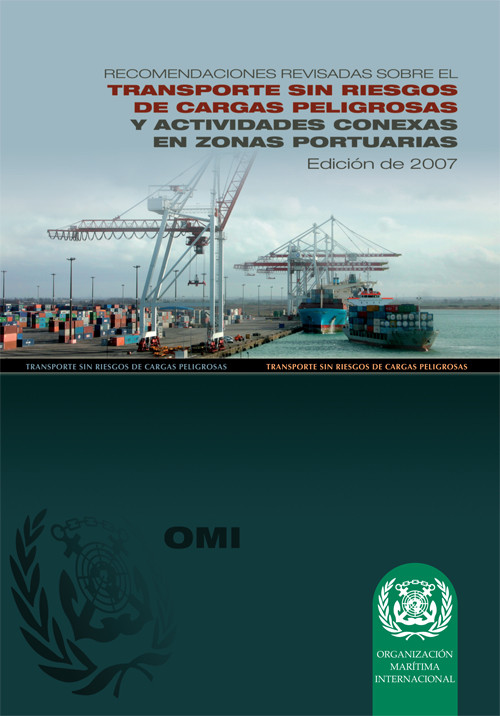
Recomendaciones Revisadas sobre el Transporte sin Riesgos de Cargas Peligrosas y Actividades Conexas en Zonas Portuarias
show More to view fulltext, buy and share links for:Recomendaciones Revisadas sobre el Transporte sin Riesgos de Cargas Peligrosas y Actividades Conexas en Zonas Portuarias show Less to hide fulltext, buy and share links for: Recomendaciones Revisadas sobre el Transporte sin Riesgos de Cargas Peligrosas y Actividades Conexas en Zonas PortuariasLa presente publicación comprende:
- un nuevo capítulo acerca de disposiciones sobre protección
- un nuevo anexo sobre fumigación en las zonas de carga
- un nuevo glosario de terminología correspondiente a la manipulación de cargas peligrosas
- recomendaciones actualizadas para el Código IMDG y demás códigos
-
-
-
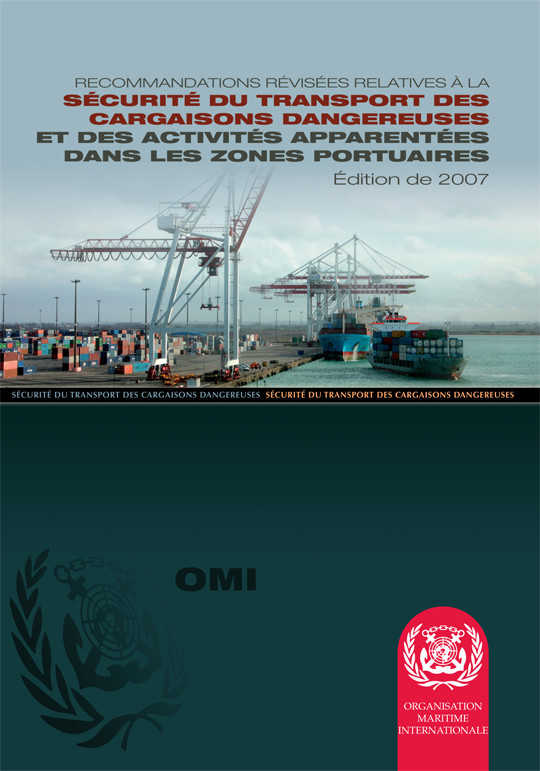
Recommandations révisées relatives à la sécurité du transport des cargaisons dangereuses et des activités apparentées dans les zones portuaires
show More to view fulltext, buy and share links for:Recommandations révisées relatives à la sécurité du transport des cargaisons dangereuses et des activités apparentées dans les zones portuaires show Less to hide fulltext, buy and share links for: Recommandations révisées relatives à la sécurité du transport des cargaisons dangereuses et des activités apparentées dans les zones portuairesLa présente publication contient:
- un nouveau chapitre intitulé "Dispositions concernant la sûreté"
- une nouvelle annexe sur la fumigation des tranches de la cargaison
- un nouveau glossaire des termes se rapportant à la manutention des cargaisons
- des recommandations actualisées pour le Code IMDG et d'autres recueils et codes
-
-
-
Recommandations révisées sur l’application du Protocole de Londres au niveau national
show More to view fulltext, buy and share links for:Recommandations révisées sur l’application du Protocole de Londres au niveau national show Less to hide fulltext, buy and share links for: Recommandations révisées sur l’application du Protocole de Londres au niveau nationalLes Recommandations révisées sur l’application du Protocole de Londres au niveau national, qui ont valeur de recommandation uniquement, visent à aider les administrations nationales à appliquer le Protocole de Londres, qu’elles soient actuellement Parties contractantes ou désireuses de devenir Parties. Il ne faut pas considérer ces recommandations comme contenant des interprétations définitives concernant le Protocole ou la manière dont il faudrait en appliquer les dispositions. Il appartient à tout moment aux Parties contractantes d’interpréter les obligations qui leur incombent en vertu du Protocole.
-
-
-
Reconocimiento de los Dispositivos Contraincendios y Disposiciones Conexas
Curso modelo 3.05: Curso y Compendio
show More to view fulltext, buy and share links for:Reconocimiento de los Dispositivos Contraincendios y Disposiciones Conexas show Less to hide fulltext, buy and share links for: Reconocimiento de los Dispositivos Contraincendios y Disposiciones ConexasThis course covers the requirements of the initial, annual, intermediate and periodical surveys, as specified in SOLAS. It does not cover preliminary design or plan approvals, nor does it cover the survey or inspection of chemical tankers, Gas carriers, special purpose ships or mobile offshore units.
-
-
-
Reconocimientos de Casco y Estructuras
Curso Modelo 3.07
show More to view fulltext, buy and share links for:Reconocimientos de Casco y Estructuras show Less to hide fulltext, buy and share links for: Reconocimientos de Casco y EstructurasThis three-volume course covers the requirements for hull structures at initial, annual, intermediate, periodical and renewal and additional surveys, as specified in SOLAS, as amended up to its 1988 Protocol, and in the 1966 Load Lines Convention, including its 1988 Protocol.
-
-
-
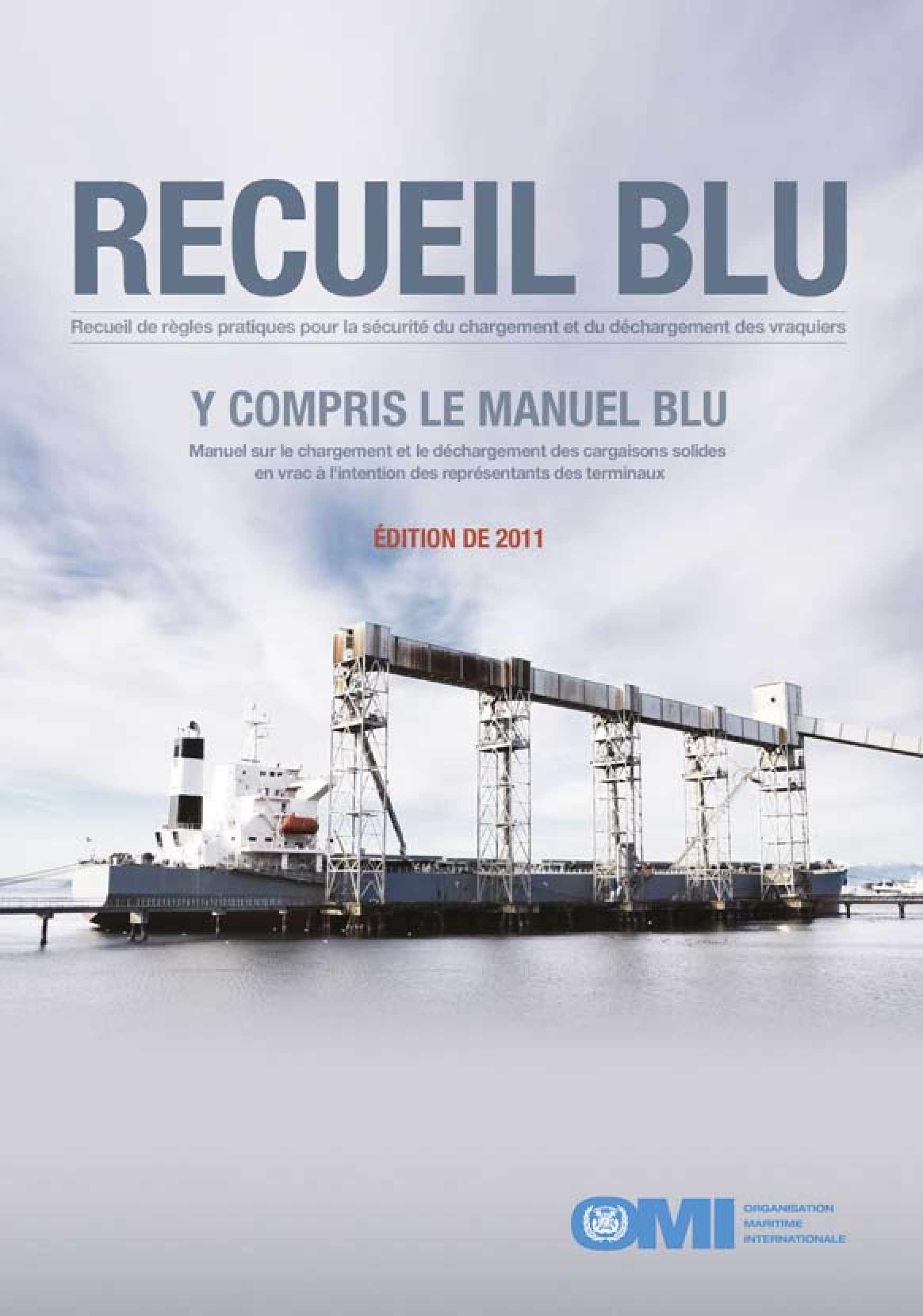
Recueil BLU
Recueil de Règles Pratiques pour la Sécurité du Chargement et du Déchargement des Vraquiers
show More to view fulltext, buy and share links for:Recueil BLU show Less to hide fulltext, buy and share links for: Recueil BLULa présente publication du Recueil BLU, y compris le Manuel BLU, renferme tous les amendements adoptés jusqu’en mai 2010.
Elle comprend entre autres :
- les amendements au Recueil BLU, adoptés par le Comité de la sécurité maritime, à ses quatre-vingtdeuxième et quatre-vingt-septième sessions, en décembre 2006 et en mai 2010, respectivement;
- les amendements au Manuel BLU, adoptés par le Comité de la sécurité maritime, à sa quatre-vingtseptième session, en mai 2010; et
- les autres aspects de la sécurité du chargement des vraquiers, approuvés par le Comité de la sécurité maritime, à sa quatre-vingt-septième session, en mai 2010.
-
-
-
Recueil CSS
Recueil de règles pratiques pour la sécurité de l’arrimage et de l’assujettissement des cargaisons
show More to view fulltext, buy and share links for:Recueil CSS show Less to hide fulltext, buy and share links for: Recueil CSSLe Recueil de règles pratiques pour la sécurité de l'arrimage et de l'assujettissement des cargaisons (Recueil CSS) fournit une norme internationale pour la sécurité de l'arrimage et de l'assujettissement des cargaisons afin de promouvoir la sauvegarde de la vie en mer, ainsi que pendant le chargement et le déchargement.
L’édition de 2021 du présent Recueil contient tous les amendements apportés jusqu'en 2020 inclus et comprend notamment les versions actualisées des textes suivants :
- Méthodes permettant d'évaluer l'efficacité des dispositifs d'assujettissement des cargaisons semi-normalisées et non normalisées (MSC.1/Circ.1623) (annexe 13);
- Directives sur la mise en place de conditions de travail sûres dans le domaine de l’assujettissement des conteneurs (MSC.1/Circ.1352/Rev.1) (annexe 14);
- Directives révisées pour l'élaboration du Manuel d’assujettissement des cargaisons (MSC.1/Circ.1353/Rev.2) (appendice 2);
- Directives révisées sur l’assujettissement des véhicules routiers transportés à bord des navires rouliers (résolution MSC.479(102), qui remplace la résolution A.581(14), telle que modifiée) (appendice 4); et
- Recommandations révisées concernant l’entrée dans les espaces clos à bord des navires (résolution A.1050(27)) (appendice 5).
-
-
-
Recueil ESP de 2011
Recueil international sur le programme renforcé d’inspections à l’occasion des visites des vraquiers et des pétroliers, 2011
show More to view fulltext, buy and share links for:Recueil ESP de 2011 show Less to hide fulltext, buy and share links for: Recueil ESP de 2011Le Recueil international sur le programme renforcé d’inspections à l’occasion des visites des vraquiers et des pétroliers, 2011 (Recueil ESP de 2011) a pour objet de fournir une norme uniforme en matière de visites pour que les espaces à cargaison et les citernes à ballast des pétroliers et des vraquiers soient inspectés régulièrement en toute sécurité.
Le présent Recueil contient, en particulier, des prescriptions spécifiques relatives aux aspects suivants :
- visites de renouvellement, annuelles et intermédiaires;
- préparatifs des visites;
- documentation devant se trouver à bord;
- procédures applicables aux mesures d’épaisseur;
- critères d’acceptation; et
- établissement des rapports de visite et évaluation.
Le Recueil ESP de 2011 a été rendu obligatoire en vertu de la règle XI-1/2 de la Convention SOLAS. Les parties A et B de l’annexe A du Recueil contiennent les prescriptions applicables aux vraquiers à muraille simple et à double muraille, respectivement. Les parties A et B de l’annexe B du Recueil contiennent les prescriptions applicables aux pétroliers à double coque et aux pétroliers autres que les pétroliers à double coque, respectivement. Le Comité de la sécurité maritime (MSC) de l’OMI a décidé que le Recueil devrait suivre de près la prescription uniforme Z10 (Visites de la coque) de l’IACS afin qu’il reste simple et facile à utiliser.
La présente édition contient tous les amendements au Recueil depuis son adoption: résolutions MSC.371(93), MSC.381(94), MSC.405(96), MSC.412(97) et MSC.461(101)). Les derniers amendements figurant dans la résolution MSC.461(101) entrent en vigueur le 1er janvier 2021.
-
-
-
Recueil FSS
Recueil international de règles applicables aux systèmes de protection contre l’incendie
show More to view fulltext, buy and share links for:Recueil FSS show Less to hide fulltext, buy and share links for: Recueil FSSLe Recueil international de règles applicables aux systèmes de protection contre l’incendie (Recueil FSS) contient les spécifications techniques applicables au matériel et aux systèmes de protection contre l’incendie prescrites par le chapitre II-2 de la Convention SOLAS qui concernent :
- les raccords internationaux de jonction avec la terre
- la protection du personnel
- les extincteurs d’incendie
- les dispositifs fixes d’extinction de l’incendie par le gaz
- les dispositifs fixes d’extinction de l’incendie à mousse
- les dispositifs fixes d’extinction de l’incendie par projection d’eau diffusée sous pression et par diffusion d’eau en brouillard
- les dispositifs automatiques d’extinction de l’incendie par eau diffusée, de détection et d’alarme d’incendie
- les dispositifs fixes de détection et d’alarme d’incendie
- les dispositifs de détection de la fumée par prélèvement d’échantillons d’air
- le système d’éclairage à faible hauteur
- la disposition des pompes d’incendie de secours fixes
- l’aménagement des moyens d’évacuation
- les dispositifs fixes à mousse sur pont
- les dispositifs à gaz inerte
- les dispositifs fixes de détection des gaz d’hydrocarbure
La présente édition contient également des résolutions de l’OMI et circulaires relatives au Recueil.
-
-
-
Recueil HSC
Recueil international de règles de sécurite applicables aux engins à grande vitesse, 1994
show More to view fulltext, buy and share links for:Recueil HSC show Less to hide fulltext, buy and share links for: Recueil HSCLe Recueil International de règles de sécurité applicables aux engins à grande vitesse, 1994 (Recueil HSC de 1994) a été adopté par le Comité de la sécurité maritime, lors de sa soixante-troisième session (mai 1994) par la résolution MSC.36(63). La Conférence SOLAS de 1994 (mai 1994) a rendu le Recueil HSC de 1994 obligatoire par l'ajout d'un nouveau chapitre X qui est entré en vigueur en janvier 1996.
Le Recueil HSC de 1994 a été élaboré à la suite d'une révision du Recueil de règles de sécurité applicables aux engins à portance dynamique (résolution A.373(X)) et compte tenu de l'augmentation de la taille et des types d'engins à grande vitesse.
-
-
-
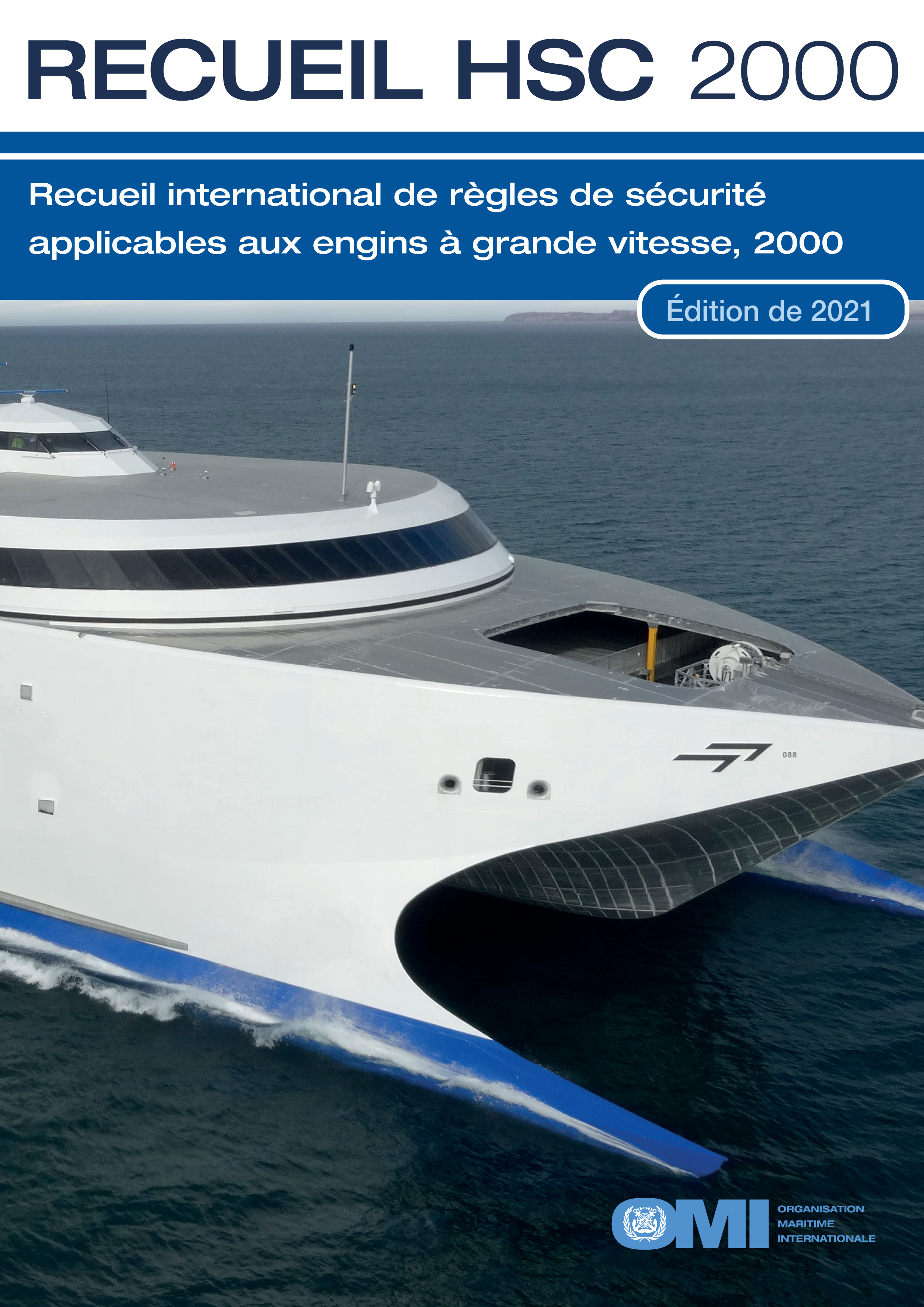
Recueil HSC 2000
Recueil International de Règles de Sécurité Applicables aux Engins à Grande Vitesse, 2000
show More to view fulltext, buy and share links for:Recueil HSC 2000 show Less to hide fulltext, buy and share links for: Recueil HSC 2000Le Recueil international de règles de sécurité applicables aux engins à grande vitesse, 2000 (Recueil HSC 2000) a été adopté par le Comité de la sécurité maritime, en décembre 2000, par la résolution MSC.97(73). Le Recueil HSC 2000 est obligatoire en vertu du chapitre X (Mesures de sécurité applicables aux engins à grande vitesse) de la Convention SOLAS de 1974 et s’applique aux engins à grande vitesse effectuant des voyages internationaux dont la quille a été posée ou dont la construction se trouvait à un stade équivalent le 1er juillet 2002 ou après cette date.
L’édition de 2021 contient le texte récapitulatif du Recueil HSC 2000, qui incorpore les amendements adoptés par le Comité de la sécurité maritime par les résolutions MSC.175(79), MSC.222(82), MSC.260(84), MSC.271(85), MSC.326(90), MSC.352(92), MSC.424(98) et MSC.439(99). Elle contient également les Interprétations uniformes des chapitres au Recueil HSC 2000, les Directives pour l’harmonisation des limites imposées à l’exploitation des engins à grande vitesse (MSC.1/Circ.1329) et le chapitre X de la Convention SOLAS.
-
-
-
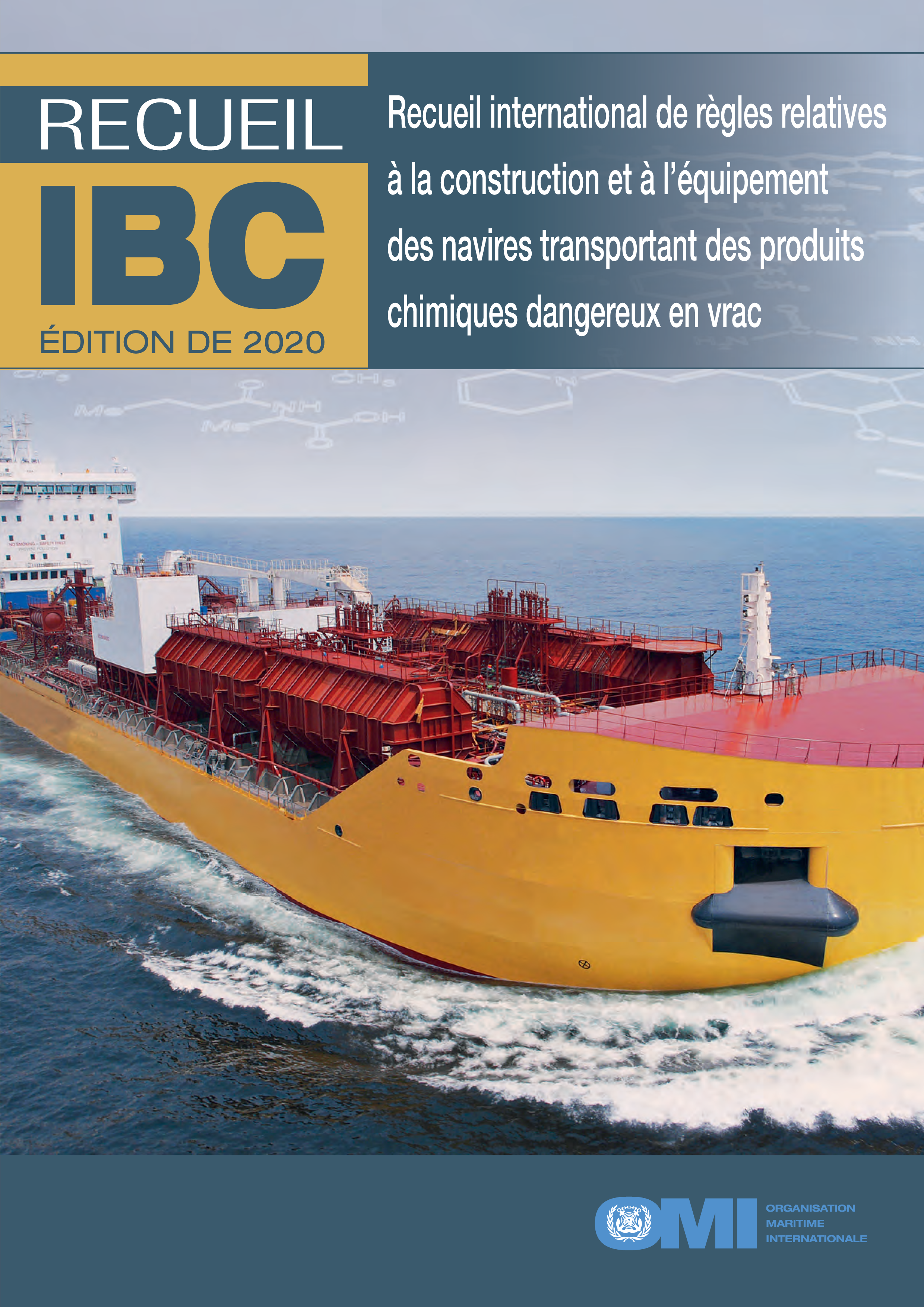
Recueil IBC
Recueil international de règles relatives à la construction et à l’équipement des navires transportant des produits chimiques dangereux en vrac
show More to view fulltext, buy and share links for:Recueil IBC show Less to hide fulltext, buy and share links for: Recueil IBCL’objectif du Recueil international de règles relatives à la construction et à l’équipement des navires transportant des produits chimiques dangereux en vrac (Recueil IBC) a pour objet d’offrir des normes internationales pour la sécurité du transport maritime en vrac des produits chimiques dangereux et des substances liquides nocives énumérés au chapitre 17.
Il prescrit des normes de conception et de construction des navires utilisés pour un tel transport, quelle qu’en soit la jauge, ainsi que le matériel dont ces navires doivent être équipés afin de réduire au minimum les risques auxquels sont exposés le navire, son équipage et l’environnement, compte tenu de la nature des produits transportés.
La présente édition du Recueil intègre un certain nombre d’amendements qui sont entrés en vigueur depuis sa dernière publication en 2016, notamment :
- les résolutions MEPC.302(72) et MSC.440(99) modifiant le modèle de Certificat international d’aptitude au transport de produits chimiques dangereux en vrac, qui sont entrées en vigueur le 1er janvier 2020; et
- les résolutions MEPC.318(74) et MSC.460(101), modifiant les chapitres 1, 15, 16, 17, 18, 19 et 21, y compris une révision complète des informations sur les produits figurant aux chapitres 17 et 18, qui entrent en vigueur le 1er janvier 2021.
-
-
-
Recueil IGC
Recueil international de règles relatives à la construction et à l’équipement des navires transportant des gaz liquéfiés en vrac
show More to view fulltext, buy and share links for:Recueil IGC show Less to hide fulltext, buy and share links for: Recueil IGCLe Recueil international de règles relatives à la construction et à l’équipement des navires transportant des gaz liquéfiés en vrac (Recueil IGC de 1993) a pour objet d’offrir une norme internationale à la sécurité du transport maritime en vrac des gaz liquéfiés (et de certaines autres matières énumérées dans la Recueil) en imposant aux navires utilisés pour un tel transport des normes de conception et de construction et un armement qui permettent de réduire le plus possible les risques auxquels sont exposés le navire, son équipage et l’environnement, compte tenu des la nature des produits transportés.
La présente édition reste valable et s’applique à tous les navires construits avant le 1er janvier 2016.
-