


International Maritime Organization
361 - 380 of 663 results
-
-
Oil Tanker Cargo and Ballast Handling Simulator
Model Course 2.06
show More to view fulltext, buy and share links for:Oil Tanker Cargo and Ballast Handling Simulator show Less to hide fulltext, buy and share links for: Oil Tanker Cargo and Ballast Handling SimulatorThis model course is essentially a practical one and consists of a series of exercises structured around the operation of the cargo and ballast installation of an oil tanker and carried out in conjunction with a simulator.
-
-
-
Onboard Assessment
Model course 1.30
show More to view fulltext, buy and share links for:Onboard Assessment show Less to hide fulltext, buy and share links for: Onboard AssessmentThis course is primarily intended for any person conducting in-service assessment of competence of a seafarer on board. These would usually comprise senior shipboard officers (management level) but may also be suitable for shipboard personnel at operational level or experienced shore-based instructors with sufficient onboard expertise.
-
-
-
Operational Guidelines on Sunken and Submerged Oil Assessment and Removal Techniques
show More to view fulltext, buy and share links for:Operational Guidelines on Sunken and Submerged Oil Assessment and Removal Techniques show Less to hide fulltext, buy and share links for: Operational Guidelines on Sunken and Submerged Oil Assessment and Removal TechniquesThe aim of the Guidelines is to provide practical guidance for assessing and responding to incidents involving sunken oil. Their scope is confined to sunken and submerged oil and does not include oil on sunken wrecks. The Guidelines also include references to other information sources.
-
-
-
Operational Use of Electronic Chart Display and Information Systems (ECDIS)
Model course 1.27
show More to view fulltext, buy and share links for:Operational Use of Electronic Chart Display and Information Systems (ECDIS) show Less to hide fulltext, buy and share links for: Operational Use of Electronic Chart Display and Information Systems (ECDIS)This model course is intended to provide the knowledge, skill and understanding of ECDIS and electronic charts, to the thorough extent needed, to safely navigate vessels whose primary means of navigation is ECDIS. The course emphasizes both the application and learning of ECDIS in a variety of underway contexts. The course is designed to meet the STCW requirements in the use of ECDIS, as revised by the 2010 Manila Amendments.
-
-
-
Orientaciones de 2012 para la elaboracion de listas de criterios de actuación y niveles de actuación con respecto a los desechos de pescado
show More to view fulltext, buy and share links for:Orientaciones de 2012 para la elaboracion de listas de criterios de actuación y niveles de actuación con respecto a los desechos de pescado show Less to hide fulltext, buy and share links for: Orientaciones de 2012 para la elaboracion de listas de criterios de actuación y niveles de actuación con respecto a los desechos de pescadoEn la presente publicación se ofrecen orientaciones dirigidas a los responsables de la reglamentación y las normas con respecto a la selección de listas de criterios de actuación y la elaboración de niveles de actuación para los desechos de pescado destinados a la evacuación en el mar. Si bien tienen por objeto asistir con la aplicación de las prescripciones del Convenio sobre la prevención de la contaminación del mar por vertimiento de desechos y otras materias, 1972 (Convenio de Londres) y su Protocolo de 1996 (Protocolo de Londres), las orientaciones son generales, por lo que podrían aplicarse para la evaluación de desechos de pescado en virtud de otros instrumentos.
-
-
-
Step-by-step guidance on simple approaches to creating and using action lists and action levels for dredged material
show More to view fulltext, buy and share links for:Step-by-step guidance on simple approaches to creating and using action lists and action levels for dredged material show Less to hide fulltext, buy and share links for: Step-by-step guidance on simple approaches to creating and using action lists and action levels for dredged materialThis publication is intended as a starting place for countries without action lists and/or action levels so that they can minimize the environmental impacts of dumping at sea, enabling them to make sound permit decisions and be in compliance with the requirements of the London Protocol and Convention.
The texts of this title are in English, French and Spanish
-
-
-
Orientaciones revisadas sobre la implantación nacional del Protocolo de Londres
show More to view fulltext, buy and share links for:Orientaciones revisadas sobre la implantación nacional del Protocolo de Londres show Less to hide fulltext, buy and share links for: Orientaciones revisadas sobre la implantación nacional del Protocolo de LondresLa presente publicación tiene un carácter únicamente orientativo y su objetivo es ayudar a las administraciones nacionales en la implantación del Protocolo de Londres, tanto si son actualmente Partes Contratantes o si simplemente están interesadas en adherirse al Protocolo. No debe entenderse que estas orientaciones presentan unas interpretaciones definitivas del Protocolo o de cómo deberían aplicarse sus disposiciones. Las Partes Contratantes siguen siendo quienes han de interpretar las obligaciones que han asumido en virtud del Protocolo.
-
-
-
POLAR Code
International Code for Ships Operating in Polar Waters
show More to view fulltext, buy and share links for:POLAR Code show Less to hide fulltext, buy and share links for: POLAR CodeThe International Code for Ships Operating in Polar Waters (Polar Code) has been developed to supplement existing IMO instruments in order to provide a more comprehensive set of provisions to address the increased interests and traffic in the polar regions, and the unique operational, environmental and search and rescue concerns peculiar to these areas, taking into account that the consequences of any major safety or pollution incident in polar waters are likely to cause widespread harm to these pristine environments.
The Polar Code covers the full range of design, construction, equipment, operational, training, search and rescue and environmental protection matters relevant to ships operating in waters surrounding the two poles. It includes mandatory measures covering safety (part I-A) and pollution prevention (part II-A) and recommendatory provisions for both (parts I-B and II-B).
-
-
-
PSSA
Particularly Sensitive Sea Areas
show More to view fulltext, buy and share links for:PSSA show Less to hide fulltext, buy and share links for: PSSAA Particularly Sensitive Sea Area (PSSA) is an area of the marine environment that needs special protection through action by the IMO because of its significance for recognized ecological, socio-economic, or scientific attributes where such attributes may be vulnerable to damage by international shipping activities.
IMO is the only international body responsible for assessing proposals for and designating areas as PSSAs and adopting measures applicable to international shipping. This publication provides the reader with an overview of all PSSAs designated by the MEPC since 1990.
-
-
-
Pasajeros y sus equipajes
Convenio de Atenas relativo al transporte de pasajeros y sus equipajes por mar, 1974, y Protocolo de 2002
show More to view fulltext, buy and share links for:Pasajeros y sus equipajes show Less to hide fulltext, buy and share links for: Pasajeros y sus equipajesThis publication concerns the carriage of passengers and their luggage by sea and the establishment of a regime of liability for damage suffered by passengers carried on a seagoing vessel. It includes:
Final Act of the International Legal Conference on the Carriage of Passengers and their Luggage on Board Ships, 1974; Athens Convention relating to the Carriage of Passengers and their Luggage by Sea (PAL), 1974; Understanding of the Conference in Relation to Participation in the Convention and the Performance of Depositary Functions in Relation thereto by the Secretary-General of the Inter-Governmental Maritime Consultative Organization (IMCO); Final Act of the International Conference on the Revision of the Athens Convention relating to the Carriage of Passengers and their Luggage by Sea, 1974; Protocol of 2002 to the Athens Convention relating to the Carriage of Passengers and their Luggage by Sea, 1974.
-
-
-
Passenger Ship Crisis Management and Human Behaviour Training
Model Course 1.42
show More to view fulltext, buy and share links for:Passenger Ship Crisis Management and Human Behaviour Training show Less to hide fulltext, buy and share links for: Passenger Ship Crisis Management and Human Behaviour TrainingThis model course aims to meet the mandatory minimum requirements for the training of personnel in crisis management during emergency situations on board Passenger ships. Trainees gain competence in passenger ship crisis management and human behaviour training in accordance with section A-V/2, paragraph 4 and table A-V/2-2 of the STCW Code, demonstrating the ability to organize shipboard emergency procedures; optimize the use of resources; control responses to emergencies; control passengers and other personnel during emergency situations; and establish and maintain effective communications.
-
-
-
Passenger Ship Crowd Management Training
Model Course 1.41
show More to view fulltext, buy and share links for:Passenger Ship Crowd Management Training show Less to hide fulltext, buy and share links for: Passenger Ship Crowd Management TrainingThe model course is designed to provide trainees with knowledge and skills in managing crowds. This covers the mandatory competences and the required knowledge, understanding and proficiencies specified in paragraph 3 of section A-V/2 and table A-V/2-1 of the STCW Code. On completion, the trainee should be able to demonstrate the ability to contribute to the implementation of shipboard emergency plans and procedures to muster and evacuate passengers as well as assisting passengers en route to muster and embarkation stations.
-
-
-
Passengers and their Luggage
Athens Convention relating to the Carriage of Passengers and their Luggage by Sea, 1974
show More to view fulltext, buy and share links for:Passengers and their Luggage show Less to hide fulltext, buy and share links for: Passengers and their LuggageThis publication concerns the carriage of passengers and their luggage by sea and the establishment of a regime of liability for damage suffered by passengers carried on a seagoing vessel. It includes:
Final Act of the International Legal Conference on the Carriage of Passengers and their Luggage on Board Ships, 1974; Athens Convention relating to the Carriage of Passengers and their Luggage by Sea (PAL), 1974; Understanding of the Conference in Relation to Participation in the Convention and the Performance of Depositary Functions in Relation thereto by the Secretary-General of the Inter-Governmental Maritime Consultative Organization (IMCO); Final Act of the International Conference on the Revision of the Athens Convention relating to the Carriage of Passengers and their Luggage by Sea, 1974; Protocol of 2002 to the Athens Convention relating to the Carriage of Passengers and their Luggage by Sea, 1974.
-
-
-
Performance Standards for Shipborne Radiocommunications and Navigational Equipment and Systems
show More to view fulltext, buy and share links for:Performance Standards for Shipborne Radiocommunications and Navigational Equipment and Systems show Less to hide fulltext, buy and share links for: Performance Standards for Shipborne Radiocommunications and Navigational Equipment and SystemsAs a result of the modernization of the Global Maritime Distress and Safety System (GMDSS) in 2022, several performance standards have been revised, consolidated, revoked or newly adopted. Most of these performance standards will be implemented as from 1 January 2024, in line with the entry into force of the amendments to SOLAS chapter IV and other related instruments.
The latest developments under SOLAS chapter V include amendments to the performance standards for shipborne voyage data recorders and simplified voyage data recorders, and revised performance standards for electronic chart display and information systems, which will introduce new IHO S-100 product specifications.
The present publication incorporates all performance standards for shipborne radiocommunications and navigational equipment and systems, including revisions or amendments thereto adopted up to June 2023.
-
-
-
Personal Safety and Social Responsibilities
Model course 1.21
show More to view fulltext, buy and share links for:Personal Safety and Social Responsibilities show Less to hide fulltext, buy and share links for: Personal Safety and Social ResponsibilitiesThis model course aims to meet the mandatory minimum standards of competence in personal safety and social responsibilities in accordance with section A-VI/1 of the STCW Code, table A-VI/1-4. The course is designed to prepare new recruits for life on a ship at sea where they will experience a vastly different living and working environment compared to that if they were living and working ashore.
-
-
-
Pollution Prevention Equipment under MARPOL
show More to view fulltext, buy and share links for:Pollution Prevention Equipment under MARPOL show Less to hide fulltext, buy and share links for: Pollution Prevention Equipment under MARPOLThe purpose of this publication is to provide easy reference to IMO resolutions on shipboard pollution-prevention equipment that are required under MARPOL.
The present publication is a revised and updated version of the 1997 edition and contains those resolutions on pollution-prevention equipment which are currently applicable to new installations on board ships.
-
-
-
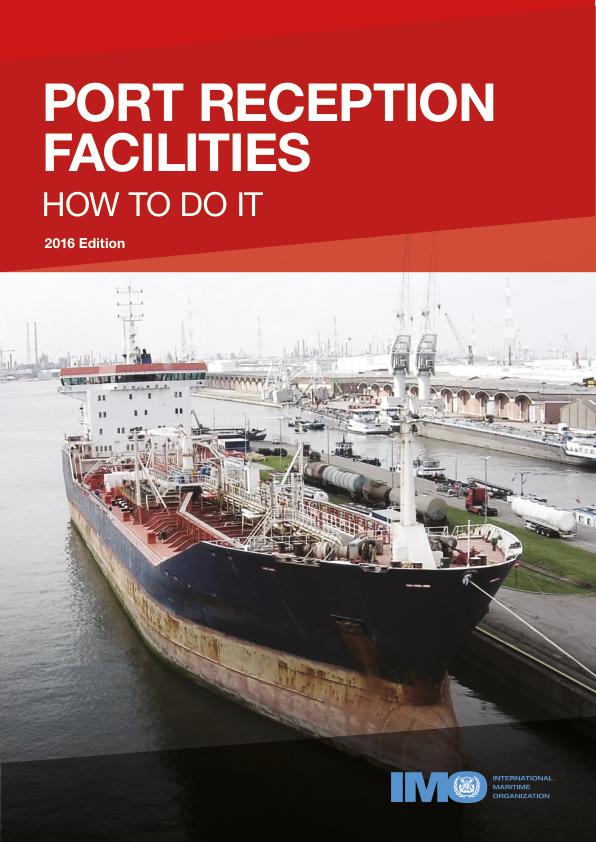
Port Reception Facilities
How to do it
show More to view fulltext, buy and share links for:Port Reception Facilities show Less to hide fulltext, buy and share links for: Port Reception FacilitiesThis Manual provides practical information to Governments and competent (port) authorities, in particular those in developing countries, as well as the shipping industry, agencies and waste contractors seeking guidance when implementing MARPOL.
It also provides guidance on how to deal with possible inadequacies, as, in order to comply fully with MARPOL, a party State has to ensure the provision of adequate port reception facilities meeting the needs of ships using their ports, without causing undue delay to the ships.
-
-
-
Prevention of corrosion on board ships
show More to view fulltext, buy and share links for:Prevention of corrosion on board ships show Less to hide fulltext, buy and share links for: Prevention of corrosion on board shipsFollowing the continuing loss, sometimes without a trace, of ships carrying solid bulk cargoes and the heavy loss of life caused by such accidents, the IMO Assembly, in the early 90s, requested the Maritime safety Committee (MSC) to develop requirements for the design, construction, operation, maintenance and survey of Bulk carriers and specific precautionary measures with respect to type of cargoes. Consequently, extensive deliberations of the issues involved took place at the MSC meetings over a number of years and a raft of measures, many derived from Formal Safety Assessment (FSA) studies conducted by various Member States of IMO, were considered. One of the many items on the list was “Improved coatings: Controls and/or performance standards for protective coatings, in relation to compatibility with cargoes”.
This publication contains performance standards and guidelines developed as a result of the above considerations.
This 2010 Edition reproduces English, French and Spanish official texts.
-
-
-
Manuel sur la pollution par les hydrocarbures
Section V – Aspects administratifs des interventions de lutte contre la pollution par les hydrocarbures
show More to view fulltext, buy and share links for:Manuel sur la pollution par les hydrocarbures show Less to hide fulltext, buy and share links for: Manuel sur la pollution par les hydrocarburesLa présente section du Manuel sur la pollution par les hydrocarbures a pour objet de donner au lecteur et notamment aux organismes de coordination, aux commandants sur place et à tous ceux qui participent à la gestion de la lutte contre la pollution par les hydrocarbures, une indication des intérêts en cause lors d’une situation d’urgence due à une pollution par des hydrocarbures et par la suite, ainsi qu’un aperçu général des conventions internationales et accords professionnels qui régissent la limitation de la responsabilité et l’indemnisation pour les dommages dus à la pollution par les hydrocarbures. Cette section ne prétend pas être un commentaire autorisé ni définitif sur les relations juridiques qui existent entre les diverses parties en cause lors d’une situation d’urgence due à une pollution par des hydrocarbures, ni une interprétation des conventions internationales applicables.
-
-
-
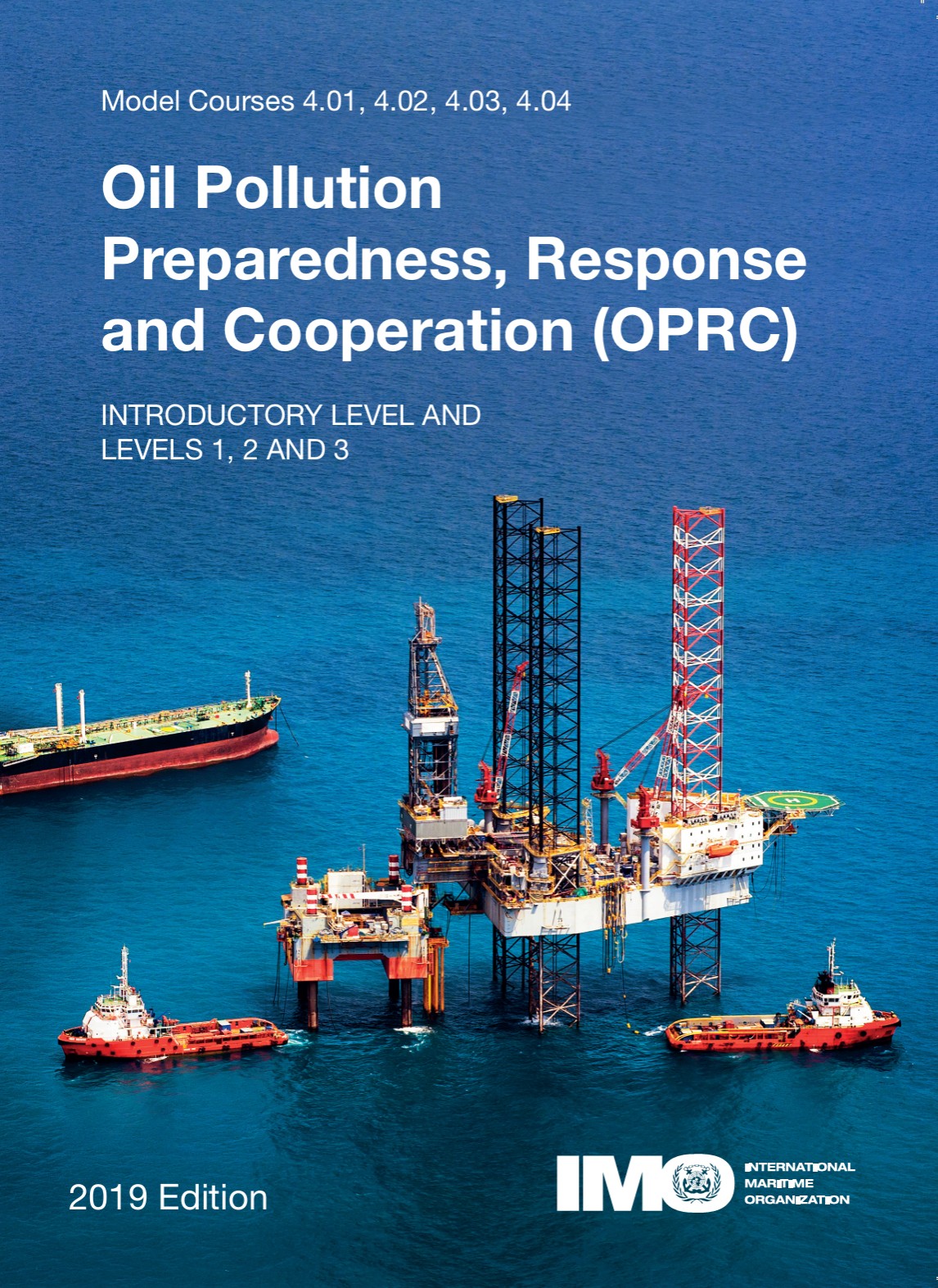
Oil Pollution, Preparedness, Response and Cooperation
Model courses 4.01, 4.02, 4.03, 4.04: Introductory level and levels 1, 2 and 3
show More to view fulltext, buy and share links for:Oil Pollution, Preparedness, Response and Cooperation show Less to hide fulltext, buy and share links for: Oil Pollution, Preparedness, Response and CooperationThe International Maritime Organisation (IMO) has developed the model courses on oil pollution preparedness, response and cooperation (OPRC) to provide guidance for preparedness and response to marine oil spills from ships.
The courses take into particular account the training needs of developing countries and include sufficient flexibility so that they may be easily tailored to address specific national and regional needs. Collectively, the suite of courses has been designed to address all aspects of oil spill planning, response and management. Each course comprises an instructor’s manual, a participant’s manual and PowerPoint presentations and exercises for each course module.
The contents of this course can be downloaded from the "Supplements" tab and include:
- OPRC Introductory Level (Model course 4.01);
- OPRC Level 1: First Responder (Model course 4.02);
- OPRC Level 2: Supervisor/On-Scene Commander (Model course 4.03);
- OPRC Level 3: Administrator and Senior Manager (Model course 4.04);
- A set of Supplementary material, comprising a video presentation, and a document with useful links.
-