


International Maritime Organization
341 - 360 of 663 results
-
-
Medical First Aid
Model Course 1.14: Course and Compendium
show More to view fulltext, buy and share links for:Medical First Aid show Less to hide fulltext, buy and share links for: Medical First AidThis model course provides training in elementary first aid at operator’s level and is based on the provisions of table A-VI/4-1 of the STCW Code.
-
-
-
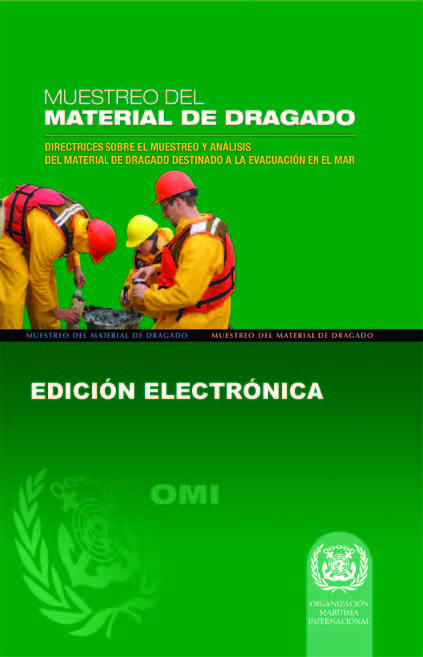
Muestreo del material de dragado
Directrices sobre el muestreo y análisis del material de dragado destinado a la evacuación en el mar
show More to view fulltext, buy and share links for:Muestreo del material de dragado show Less to hide fulltext, buy and share links for: Muestreo del material de dragadoThe guidance contained in this Guidelines for the Sampling and Analysis of Dredged material Intended for Disposal at Sea, addresses the points above and is an amalgamation of two documents produced for the London Convention and the 1996 Protocol thereto:
- Guidelines for the sampling of sediment intended for disposal at sea (LC 24/17, addendum 1)
- Selection and analysis of physical and chemical parameters for the assessment of Dredged material quality (LC/SG 26/12, annex 2)
-
-
-
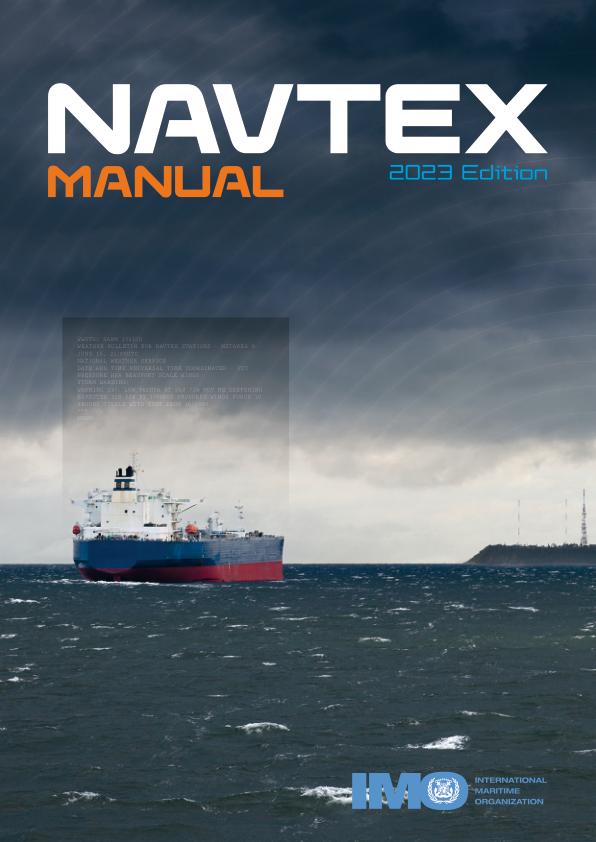
NAVTEX Manual
show More to view fulltext, buy and share links for:NAVTEX Manual show Less to hide fulltext, buy and share links for: NAVTEX ManualNAVTEX is an international automated directprinting service for promulgation of Maritime safety information such as navigational warnings and meteorological information to ships. It is a principle method for broadcasting maritime safety information, and Search and rescue alerts when there is an incident, in accordance with the provisions of the International Convention for the Safety of Life at Sea, 1974. It has been developed to provide a low-cost, simple and automated means of receiving Maritime safety information on board ships at sea and in coastal waters. This edition includes, in particular, the procedure to withdraw existing NAVTEX stations, should a coastal State decide to do so.
This Manual is intended for use by maritime Administrations, seafarers, shipowners and others concerned with preparing, broadcasting and receiving Maritime safety information. The 2023 edition of the Manual came into effect on 1 January 2023 and includes the revised Performance standards for the reception of Maritime safety information and Search and rescue related information by MF (NAVTEX) and HF (resolution MSC.508(105)) and the revised Criteria for use when providing a NAVTEX service (resolution MSC.509(105), annex 4).
-
-
-
Nairobi International Convention on the Removal of Wrecks, 2007
show More to view fulltext, buy and share links for:Nairobi International Convention on the Removal of Wrecks, 2007 show Less to hide fulltext, buy and share links for: Nairobi International Convention on the Removal of Wrecks, 2007The Nairobi International Convention on the Removal of Wrecks, 2007 provides the legal basis to enable States to remove, or to have removed, from their coastlines and waters around their coasts, wrecks posing a hazard to the safety of shipping or to the Marine environment. To achieve these objectives, the new treaty includes provisions on the reporting and locating of ships and wrecks and criteria for determining the hazard posed by wrecks, including assessment of damage to the Marine environment. It also regulates measures to facilitate the removal of wrecks, as well as the liability of the owner for the costs of locating, marking and removing of ships and wrecks. The registered shipowner is required to maintain compulsory insurance or other financial security to cover liability under the Convention.
-
-
-
Noise Levels on Board Ships
show More to view fulltext, buy and share links for:Noise Levels on Board Ships show Less to hide fulltext, buy and share links for: Noise Levels on Board ShipsThis publication contains the Code on Noise Levels on Board Ships (resolution A.468(XII)), developed to stimulate and promote noise control at a national level within the framework of internationally agreed guidelines, and the Recommendation on methods of measuring noise levels at listening posts (resolution A.343(IX)).
-
-
-
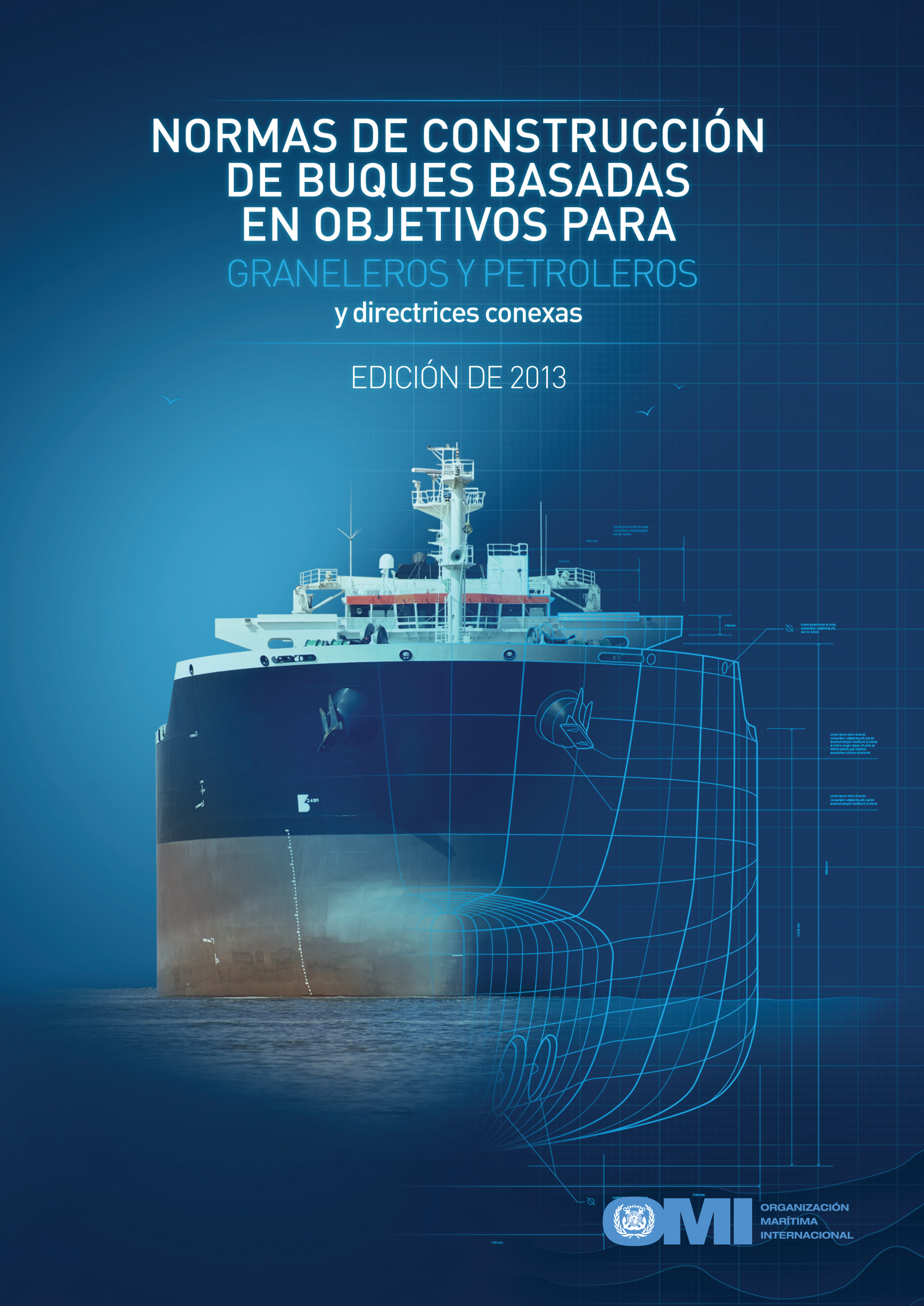
Normas de construcción basadas en objetivos para graneleros y petroleros y directrices conexas
show More to view fulltext, buy and share links for:Normas de construcción basadas en objetivos para graneleros y petroleros y directrices conexas show Less to hide fulltext, buy and share links for: Normas de construcción basadas en objetivos para graneleros y petroleros y directrices conexasLa presente publicación contiene:
- Las normas internacionales de construcción de buques basadas en objetivos para graneleros y petroleros (resolución MSC.287(87) y las enmiendas conexas al Convenio SOLAS para hacer obligatorias las mismas (MSC.290(87);
- Directrices para la verifi cación del cumplimiento de las normas de construcción de buques basadas en objetivos para graneleros y petroleros (MSC.296(87);
- Directrices sobre la información que debe incluirse en el expediente de construcción del buque (MSC.1/Circ.1343); y
- Directrices genéricas para elaborar normas de la OMI basadas en objetivos (MSC.1/Circ.1394).
-
-
-
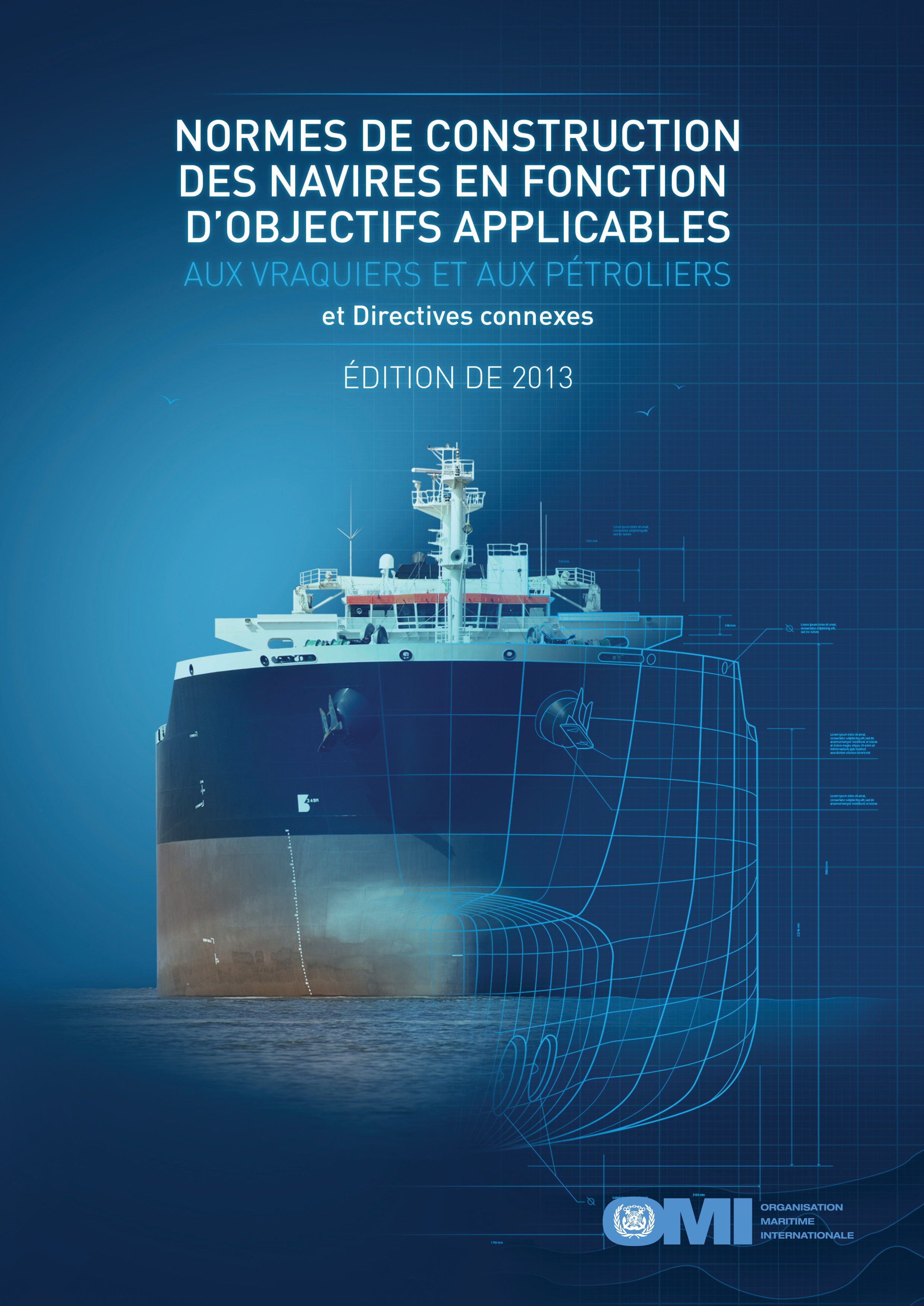
Normes de construction des navires en fonction d’objectifs applicables aux vraquiers et aux pétroliers et directives connexes
show More to view fulltext, buy and share links for:Normes de construction des navires en fonction d’objectifs applicables aux vraquiers et aux pétroliers et directives connexes show Less to hide fulltext, buy and share links for: Normes de construction des navires en fonction d’objectifs applicables aux vraquiers et aux pétroliers et directives connexesLa présente publication comprend:
- les Normes internationales de construction des navires en fonction d’objectifs applicables aux vraquiers et aux pétroliers (résolution MSC.287(87)) et les amendements connexes à la Convention SOLAS de 1974 (résolution MSC.290(87)) rendant ces normes obligatoires;
- les Directives pour la vérification de la conformité avec les normes de construction des navires en fonction d’objectifs applicables aux vraquiers et aux pétroliers (résolution MSC.296(87));
- les Directives sur les renseignements à inclure dans le dossier de construction du navire (MSC.1/Circ.1343); et
- les Directives générales pour l’élaboration de normes de l’OMI en fonction d’objectifs (MSC.1/Circ.1394)
-
-
-
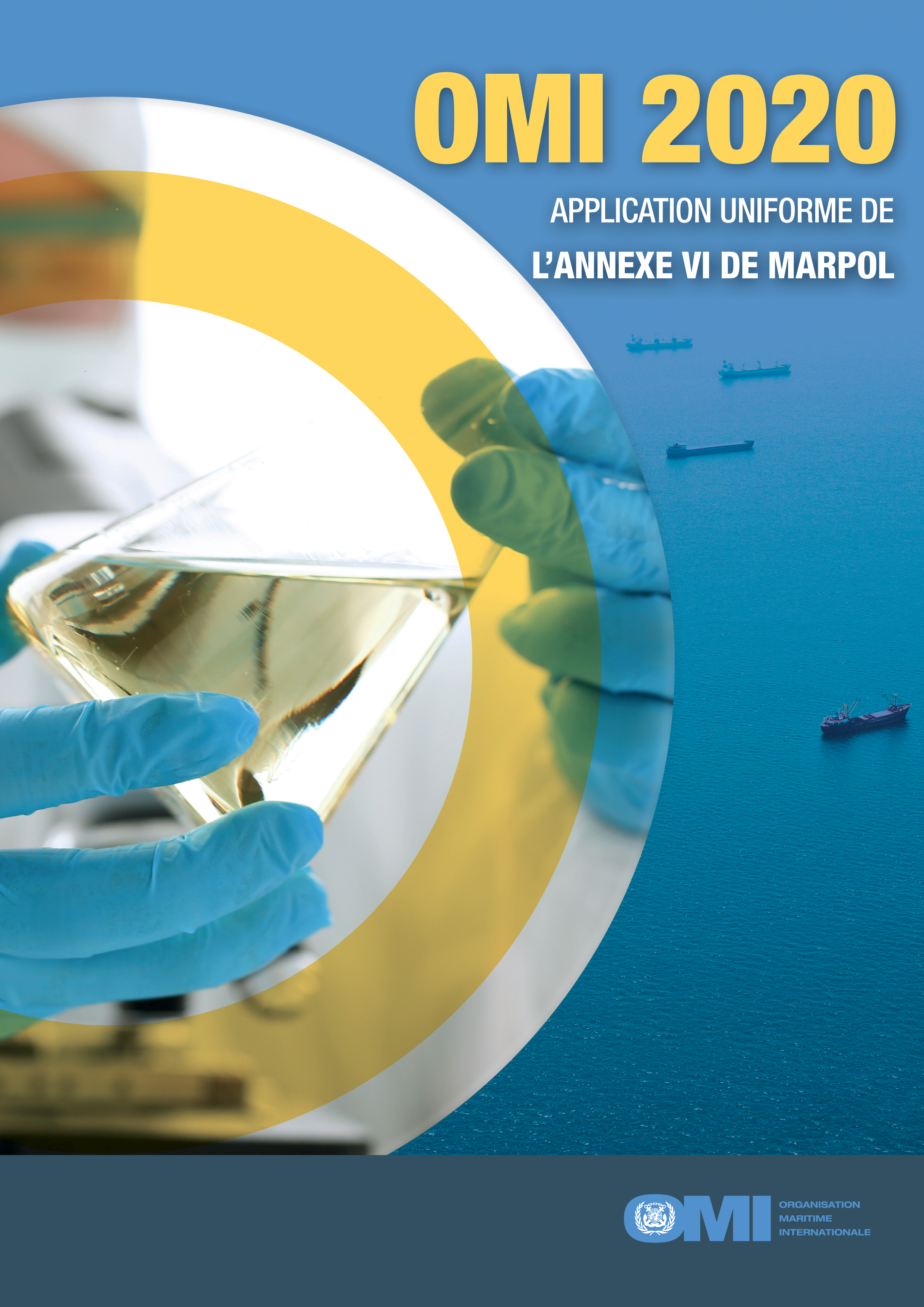
OMI 2020
Application uniforme de l'Annexe VI de MARPOL
show More to view fulltext, buy and share links for:OMI 2020 show Less to hide fulltext, buy and share links for: OMI 2020En octobre 2008, le Comité de la protection du milieu marin (MEPC) de l’Organisation maritime internationale (OMI) a adopté des modifications apportées aux règles internationales relatives à la prévention de la pollution de l’atmosphère par les navires (Annexe VI de MARPOL). Dans la version révisée des règles, il est exigé qu’à compter du 1er janvier 2020, la teneur en soufre du fuel-oil utilisé par les navires exploités en dehors des zones de contrôle des émissions désignées ne dépasse pas 0,50 % en masse; ces modifications sont connues sous le nom d’Initiative de l’OMI «Horizon 2020». La réduction des émissions d’oxydes de soufre améliorera considérablement la santé humaine et l’environnement au niveau mondial.
L’Initiative de l’OMI «Horizon 2020» aura un retentissement majeur à l’échelle mondiale. Afin que le secteur maritime international puisse mettre en œuvre avec succès cette initiative, la présente publication rassemble en un seul document l’ensemble des instruments et recommandations élaborés, y compris les résolutions et circulaires de l’OMI, afin qu’il soit facile de s’y reporter.
-
-
-
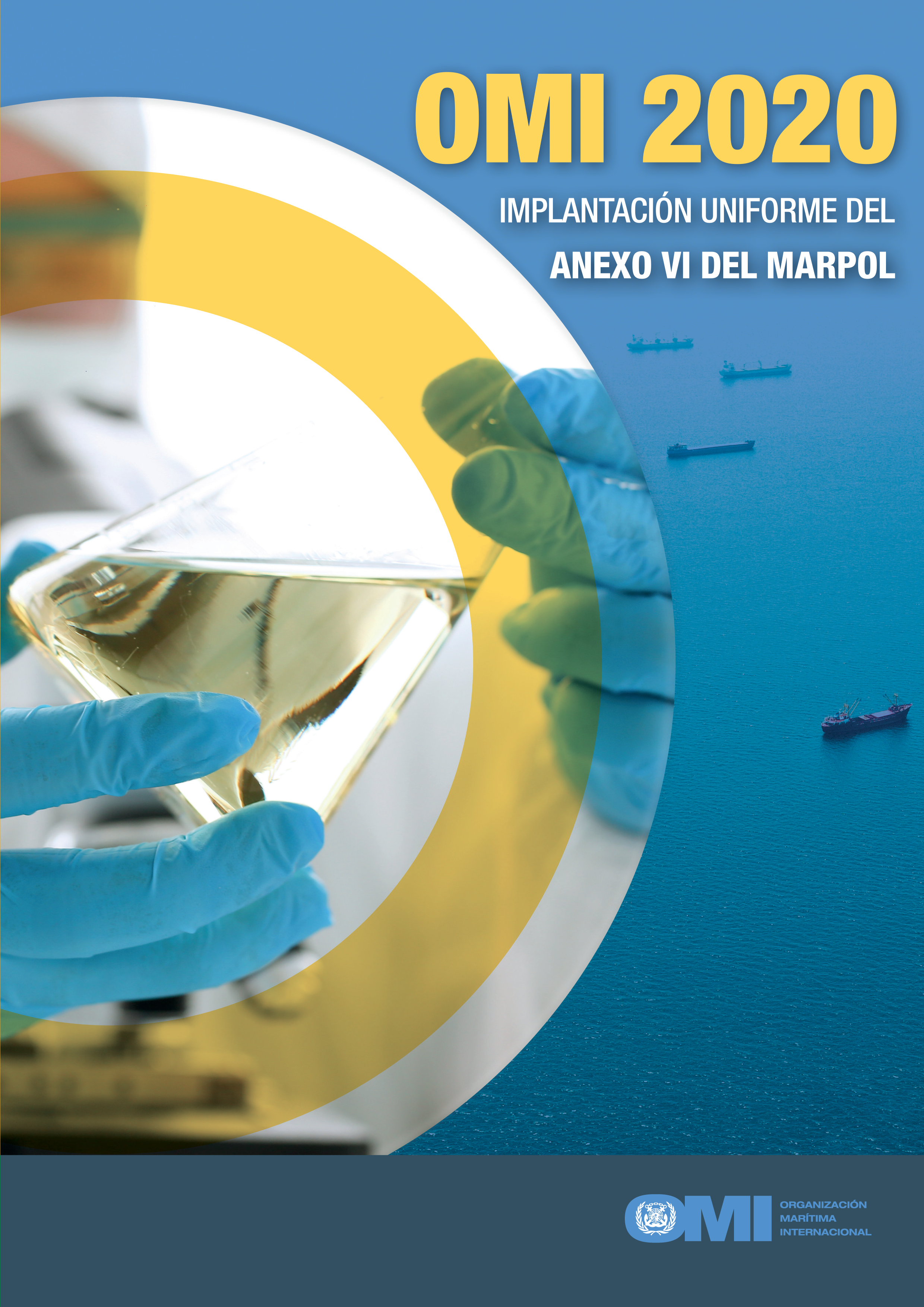
OMI 2020
Implantación uniforme del Anexo VI del MARPOL
show More to view fulltext, buy and share links for:OMI 2020 show Less to hide fulltext, buy and share links for: OMI 2020En octubre de 2008, el Comité de protección del medio marino de la Organización Marítima Internacional adoptó revisiones de las reglas internacionales para prevenir la contaminación atmosférica ocasionada por los buques (Anexo VI del Convenio MARPOL). Las reglas revisadas incluían la prescripción de que, a partir del 1 de enero de 2020, el contenido de azufre del fueloil utilizado por los buques que operasen fuera de las zonas de control de las emisiones designadas no rebasaría el 0,50 % en masa; esta prescripción recibe la denominación de «OMI 2020». La reducción de las emisiones de óxidos de azufre se traducirá en beneficios significativos para la salud humana y el medio ambiente en todo el mundo.
La prescripción «OMI 2020» tendrá efectos importantes en todo el mundo. A fin de contribuir a que el sector del transporte marítimo internacional la implante con éxito, esta publicación reúne en un solo documento todos los instrumentos y orientaciones elaborados, incluidas las resoluciones y circulares de la OMI, a fin de facilitar las referencias.
-
-
-
OPRC Convention
International Convention on Oil Pollution Preparedness, Response and Co-Operation, 1990
show More to view fulltext, buy and share links for:OPRC Convention show Less to hide fulltext, buy and share links for: OPRC ConventionThe International Convention on Oil pollution Preparedness, Response and Co-operation, 1990, was adopted at a conference convened in November 1990 for the purpose of establishing precautionary measures and effective preparation for combating Oil pollution incidents involving ships, offshore units, sea ports and oil handling facilities. The publication includes:
- Final Act of the Conference on International Co-operation on Oil pollution Preparedness and Response, 1990;
- OPRC Convention, 1990;
- Resolutions 1 to 10 adopted by the Conference.
-
-
-
OPRC-HNS Protocol
Protocol on Preparedness, Response and Co-operation to Pollution Incidents by Hazardous and Noxious Substances, 2000
show More to view fulltext, buy and share links for:OPRC-HNS Protocol show Less to hide fulltext, buy and share links for: OPRC-HNS ProtocolThis publication reproduces the texts of the Final Act of the Conference, including its Attachments, and the Protocol on Preparedness, Response and Co-operation to Pollution Incidents by Hazardous and Noxious Substances, 2000.
-
-
-
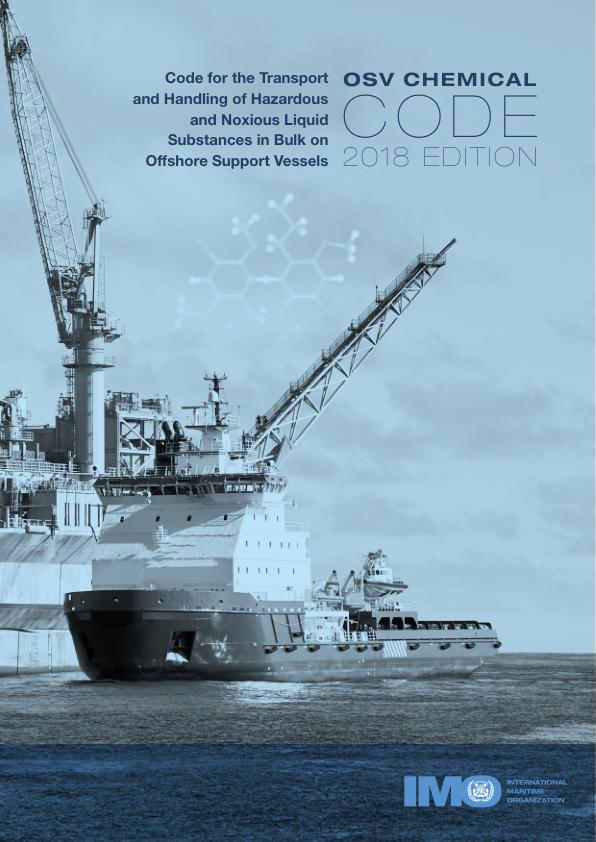
OSV Chemical Code
Code for the Transport and Handling of Hazardous and Noxious Liquid Substances in Bulk on Offshore Support Vessels
show More to view fulltext, buy and share links for:OSV Chemical Code show Less to hide fulltext, buy and share links for: OSV Chemical CodeThe Code for the Transport and Handling of Hazardous and Noxious Liquid Substances in Bulk on Offshore Support Vessels (OSV Chemical Code), has been developed for the design, construction and operation of offshore support vessels (OSVs) which transport hazardous and noxious liquid substances in bulk for the servicing and resupplying of offshore platforms, Mobile offshore drilling units and other offshore installations, including those employed in the search for and recovery of hydrocarbons from the seabed.
The basic philosophy of the present Code is to apply standards contained in the Code and the International Code for the Construction and Equipment of Ships Carrying Dangerous Chemicals in Bulk (IBC Code) and in the International Code for the Construction and Equipment of Ships Carrying Liquefied Gases in Bulk (IGC Code) to the extent that is practicable and reasonable taking into account the unique design features and service characteristics of OSVs.
-
-
-
OSV Code
Code of Safe Practice for the Carriage of Cargoes and Persons by Offshore Supply Vessels
show More to view fulltext, buy and share links for:OSV Code show Less to hide fulltext, buy and share links for: OSV CodeThe purpose of the Code of Safe Practice for the Carriage of Cargoes and Persons by Offshore supply vessels (OSV Code), which was adopted by resolution A.863(20), is to provide, for both the operator and contractor, an international standard to avoid or to reduce to a minimum the hazards which affect Offshore supply vessels in their daily operation of carrying cargoes and persons from and between offshore installations. This standard should be considered when implementing a safety-management system within the meaning of paragraph 1.4 of the International Safety Management (ISM) Code.
-
-
-
Officer in Charge of a Navigational Watch
Model course 7.03
show More to view fulltext, buy and share links for:Officer in Charge of a Navigational Watch show Less to hide fulltext, buy and share links for: Officer in Charge of a Navigational WatchThis model course comprises three functions at the operational level. On successful completion of the training and assessment trainees should be competent to carry out safely the watchkeeping duties of an officer in charge of a navigational watch, both at sea and in port. In particular, they will be fully conversant with the basic principles to be observed in keeping a navigational watch as per STCW Regulation VIII/2 and STCW Code Chapter VIII.
-
-
-
Officer in Charge of a Navigational Watch on a Fishing Vessel
Model Course 7.06
show More to view fulltext, buy and share links for:Officer in Charge of a Navigational Watch on a Fishing Vessel show Less to hide fulltext, buy and share links for: Officer in Charge of a Navigational Watch on a Fishing VesselThe course is organized under the three functions at the operating level of responsibility. Specifically, this course covers the minimum standard of competence for officers in charge of a navigational watch on Fishing vessels of 24 metres in length and over, operating in unlimited waters.
-
-
-

Officer in Charge of an Engineering Watch
Model course 7.04
show More to view fulltext, buy and share links for:Officer in Charge of an Engineering Watch show Less to hide fulltext, buy and share links for: Officer in Charge of an Engineering WatchThis model course aims to meet the mandatory minimum requirements for knowledge, understanding and proficiency in Table A-III/1 of STCW Code for the function Marine Engineering, Electrical, Electronic and Control Engineering, Maintenance and Repair and Controlling the Operation of the Ship and Care for Persons on Board at the Operational Level.
-
-
-
Official Records of the Conference on the Establishment of an International Compensation Fund for Oil pollution Damage, 1971
show More to view fulltext, buy and share links for:Official Records of the Conference on the Establishment of an International Compensation Fund for Oil pollution Damage, 1971 show Less to hide fulltext, buy and share links for: Official Records of the Conference on the Establishment of an International Compensation Fund for Oil pollution Damage, 1971This publication comprises documents issued in connection with the Conference.
-
-
-
Official records of the International Conference on the Limitation of Liability for Maritime Claims, 1976
show More to view fulltext, buy and share links for:Official records of the International Conference on the Limitation of Liability for Maritime Claims, 1976 show Less to hide fulltext, buy and share links for: Official records of the International Conference on the Limitation of Liability for Maritime Claims, 1976This publication contains documents issued in connection with the Conference.
-
-
-
Oficial Encargado de la Guardia de Navegación en Buque Pesquero
Curso modelo 7.06
show More to view fulltext, buy and share links for:Oficial Encargado de la Guardia de Navegación en Buque Pesquero show Less to hide fulltext, buy and share links for: Oficial Encargado de la Guardia de Navegación en Buque PesqueroThe course is organized under the three functions at the operating level of responsibility. Specifically, this course covers the minimum standard of competence for officers in charge of a navigational watch on Fishing vessels of 24 metres in length and over, operating in unlimited waters.
-
-
-
Oficial de Protección del Buque
Curso Modelo 3.19
show More to view fulltext, buy and share links for:Oficial de Protección del Buque show Less to hide fulltext, buy and share links for: Oficial de Protección del BuqueThis model course is intended to provide knowledge to those who may be designated to perform the duties and responsibilities of a Ship Security Officer (SSO), as defined in section A/2.1.6 (and section A/12) of the ISPS Code and in section A-VI/5 of the STCW Code, as amended, and in particular the duties and responsibilities with respect to the security of a ship, for implementing and maintaining a Ship Security Plan and for liaising with the Company Security Officer (CSO) and with Port Facility Security Officers (PFSOs).
-