


International Maritime Organization
241 - 260 of 663 results
-
-
IAMSAR Manual, Volume III – Mobile Facilities
International Aeronautical and Maritime Search and Rescue Manual, Volume III
show More to view fulltext, buy and share links for:IAMSAR Manual, Volume III – Mobile Facilities show Less to hide fulltext, buy and share links for: IAMSAR Manual, Volume III – Mobile FacilitiesBy clicking on the “Read” button on this page you will be accessing the PDF of the full book. To access the Full-Text version and PDFs of the individual chapters, click on the “Chapters” tab and select the chapter you would like to read.
The Mobile Facilities volume is intended to be carried on board rescue units, aircraft and vessels to help with the performance of a search, rescue or on-scene coordinator function and with aspects of search and rescue that pertain to their own emergencies.
A new edition of the IAMSAR Manual is published every three years. The 2025 edition includes amendments, adopted by the International Civil Aviation Organization (ICAO) and approved by the Maritime Safety Committee of the International Maritime Organization (IMO) at its 109th session in December 2024 by means of MSC.1/Circ.1686, which become applicable on 1 January 2026.
-
-
-
IBC Code
International Code for the Construction and Equipment of Ships Carrying Dangerous Chemicals in Bulk
show More to view fulltext, buy and share links for:IBC Code show Less to hide fulltext, buy and share links for: IBC CodeThe purpose of the International Code for the Construction and Equipment of Ships Carrying Dangerous Chemicals in Bulk (IBC Code) is to provide an international standard for the safe carriage, in bulk by sea, of dangerous chemicals and noxious liquid substances listed in chapter 17 of the Code.
The Code prescribes the design and construction standards of ships, regardless of tonnage, involved in such carriage and the equipment they shall carry to minimize the risk to the ship, its crew and the environment, having regard to the nature of the products involved. This edition of the Code incorporates a number of amendments which have entered into force since it was last published in 2016, including:
- resolutions MEPC.302(72) and MSC.440(99), amending the model form of International Certificate of Fitness for the Carriage of Dangerous Chemicals in Bulk, which entered into force on 1 January 2020; and
- resolutions MEPC.318(74) and MSC.460(101), amending chapters 1, 15, 16, 17, 18, 19 and 21, including a complete revision of the product information set out in chapters 17 and 18, which enter into force on 1 January 2021.
-
-
-
IGC Code
International Code for the Construction and Equipment of Ships Carrying Liquefied Gases in Bulk
show More to view fulltext, buy and share links for:IGC Code show Less to hide fulltext, buy and share links for: IGC CodeThe purpose of the International Code for the Construction and Equipment of Ships Carrying Liquefied Gases in Bulk (IGC Code) is to provide an international standard for the safe carriage, by sea in bulk, of liquefied gases and certain other substances that are listed in chapter 19.
Through consideration of the products carried, it prescribes the design and construction standards of the ships involved and the equipment they should carry to minimize the risk to the ship, its crew and the environment.
-
-
-
IGC Code 1993
International Code for the Construction and Equipment of Ships Carrying Liquefied Gases in Bulk
show More to view fulltext, buy and share links for:IGC Code 1993 show Less to hide fulltext, buy and share links for: IGC Code 1993The purpose of the International Code for the Construction and Equipment of Ships Carrying Lyquified Gases in Bulk (IGC Code 1993) is to provide an international standard for the safe carriage by sea of liquefied gases (and other substances listed in the Code) in bulk. To minimize risks to ships involved in such carriage, to their crews and to the environment, the Code prescribes the design and constructional standards of such ships and the equipment they should carry.
This edition remains valid and applies to all applicable ships constructed before 1 January 2016.
-
-
-
IGC مدونة
ﺍﻟﻤﺪﻭﻧﺔ ﺍﻟﺪﻭﻟﻴﺔ ﻟﺒﻨﺎﺀ ﻭﺗﺠﻬﻴﺰ ﺍﻟﺴﻔﻦ الناقلة للغازات المسيّلة السائبة
show More to view fulltext, buy and share links for:IGC مدونة show Less to hide fulltext, buy and share links for: IGC مدونةيتمثل الغرض من المـدونة الدولية لبناء وتجهيز السفن ناقلة الغازات المُسالة السائبة (مدونة IGC لعام 1993) في وضع معيار دولي للنقل البحري الآمن للغازات المسالة (وغيرها من المواد المدرجة في المدونة) في صورة سائبة. ومن أجل الحد من الأخطار المحتملة على السفن التي تحمل هذه المواد وعلى أفراد أطقمها وعلى البيئة، تحدِّد المدونة معايير التصميم والبناء الخاصة بهذه السفن وما ينبغي أن تحمله من معدات.
ولا تزال هذه المدونة سارية وتنطبق على جميع السفن المعنية المبنية قبل 1 كانون الثاني/يناير 2016.
-
-
-
IGF Code
International Code of Safety for Ships using Gases or other Low-flashpoint Fuels
show More to view fulltext, buy and share links for:IGF Code show Less to hide fulltext, buy and share links for: IGF CodeThe purpose of the International Code of Safety for Ships using Gases or other Low-flashpoint Fuels (IGF Code) is to provide an international standard for ships using gases or low‑flashpoint fuels, other than ships covered by the International Code for the Construction and Equipment of Ships Carrying Liquefied Gases in Bulk (IGC Code). The basic philosophy of the IGF Code is to provide mandatory provisions for the arrangement, installation, control and monitoring of machinery, equipment and systems using gases or low‑flashpoint fuels to minimize the risk to the ship, its crew and the environment, having regard to the nature of the fuels involved.
This edition of the publication presents the text of the IGF Code and all amendments thereto that have entered into force on or before 1 January 2026. Additionally, this edition includes the unified interpretations of the Code approved by the Maritime Safety Committee of the International Maritime Organization.
-
-
-
IMDG Code Supplement – 2024 Edition
International Maritime Dangerous Goods Code Supplement
show More to view fulltext, buy and share links for:IMDG Code Supplement – 2024 Edition show Less to hide fulltext, buy and share links for: IMDG Code Supplement – 2024 EditionBy clicking on the "Read" button on this page you will be accessing the PDF of the full book. To access the Full-Text version and PDFs of the individual chapters, click on the “Chapters” tab and select the chapter you would like to read.
The International Maritime Dangerous Goods Code (IMDG Code) lays out the regulatory framework for all aspects of handling dangerous goods and marine pollutants in sea transport, but does not include all details of procedures for packing of dangerous goods or actions to take in the event of an emergency or accident involving personnel who handle goods at sea.
This Supplement presents the publications associated with the IMDG Code that cover these aspects of the transport of dangerous goods.
The 2024 edition of the Supplement features:
- the Revised Emergency Response Procedures for Ships Carrying Dangerous Goods (EmS Guide), taking into account Amendment 42-24 to the IMDG Code;
- the Medical First Aid Guide for Use in Accidents involving Dangerous Goods (MFAG);
- the Reporting procedures;
- the Recommendations on the safe use of pesticides in ships;
- the International Code for the Safe Carriage of Packaged Irradiated Nuclear Fuel, Plutonium and High-Level Radioactive Wastes on board Ships (INF Code); and
- other appropriate resolutions and circulars pertaining to the transport of dangerous goods, including Guidelines for the implementation of the inspection programmes for cargo transport units (MSC.1/Circ.1649) and the List of non-exhaustive voluntary guidance on pest contamination (MSC.1/Circ.1650).
The IMDG Code Supplement should be of interest to maritime administrations, shipping companies, manufacturers, packers, shippers, feeder services such as road and rail, and port authorities.
-
-
-
IMDG Code – 2024 Edition
International Maritime Dangerous Goods Code
show More to view fulltext, buy and share links for:IMDG Code – 2024 Edition show Less to hide fulltext, buy and share links for: IMDG Code – 2024 EditionBy clicking on the "Read" button on this page you will be accessing a version containing both volumes combined. To access the full-text and the e-reader versions of the individual chapters, click on the “Chapters” tab and select the chapter you would like to read.
The International Maritime Dangerous Goods Code (IMDG Code) lays out the regulatory framework for all aspects of handling dangerous goods and marine pollutants in sea transport.
The IMDG Code is divided into two volumes:
- Volume 1 containing sections on general provisions, definitions and training; classification; packing and tank provisions; consignment procedures; construction and testing of packagings, IBCs, large packagings, portable tanks, MEGCs and road tank vehicles and transport operations, and
- Volume 2 containing the Dangerous Goods List, special provisions and exceptions, Appendix A (list of generic and N.O.S. proper shipping names), Appendix B (glossary of terms) and the Index.
Since it was first published in 1965, the Code has undergone many changes, in both format and content, in order to keep up with the rapid expansion of the shipping industry.
Amendment 42-24 includes revisions to various sections of the Code and to transport requirements for specific substances. It was adopted by the International Maritime Organization’s Maritime Safety Committee at its one hundred and eighth session in May 2024 and is mandatory from 1 January 2026 but may be applied by Administrations in whole or in part on a voluntary basis from 1 January 2025.
The provisions of the Code should be of interest to maritime administrations, shipping companies, manufacturers, packers, shippers, feeder services such as road and rail, and port authorities.
Links
- Dangerous Goods List: IMDG Dangerous Goods List with links to data
- The alphabetic substance index with links to the Dangerous Goods List
-
-
-
IMO 2020
Consistent Implementation of MARPOL Annex VI
show More to view fulltext, buy and share links for:IMO 2020 show Less to hide fulltext, buy and share links for: IMO 2020In October 2008, the Marine environment protection committee (MEPC) of the International Maritime Organization (IMO) adopted revisions to the international regulations for the prevention of Air pollution from ships (MARPOL Annex VI). The revised regulations included a requirement that, from 1 January 2020, the sulphur content of fuel oil used by ships operating outside designated emission control areas shall not exceed 0.50% by mass, known as “IMO 2020”. Reducing emissions of sulphur oxides will bring significant global benefits for human health and the environment.
IMO 2020 will have a major impact worldwide. To support its successful implementation by the international shipping sector, this publication brings together all the instruments and guidance prepared into one document for easy reference, including IMO resolutions and circulars.
-
-
-
IMO Guidelines on Ship Recycling
including MEPC/Circ.466 “Gas-free-for-hot-work” certification
show More to view fulltext, buy and share links for:IMO Guidelines on Ship Recycling show Less to hide fulltext, buy and share links for: IMO Guidelines on Ship RecyclingThe present publication contains the consolidated text of the IMO Guidelines on Ship Recycling adopted by Assembly resolution A.962(23), as amended by Assembly resolution A.980(24), while also referring to the existence and relevance of the guidelines on the same subject by ILO and by the Basel Convention.
-
-
-
IMO In-Situ Burning Guidelines
show More to view fulltext, buy and share links for:IMO In-Situ Burning Guidelines show Less to hide fulltext, buy and share links for: IMO In-Situ Burning GuidelinesThese guidelines provide critical information and recommendations for the use of in-situ burning (ISB) on open water in the offshore environment generally 5 kilometres from land and and in ice-covered waters. These guidelines will allow the response community to understand and take full advantage of ISB technology as another tool for improved spill response.
-
-
-
IMO Liability and Compensation Regime
show More to view fulltext, buy and share links for:IMO Liability and Compensation Regime show Less to hide fulltext, buy and share links for: IMO Liability and Compensation RegimeIMO’s comprehensive Liability and compensation regime has been developed by the Legal Committee since its inception in 1967. It comprises Liability and compensation for pollution incidents, wreck removal and the carriage of passengers and their luggage.
In addition, the Legal Committee developed conventions relating to protection against pollution incidents, empowering coastal States to intervene on the high seas and determining uniform international rules regarding salvage operations. These conventions are closely linked to the Liability and compensation regime and have therefore also been included in this publication. This publication has been developed to assist Member States with the effective and uniform implementation of IMO’s Liability and compensation regime. It provides a practical and comprehensive reference book for administrations, non-governmental organizations and private companies alike.
-
-
-
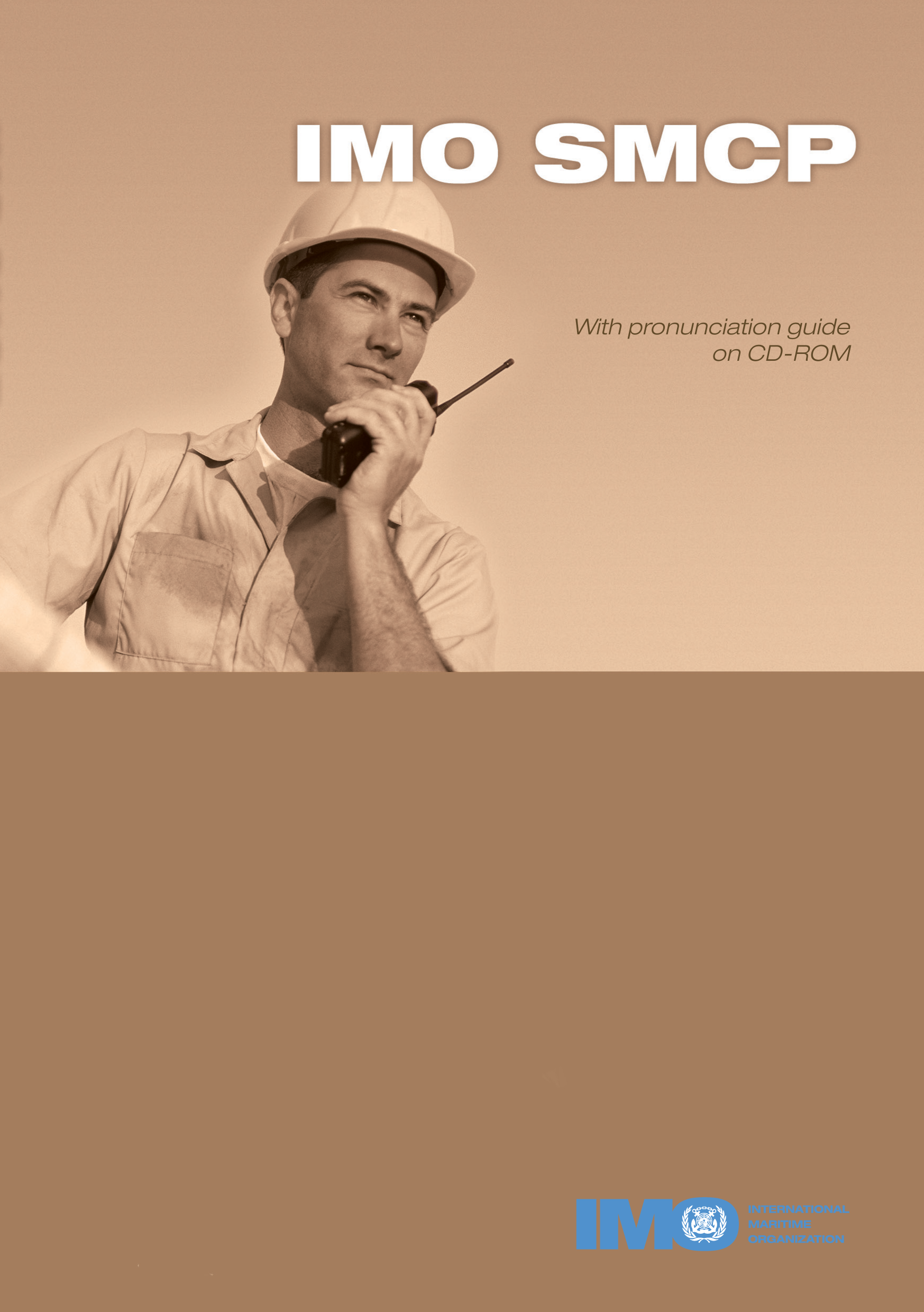
IMO SMCP
IMO Standard Marine Communication Phrases
show More to view fulltext, buy and share links for:IMO SMCP show Less to hide fulltext, buy and share links for: IMO SMCPAs navigational and safety communications from ship to shore and vice versa, from ship to ship, and on board ship must be precise, simple and unambiguous so as to avoid confusion and error, there is a need to standardize the language used.
Under the International Convention on Standards of Training, Certification and Watchkeeping for Seafarers, 1978, as revised in 1995, the ability to use and understand the IMO SMCP is required for the certification of officers in charge of a navigational watch on ships of 500 gross tonnage or more.
-
-
-
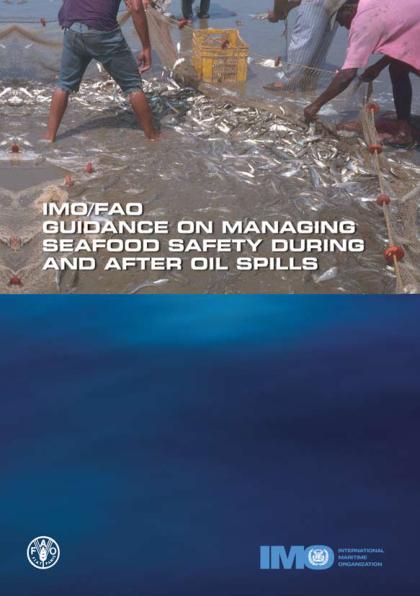
IMO/FAO Guidance on Managing Seafood Safety During and after Oil Spills
show More to view fulltext, buy and share links for:IMO/FAO Guidance on Managing Seafood Safety During and after Oil Spills show Less to hide fulltext, buy and share links for: IMO/FAO Guidance on Managing Seafood Safety During and after Oil SpillsThis publication provides a very useful guide to identify the various problems that will affect fisheries and aquaculture enterprises in the event of an oil spill. This will be useful to spill responders and managers with responsibilities for protecting public health and those in the fisheries sector as well as consumers concerned about the safety and quality of seafood.
At its forty-first session, the Marine environment protection Committee tasked the OPRC Working Group to develop a guidance document for fisheries management during and after an oil spill incident. Dr. Tosh Moller, Technical Team Manager of the International Tanker Owners Pollution Federation Ltd. (ITOPF), prepared the draft guidance document and submitted it at MEPC 42.
-
-
-
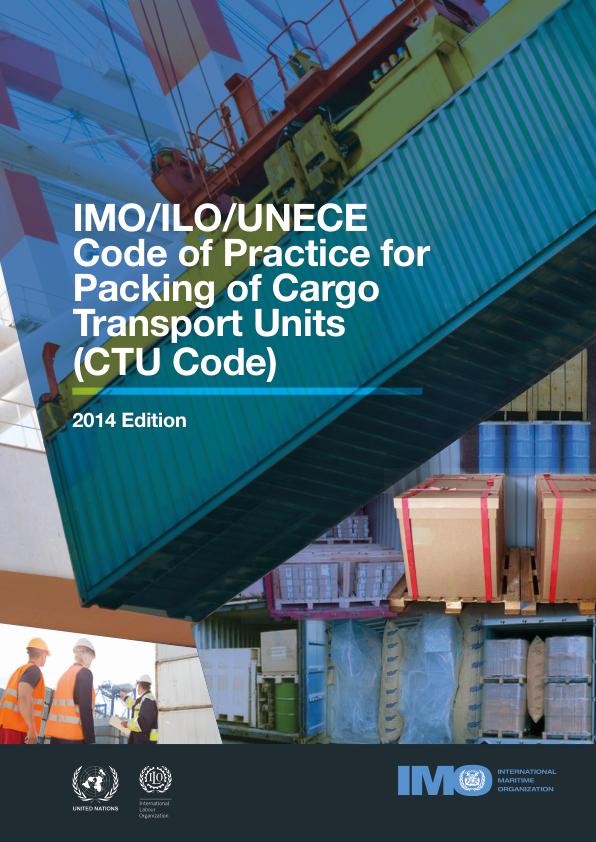
IMO/ILO/UNECE Code of Practice for Packing of Cargo Transport Units (CTU Code)
show More to view fulltext, buy and share links for:IMO/ILO/UNECE Code of Practice for Packing of Cargo Transport Units (CTU Code) show Less to hide fulltext, buy and share links for: IMO/ILO/UNECE Code of Practice for Packing of Cargo Transport Units (CTU Code)Innovations and developments in the types of cargoes carried in freight containers have allowed heavy, bulky items which were traditionally loaded directly into the ships’ hold to be carried in cargo transport units (CTUs).
The IMO/ILO/UNECE Code of Practice for Packing of Cargo Transport Units (CTU Code) gives advice on the safe packing of cargo transport units to those responsible for the packing and securing of the cargo and by those whose task it is to train people to pack such units. This publication outlines theoretical details for packing and securing as well as giving practical measures to ensure the safe packing of cargo onto or into CTUs.
-
-
-
IMO/UNEP Guidance Manual on the Assessment and Restoration of Environmental Damage following Marine Oil Spills
show More to view fulltext, buy and share links for:IMO/UNEP Guidance Manual on the Assessment and Restoration of Environmental Damage following Marine Oil Spills show Less to hide fulltext, buy and share links for: IMO/UNEP Guidance Manual on the Assessment and Restoration of Environmental Damage following Marine Oil SpillsThe objective of the Manual is to provide guidance on strategies that may be used to assess the damage and subsequent recovery of the environment resulting from marine pollution incidents. Available techniques are considered together with criteria to help judge the feasibility of such measures to bring about successful recovery of those environments.
The Manual emphasizes the importance of pre-spill planning and provides an overview of assessment techniques and restoration measure in various ecosystems. It also provides guidance on opportunities for compensation through the international oil compensation schemes. Practical examples of natural resource assessment and restoration are provided through a series of case studies.
-
-
-
IMO/UNEP Guidelines on Oil Spill Dispersant Application
including environmental considerations
show More to view fulltext, buy and share links for:IMO/UNEP Guidelines on Oil Spill Dispersant Application show Less to hide fulltext, buy and share links for: IMO/UNEP Guidelines on Oil Spill Dispersant ApplicationThis publication contains practical information which may be useful to Governments, particularly those of developing countries, and to other concerned parties, on the use of dispersants for dealing with oil spills at sea.
-
-
-
IMSAS
IMO Member State Audit Scheme
show More to view fulltext, buy and share links for:IMSAS show Less to hide fulltext, buy and share links for: IMSASIMO Member State Audit Scheme (IMSAS) contains all relevant resolutions adopted by the International Maritime Organization (IMO) in the process of the institutionalization of the IMO Member State Audit Scheme (IMSAS), as well as other documents developed to support its effective implementation. It includes:
- Framework and Procedures for IMSAS
- IMO Instruments Implementation Code (III Code)
- 2013 non-exhaustive list of obligations under instruments relevant to the III Code
- Amendments to conventions making the use of the III Code mandatory in audits of Member States
- Other resolutions
- Auditor’s Manual for IMSAS.
-
-
-
IMSBC Code
International Maritime Solid Bulk Cargoes Code and Supplement
show More to view fulltext, buy and share links for:IMSBC Code show Less to hide fulltext, buy and share links for: IMSBC CodeThe International Maritime Solid Bulk Cargoes Code (IMSBC Code), adopted on 4 December 2008 by resolution MSC.268(85), entered into force on 1 January 2011, from which date it was made mandatory under the provisions of the SOLAS Convention. The present edition incorporates Amendment 07-23, which may be applied from 1 January 2024 on a voluntary basis, anticipating its envisaged official entry into force on 1 January 2025.
This publication also presents additional information that supplements the IMSBC Code, such as the Code of Practice for the Safe Loading and Unloading of Bulk Carriers (BLU Code), BLU Manual and recommendations on the safe use of pesticides in ships applicable to the fumigation of cargo holds. The IMSBC Code and supplement is commended to Administrations, shipowners, shippers and masters and all others concerned with the standards to be applied in the safe stowage and shipment of solid bulk cargoes, excluding grain.
-
-
-
IMSBC Code
International Maritime Solid Bulk Cargoes Code and supplement
show More to view fulltext, buy and share links for:IMSBC Code show Less to hide fulltext, buy and share links for: IMSBC CodeBy clicking on the “Read” button on this page you will be accessing the PDF of the full book. To access the Full-Text version and PDFs of the individual chapters, click on the “Chapters” tab and select the chapter you would like to read.
The International Maritime Solid Bulk Cargoes Code (IMSBC Code), adopted on 4 December 2008 by resolution MSC.268(85), entered into force on 1 January 2011, from which date it was made mandatory under the provisions of the SOLAS Convention. The present edition incorporates Amendment 08-25, which may be applied from 1 January 2026 on a voluntary basis, anticipating its envisaged official entry into force on 1 January 2027.
This publication also presents additional information that supplements the IMSBC Code, such as the Code of Practice for the Safe Loading and Unloading of Bulk Carriers (BLU Code), BLU Manual and recommendations on the safe use of pesticides in ships applicable to the fumigation of cargo holds. The IMSBC Code and supplement is commended to Administrations, shipowners, shippers and masters and all others concerned with the standards to be applied in the safe stowage and shipment of solid bulk cargoes, excluding grain.
-